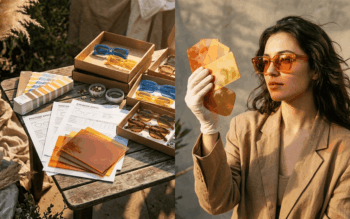
If you walk into the lens tinting laboratory at Wenzhou Zhantai Glasses Co., Ltd., you will witness one of the most frustrating and complex chemical balancing acts in the optical industry. Currently, the most lucrative trend in eyewear is the “monochromatic jelly” aesthetic—where a translucent pink acetate frame is paired with an identical pink lens. To a consumer, it looks effortless. To a factory engineer, it is a nightmare.
When independent brands search for color sunglasses wholesale, they often buy cheap, off-the-shelf lots, only to realize the frame is a cool magenta and the lens is a warm peach. They clash horribly. Why? Because cellulose acetate (the frame) and CR-39 (the lens) are two fundamentally different chemical polymers. When you dip them into the exact same color dye, they absorb the pigment differently.
For 20 years, I have helped global brands navigate the B2B manufacturing landscape. In this deep dive, we are abandoning generic fashion advice. Instead, we will explore the factory-level chemistry of color matching, expose the dangerous UV400 paradox regarding light-tinted lenses, and break down exactly how you can build a highly profitable, multi-color catalog without making rookie supply chain mistakes.
The Great Misconception: Visible Light vs. UV Protection
The biggest liability you face when selling light-wash yellow sunglasses or pale blue sunglasses is customer ignorance. Consumers inherently believe that a dark, pitch-black lens offers more sun protection than a pale colored lens. As an eyewear brand, you must educate your buyers, and you can only do that if you understand the factory science.
In optical manufacturing, tint color and UV protection are completely unrelated.
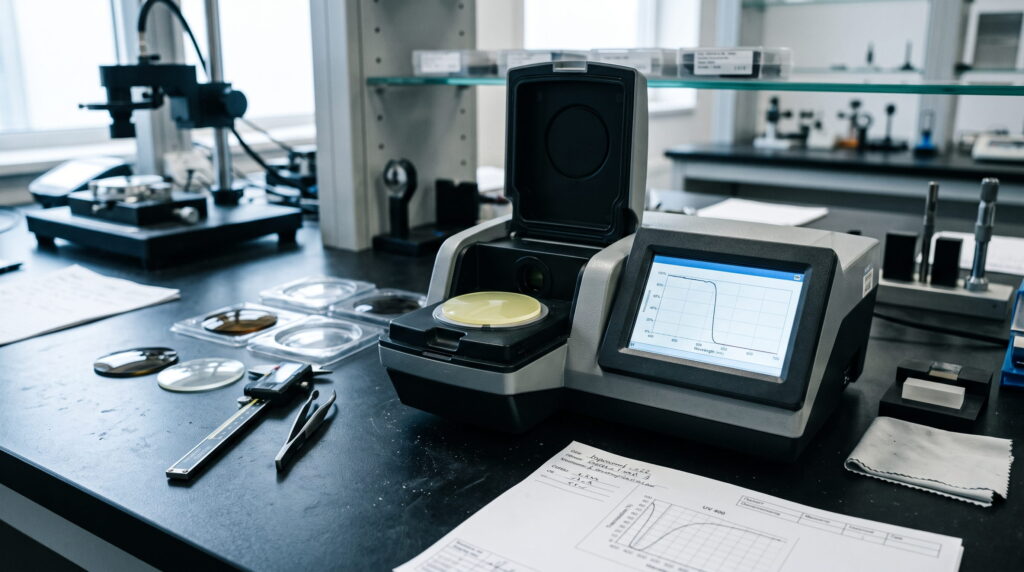
The color dye (whether it is vibrant green or pale pink) only controls the Visible Light Transmission (VLT)—meaning how much visible light hits your retina. The UV400 protection is an entirely separate, invisible chemical coating applied to the lens. At Zhantai, a translucent pale yellow lens receives the exact same medical-grade UV-blocking chemical bath as our darkest Category 3 smoke lenses. When you source premium wholesale frames, you must demand spectrometer reports proving that your light-colored fashion lenses block 100% of UVA/UVB rays at the 400nm wavelength. If a supplier cannot provide this, their lenses will cause severe retinal damage to your customers.
Engineering the 4 Core Colors: Factory Challenges & Solutions
Producing a vibrant, consistent color across a massive wholesale order requires manipulating dye vat temperatures, immersion times, and base materials. Here is how we engineer the four most demanded colors on the B2B market, and the specific manufacturing hurdles associated with each.
-
Pink Sunglasses: The Monochromatic Challenge
Pink sunglasses dominate the festival and Gen-Z fashion markets. The current demand is for a cohesive, head-to-toe monochromatic look.
-
The Factory Challenge: Pink is notoriously unstable. If the CR-39 dye vat temperature fluctuates by even 2°C from the optimal 92°C, a vibrant rose pink will rapidly turn into a muddy salmon color.
-
The Zhantai Solution: We do not rely on visual guessing. We use digital colorimeters to match the dyed lens precisely to the Pantone code of the translucent acetate frame. We also apply a backside Anti-Reflective (AR) coating to pale pink lenses, ensuring that light entering from behind the wearer doesn’t bounce off the pink surface directly into their eyes.
-
Blue Sunglasses: The Base Material Conflict
Ice blue and deep navy lenses are staples in luxury resort wear and quiet-luxury catalogs.
-
The Factory Challenge: When sourcing blue sunglasses, the base material of the lens matters immensely. If a factory tries to dye a cheap acrylic (AC) lens blue, the material’s innate yellow impurities will mix with the blue dye, resulting in a sickly, unintentional greenish tint.
-
The Zhantai Solution: True, vibrant blue requires absolute optical clarity as a baseline. We only dye premium CR-39 or high-definition Nylon blanks, ensuring the blue remains crisp, cold, and true to the original design spec.

-
Yellow Sunglasses: Hitting the VLT Sweet Spot
Yellow lenses are not just fashionable; they are high-performance optical tools that block blue light, increasing contrast for night driving and overcast days.
-
The Factory Challenge: If yellow sunglasses are tinted too dark (dropping below 60% VLT), they defeat their own purpose and make environments too dim. If they are too light, they fail to boost contrast.
-
The Zhantai Solution: We utilize precise, automated robotic dipping arms. To hit the exact 75% VLT sweet spot for an optical-grade yellow lens, the lenses are submerged for a microscopically timed cycle, ensuring absolute uniformity across the entire production run.
-
Green Sunglasses: The G-15 Standardization
When clients ask for green sunglasses, they almost always mean the classic G-15 lens (which transmits 15% of visible light and blocks 85%).
-
The Factory Challenge: Because G-15 is an industry standard, consumers instantly recognize when it looks “wrong.” Cheap wholesale factories often produce a green that is too neon or too muddy, which immediately cheapens the frame.
-
The Zhantai Solution: We utilize pre-compounded Nylon or mass-colored Polycarbonate for our standard G-15 lenses. By mixing the green pigment directly into the raw plastic resin before the lens is molded (rather than surface dipping), we guarantee the exact G-15 wavelength transmission every single time.
B2B Wholesale Costs for Color Treatments
How much extra should you pay for these specialized color applications? If you are buying color sunglasses wholesale, you must understand the cost of the labor involved. Solid colors are standard, but custom treatments require significant manual intervention.
Here is our internal factory cost breakdown for custom lens tinting (costs are additive to the base frame price):
| Lens Color Treatment | Factory Execution Method | Optical / Aesthetic Result | Est. Wholesale Add-On Cost (Per Pair) |
| Solid Custom Pantone Dye | Timed immersion in a calibrated chemical dye vat. | Exact Pantone matching to translucent frames. | +$0.40 – $0.60 |
| Backside AR Coating | Vacuum chamber application of microscopic metal oxides. | Eliminates rear glare (Crucial for light pink/yellow lenses). | +$0.80 – $1.10 |
| Gradient Dip-Dye | Mechanical arm slowly extracts the lens from the dye. | Darker at the top, fading to clear at the bottom. | +$0.90 – $1.20 |
| Bi-Color (Sunset Fade) | Complex manual dipping in two separate color vats. | Two distinct colors blending seamlessly in the center. | +$1.50 – $2.00 |
Strategic Sourcing: The 1,200-Unit Multi-Color Playbook
The biggest mistake emerging brands make is trying to guess which color will go viral. You might order 2,000 units of solid pink, only to find that your specific demographic is currently obsessing over ice blue.
You do not need to risk massive amounts of capital on a single unproven colorway. Smart margin growth relies on an agile, precision-engineered supply chain. At Wenzhou Zhantai Glasses Co., Ltd., we have structured our OEM/ODM programs specifically to help brands test the market without absorbing unnecessary tooling costs.
-
The MOQ Color Split: For custom CNC-milled acetate frames or PVD-plated metal designs, our standard Minimum Order Quantity (MOQ) is 1,200 pieces per model. However, we allow our B2B partners to split this volume across 3 to 4 different frame and lens colorways.
-
Real-World Application: This means you can design a single, beautiful geometric acetate shape, and fulfill your 1,200-unit MOQ by ordering 300 units in Monochromatic Pink, 300 in Translucent Blue, 300 in Amber Yellow, and 300 in Classic G-15 Green. You immediately launch a robust, multi-color capsule collection using only one base mold.
-
Production Realities: Engineering exact color matches, applying backside AR coatings to light lenses, and verifying UV400 protection takes time. We do not rush chemistry. To guarantee these clinical standards, we operate on a strict 55-day production timeframe, supported by standard T/T payment terms (50% deposit before production, 50% balance before shipment).
Stop Buying Blindly
Color is the most powerful emotional driver in fashion eyewear, but it is also the easiest place for a cheap factory to cut corners. A fading pink lens or a yellow lens that fails to block UV rays will permanently destroy your brand’s reputation and lead to massive return rates.
By partnering directly with a primary manufacturer like Wenzhou Zhantai Glasses Co., Ltd., you bypass the unreliable wholesale gray market. You gain access to exact Pantone color matching, certified spectrometer testing, and the ability to scale your catalog intelligently. Stop settling for mismatched, cheap plastics. Contact our B2B production team today to review our multi-color capabilities and architect your next highly profitable eyewear collection.