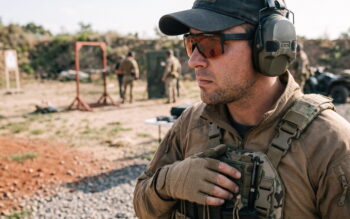
Walk into any outdoor retailer or shooting range, and you will see dozens of aggressive-looking, matte-black shades marketed as “tactical.” The modern “tacticool” aesthetic is incredibly popular, but there is a dangerous gap between looking the part and surviving a high-velocity impact.
True tactical sunglasses are not just fashion accessories; they are classified as wearable body armor.
Whether you are an active-duty service member, a law enforcement officer, a competitive sports shooter, or simply a civilian spending a weekend at the local firing range, your eye protection must withstand extreme kinetic forces.
This educational guide strips away the marketing jargon to explain the exact materials that make up tactical eyewear, the clinical physics that separate it from your everyday sunglasses, and what you must look for to genuinely protect your vision.
Direct Answer: What Makes Them Different from Regular Sunglasses?
The most common mistake consumers make is assuming that any dark, plastic sports frame will protect their eyes at the shooting range.
The Core Difference: Regular sunglasses and standard industrial safety glasses protect against UV rays and low-velocity workshop hazards (like flying sawdust or small pebbles). Tactical sunglasses, however, absorb and deflect high-velocity explosive shrapnel, ricocheting lead fragments, and hot brass casings.
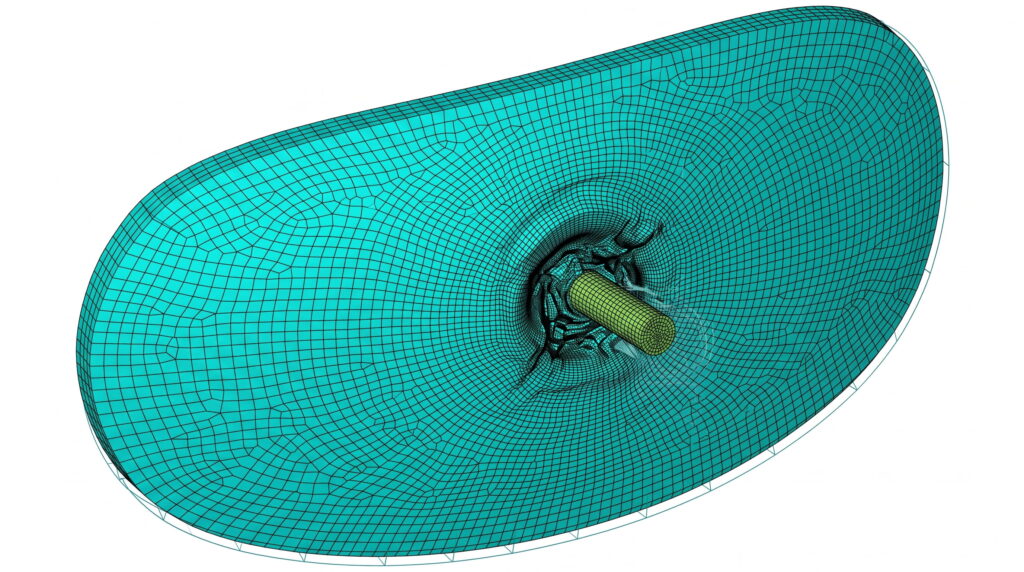
To achieve this, manufacturers craft true ballistic lenses from ultra-dense, optical-grade polycarbonate that is significantly thicker than normal eyewear (usually 2.5mm to 3.0mm thick). Unlike standard plastic or glass, which will shatter into sharp shards upon impact, this specialized ballistic polycarbonate deforms deeply under immense pressure. It catches the projectile like a baseball glove, preventing it from penetrating the eye or dislodging from the frame.
The video below demonstrates how high-velocity impact tests separate true ballistic lenses from standard plastics.
The Hard Metrics: ANSI Z87.1 vs. MIL-PRF-32432
If a pair of tactical shooting sunglasses does not have specific certification codes physically stamped into the frame or lens, it is just a fashion piece.
In the United States, eye protection is governed by two entirely different testing protocols. Understanding the numbers behind what these glasses are made to withstand is the only way to verify what you are buying.
| Certification Standard | The Testing Protocol | Projectile Speed | Real-World Protection Level |
| ANSI Z87.1 (Civilian Safety) | High Mass / High Velocity Test. A 0.25-inch steel ball is shot at the lens. | ~150 feet per second (fps). | Workshop hazards, nail guns, airsoft, and minor debris. |
| MIL-PRF-32432 (Military Ballistic) | Fragmentation Simulator Test. A T37 shaped projectile (0.15 caliber) is fired directly at the eyewear. | 640 to 660 feet per second (fps). | Battlefield fragmentation, bullet ricochets, and explosive shrapnel. |
To pass the military specification (MIL-SPEC), the lens cannot crack, shatter, or pop out of the frame chassis. This requires the polycarbonate polymer to possess immense molecular density while maintaining perfect optical clarity, ensuring the wearer does not experience visual distortion (the “fishbowl” effect) through the thick material.
Frame Architecture: Engineered for the Operator
When evaluating high-end tactical eyewear, the structural design of the frame is just as critical as the lens material. Tactical operators wear heavy, specialized equipment on their heads, and the eyewear must integrate flawlessly without causing pain or breaking acoustic seals.
-
The “Spatula” Temple Design
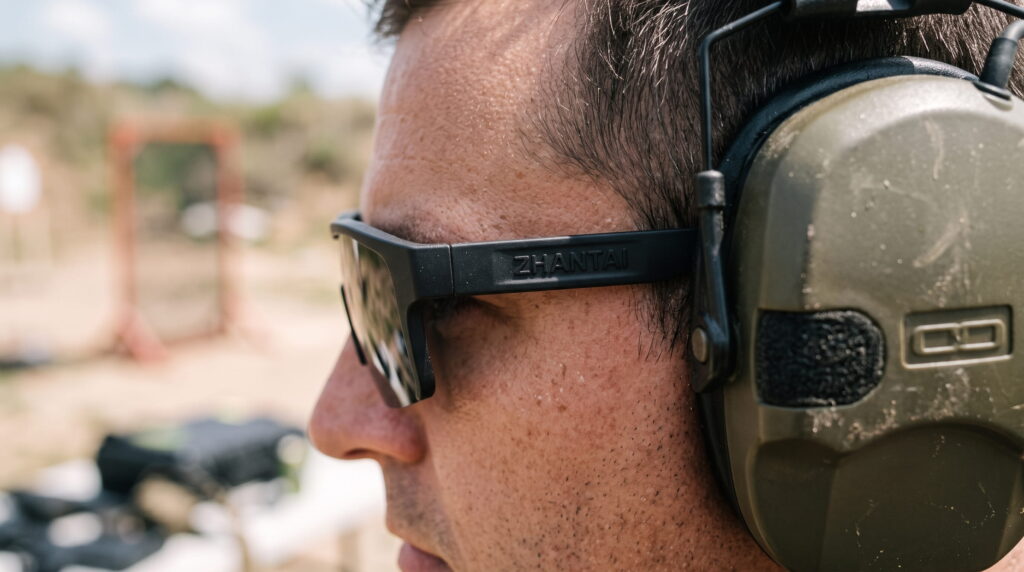
Standard sunglasses feature temple arms that curve downward behind the ear to hook onto the face. Tactical frames completely abandon this design in favor of flat, ultra-thin, straight-back arms (often called spatula temples).
-
The Purpose: Shooters and soldiers wear heavy electronic communication headsets or hearing protection earmuffs. If a sunglass temple is thick or curved, it will break the acoustic seal of the earmuff, allowing damaging gunshot decibels to reach the eardrum. Furthermore, a thick temple clamped against the skull by a combat helmet will cause excruciating pressure headaches within minutes.
-
Frameless Lower Chassis (Half-Rim Design)
Many premium tactical frames are “half-rim” or completely rimless at the bottom.
-
The Purpose: When a shooter is in a dynamic, forward-leaning stance looking through a rifle optic, their eyes are angled downward. A thick plastic lower rim creates a massive blind spot. Removing the lower frame gives the user an unobstructed field of view for quick magazine reloads and navigating tripping hazards on the ground.
Precision Tints for the Firing Range
In tactical and shooting applications, managing light transmission and color contrast can mean the difference between instantly acquiring a target and missing it entirely. Because environments change rapidly—from dark indoor shoot-houses to blinding desert sunlight—most genuine military eyewear systems come with interchangeable lenses that the user can snap in and out.
Here is how specific lens colors alter the visual spectrum for shooters:
| Tactical Lens Color | Optical Function | Primary Shooting Environment |
| Clear | Maximum light transmission (90%+ VLT). Protects the eye without altering natural light. | Indoor firing ranges, night operations, or heavily wooded dark environments. |
| Smoke / Grey | Reduces overall light transmission and glare without altering true color perception. | Bright, sunny, open outdoor ranges and desert environments. |
| Vermillion / Rust (Orange) | Filters out blue light and drastically spikes contrast against green and brown backgrounds. | Outdoor ranges with heavy foliage, clay pigeon shooting, and overcast days. |
How to Identify the Real Deal
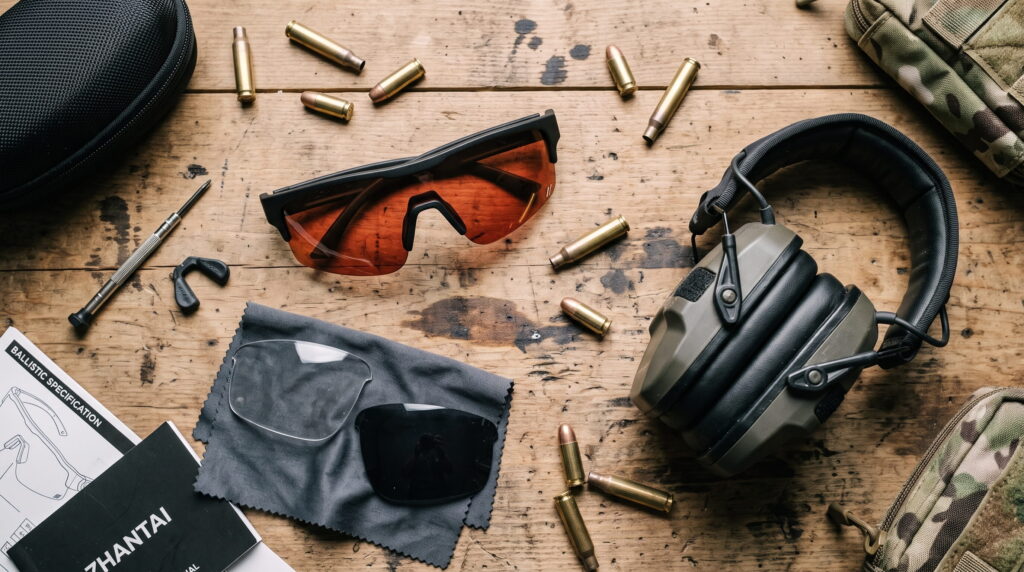
Because the “tactical” aesthetic is so trendy, thousands of cheap knockoffs flood the market every year. They often use standard acrylic or 1.1mm TAC polarized lenses that offer zero impact resistance. If you wear these to a dynamic shooting course and catch a piece of ricocheting copper jacket, the lens will shatter and cause severe injury.
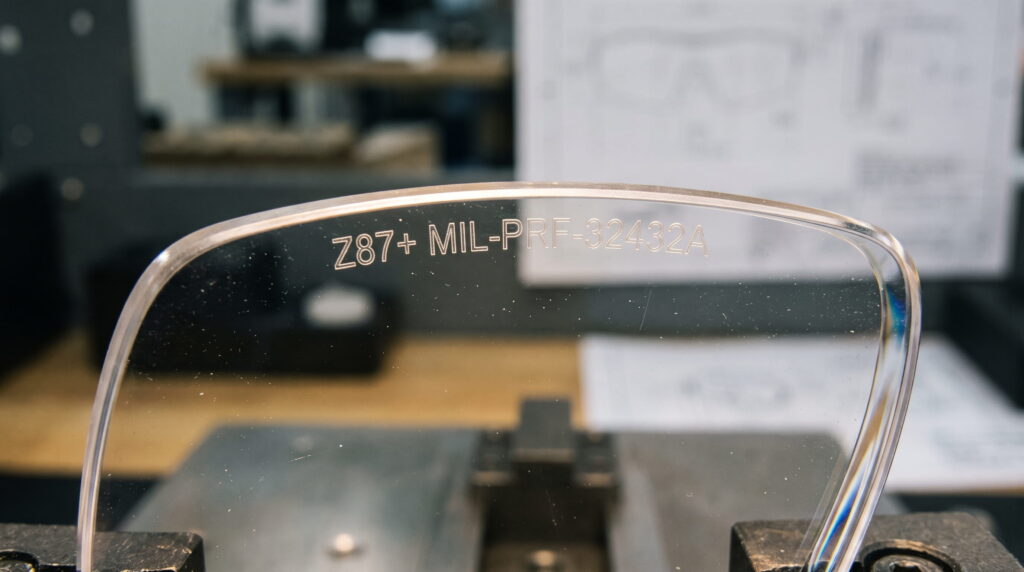
Always look for the stamp. By law, authentic safety and ballistic eyewear must be physically marked. Before purchasing, inspect the top corner of the lens and the inside of the temple arms.
-
You should see “Z87+” (the plus sign indicates high-velocity impact, not just basic safety).
-
For military-grade gear, you will often see the MIL-PRF string or specific ballistic fragmentation codes laser-engraved into the material.
Your eyesight is irreplaceable. Whether you are hunting in the backcountry, running drills on a flat range, or deploying overseas, understanding what your eyewear is truly made of ensures you are wearing the right tool for the job. Respect the physics, verify the certifications, and always prioritize genuine protection over aesthetics.