The best polarized sunglasses for women depend on the activity, glare level, impact risk, frame fit, and lens construction. Standard 0.74 mm and 1.1 mm TAC polarized lenses work well for fishing, beach leisure, driving, shopping, travel, and general outdoor use. For professional sports or higher-impact environments, a 1.5 mm PC-based lens combined with a TAC polarizing film is usually more appropriate.
The important distinction is not simply “TAC or PC.” TAC may describe the polarizing film or laminated lens structure, while PC is the impact-resistant base material. These materials can be combined in one polarized sports lens.
Key Takeaways
-
Polarization is most useful around water, wet roads, sand, glass, and other reflective surfaces.
-
Standard 0.74 mm and 1.1 mm TAC lenses are lightweight and commercially practical for lifestyle and leisure products.
-
Their impact resistance is generally limited compared with a thicker PC-based lens structure.
-
Professional cycling, running, water sports, and ball sports usually require a 1.5 mm PC-based polarized lens with TAC polarizing film.
-
The correct lens should be chosen according to the activity rather than using one construction for every frame.
What Makes the Best Polarized Sunglasses for Women?
The best polarized sunglasses for women combine effective glare reduction with suitable lens thickness, impact resistance, frame coverage, weight, and fit.
A polarized lens reduces reflected glare, but polarization alone does not make a product suitable for every activity. A pair designed for shopping or beach relaxation does not face the same impact, movement, or frame-retention requirements as a product made for cycling.
B2B buyers should compare five factors:
-
Polarization performance
-
Lens base material
-
Finished lens thickness
-
Impact resistance
-
Frame fit and coverage
The intended use should be confirmed before the factory selects the lens structure.
Which Polarized Lens Works Best by Activity?
Different activities require different balances of glare control, weight, durability, and impact resistance.
| Usage Scene | Main Product Requirement | Recommended Lens Direction | Are 0.74 mm or 1.1 mm TAC Lenses Suitable? | When to Use 1.5 mm PC-Based Polarized Lenses |
| Recreational fishing | Water-glare reduction and comfort | Gray, brown, or green polarized lens | Yes | Rugged or professional fishing |
| Beach and resort use | Glare reduction, comfort, and fashion | TAC polarized lens, optionally mirrored | Yes | Active water sports |
| Shopping and city wear | Lightweight comfort and styling | Standard TAC polarized lens | Yes | Usually unnecessary |
| Driving | Road-glare reduction | Gray or brown polarized lens | Yes | When greater durability is required |
| Walking and casual hiking | General outdoor glare control | Standard TAC polarized lens | Yes | Technical or rough outdoor use |
| Light jogging | Low weight and moderate glare reduction | 1.1 mm TAC may be suitable | Sometimes | Faster or more demanding running |
| Professional running | Stability, durability, and impact resistance | 1.5 mm PC-based lens with TAC polarizing film | Generally not preferred | Recommended |
| Cycling | Wind coverage, retention, and impact resistance | 1.5 mm PC-based polarized lens | Not ideal for professional use | Recommended |
| Ball sports | Secure retention and impact protection | 1.5 mm PC-based polarized lens | No for professional products | Recommended |
| Water sports | Glare control, secure fit, and impact resistance | 1.5 mm PC-based polarized lens | Only for casual use | Recommended |
Are Polarized Sunglasses Good for Fishing?
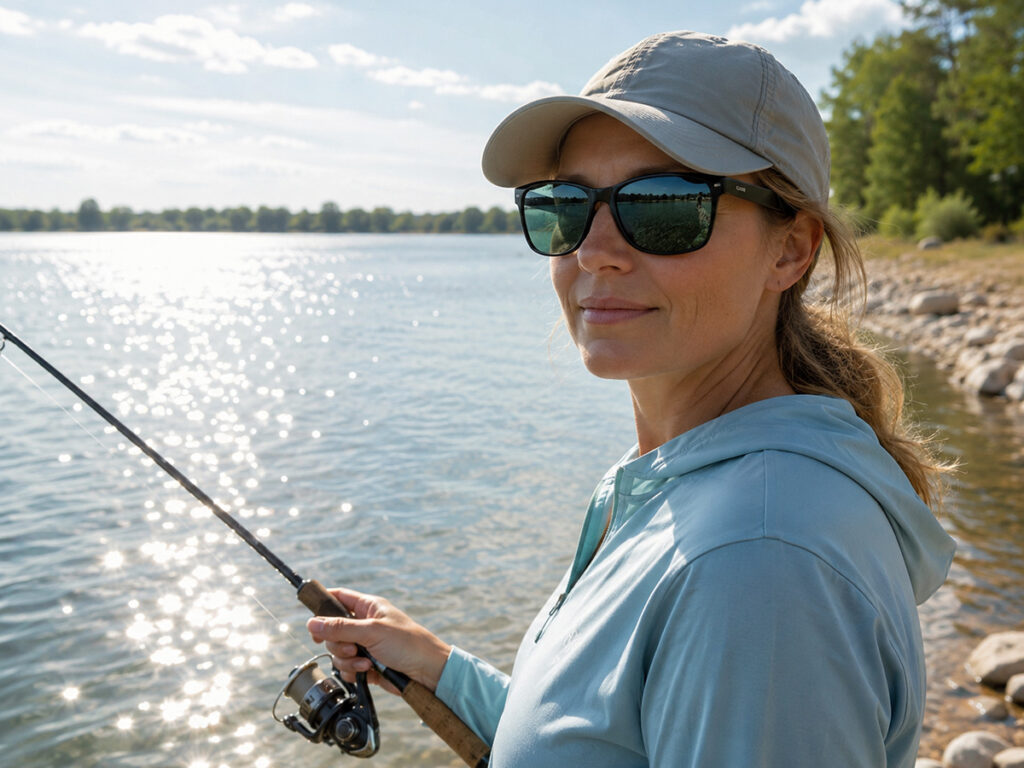
Polarized sunglasses are particularly useful for fishing because they reduce glare reflected from the water surface.
Strong surface glare can make it difficult to see details in or around the water. Polarization improves visual comfort by reducing much of that reflected light.
Suitable lens colors include:
-
Brown or tea: Enhances perceived contrast in variable light.
-
Green: Provides a balanced outdoor visual effect.
-
Gray: Maintains relatively neutral color perception.
-
Mirror over a polarized base: Useful in bright open-water conditions.
Are Standard TAC Lenses Suitable for Fishing?
Yes. Standard 0.74 mm and 1.1 mm TAC polarized lenses are suitable for recreational fishing, boating, and general outdoor collections.
Their main advantages are:
-
Lightweight comfort
-
Effective glare reduction
-
Competitive factory cost
-
Broad color options
-
Suitability for fashion and outdoor frames
However, professional fishing products may face greater impact, bending, or drop risks. In these cases, a 1.5 mm PC-based lens with TAC polarizing film provides stronger structural support.
Are Standard TAC Lenses Suitable for Running and Sports?
Standard TAC polarized lenses can work for light exercise, but they are generally not designed for professional or high-impact sports environments.
A sports lens must do more than reduce glare. It should also remain secure during movement and resist accidental impact.
Standard TAC Can Work for
-
Walking
-
Casual outdoor exercise
-
Light jogging
-
Travel
-
Low-impact fitness
-
Fashion-sport collections without professional claims
A 1.1 mm TAC lens may provide a more substantial structure than a thinner 0.74 mm option, but it should not automatically be treated as a professional impact lens.
Use 1.5 mm PC-Based Polarized Lenses for
-
Professional running
-
Trail running
-
Cycling
-
Ball sports
-
Fast-moving outdoor activities
-
Water sports
-
Products requiring stronger lens retention
The PC base provides the primary impact-resistant structure, while the TAC polarizing film provides glare reduction. Therefore, the PC-based lens does not lose TAC polarization. It combines the two material functions.
Frame Design Also Matters
For active sports, buyers should confirm:
-
Secure temple grip
-
Stable nose support
-
Suitable wraparound coverage
-
Lens-retention strength
-
Controlled frame weight
-
Sweat-resistant contact areas
A strong lens installed in an unstable fashion frame will not create a reliable sports product.

Are Polarized Sunglasses Suitable for the Beach?
Polarized sunglasses are well suited to the beach because both water and sand can create strong reflected glare.
For normal beach use, TAC lenses offer a useful combination of comfort, fashion flexibility, and cost-performance.
Standard TAC Is Suitable for
-
Relaxing on the beach
-
Walking beside the shoreline
-
Resort travel
-
Outdoor cafés
-
General seaside sightseeing
-
Fashion beach collections
A 0.74 mm or 1.1 mm TAC polarized lens can be paired with:
-
Gray, brown, green, or gradient colors
-
Mirror treatments
-
Hydrophobic treatments
-
Oleophobic treatments
-
Fashion cat-eye, square, or aviator frames
When a PC-Based Lens Is Better
A 1.5 mm PC-based polarized lens with TAC film is more suitable for:
-
Surfing
-
Paddleboarding
-
Jet skiing
-
Beach volleyball
-
Fast water activities
-
Products with greater impact or drop risk
The product should also use a secure frame structure. A professional water-sports lens should not be installed in a loose or overly decorative frame.
Are Polarized Sunglasses Good for Hiking and Outdoor Use?
Polarized sunglasses work well for many hiking and outdoor situations, but the required lens structure depends on how technical the activity is.
Standard TAC polarized lenses are practical for:
-
Park walking
-
Day hiking
-
Camping
-
Outdoor travel
-
Sightseeing
-
General leisure use
A 1.5 mm PC-based structure is more suitable for:
-
Technical hiking
-
Climbing
-
Rough trails
-
High-movement outdoor activity
-
Situations with a higher risk of drops or impact
Lens color should also match the environment:
-
Gray: Bright conditions and neutral color perception
-
Brown: Stronger perceived contrast
-
Green: Balanced general outdoor use
-
Mirror coating: Intense sunlight and exposed environments
Are Polarized Sunglasses Necessary for Shopping?
Polarized lenses can improve comfort during city wear, but they are not essential for every shopping or fashion situation.
Polarization is useful when the wearer encounters:
-
Bright pavement
-
Vehicle reflections
-
Glass buildings
-
Outdoor shopping streets
-
Waterfront retail areas
-
Strong midday sunlight
However, a non-polarized fashion lens may be sufficient when the product is used mainly:
-
Indoors
-
For short city trips
-
In low-glare conditions
-
For fashion photography
-
Around digital screens
Polarized lenses can make some LCD screens appear darker at certain angles. This does not indicate a defective lens, but frequent phone or dashboard users may notice the effect.
Is TAC Suitable for Shopping and City Wear?
Yes. Standard TAC polarized lenses are highly suitable for lifestyle collections because they provide:
-
Lightweight comfort
-
Competitive cost
-
Multiple lens-color options
-
Broad compatibility with fashion frames
-
Effective glare reduction for everyday outdoor use
This is one of the clearest situations where a heavier-duty PC-based sports construction may add cost without providing a meaningful consumer benefit.
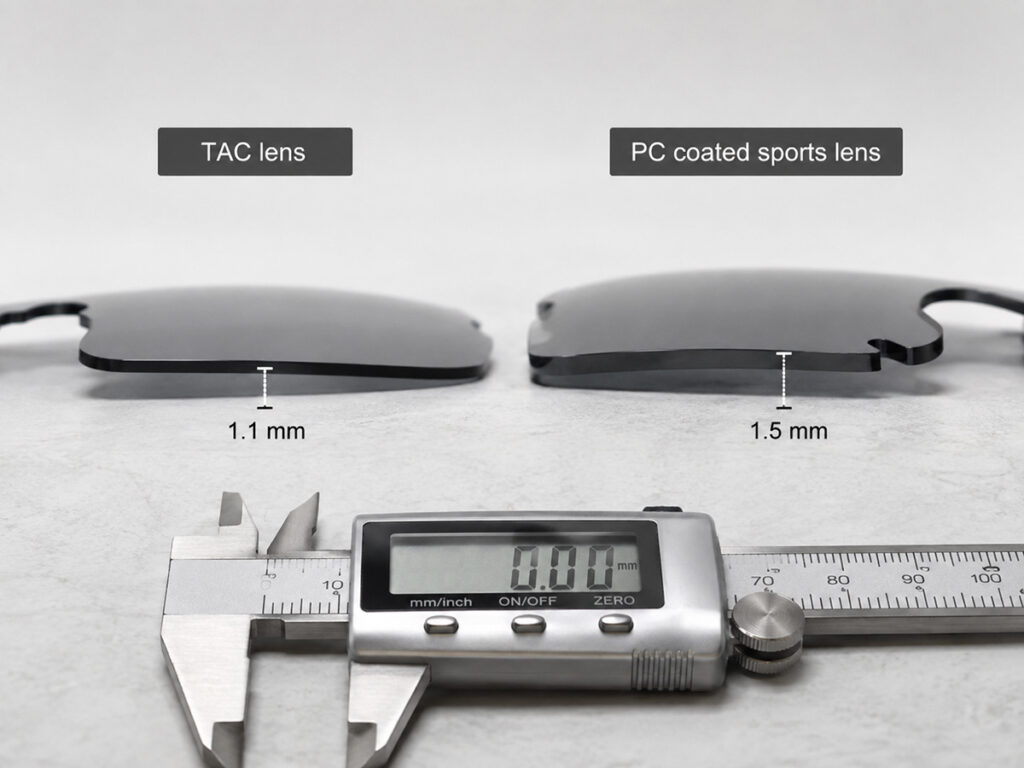
TAC Polarized Lens Thickness: 0.74 mm vs 1.1 mm vs 1.5 mm PC-Based Lens
Lens thickness and base material affect strength, cost, weight, frame compatibility, and intended use.
| Lens Structure | Typical Thickness | Main Advantage | Main Limitation | Suitable Applications |
| Standard TAC polarized lens | 0.74 mm | Very lightweight and cost-effective | General impact resistance | Fashion, shopping, beach leisure, promotional programs |
| Standard TAC polarized lens | 1.1 mm | More substantial than thinner TAC while remaining light | Not intended for professional impact environments | Driving, fishing, travel, general outdoor use |
| PC-based lens with TAC polarizing film | 1.5 mm | Higher impact resistance with polarization | Higher cost and potentially more weight | Cycling, professional running, water sports, ball sports, rugged outdoor use |
Thickness alone does not define final performance. Buyers should also consider:
-
PC material grade
-
Polarizing-film construction
-
Lens curvature
-
Molding quality
-
Coating system
-
Lens shape
-
Frame retention
-
Required finished-product testing
Does Every Scene Need Polarization?
No. Polarization provides the most value when reflected glare is a meaningful part of the activity.
Strong Use Cases
-
Fishing
-
Boating
-
Beach use
-
Driving
-
Waterfront travel
-
Wet roads
-
Bright outdoor environments
Optional Use Cases
-
Shopping
-
Short city walks
-
Fashion-first products
-
Shaded outdoor use
-
Low-glare leisure activities
Situations Requiring More Consideration
-
Frequent LCD-screen use
-
Professional sports
-
Very low-light conditions
-
Activities requiring certified impact protection
-
Products subject to specific safety standards
Polarization should be presented as a functional benefit, not as proof that a product is suitable for every sport.
How Should B2B Buyers Build a Women’s Polarized Collection?
A strong B2B collection should use different polarized lens structures for lifestyle, fishing, beach, and professional sports products.
A practical assortment may include:
-
Shopping and fashion: 0.74 mm or 1.1 mm TAC in gray or brown
-
Beach and travel: Standard TAC with mirror or hydrophobic treatment
-
Recreational fishing: 1.1 mm TAC in brown, green, or gray
-
Professional fishing: 1.5 mm PC-based polarized lens
-
Casual hiking: Standard TAC
-
Technical outdoor use: 1.5 mm PC-based polarized lens
-
Light jogging: 1.1 mm TAC where impact requirements are moderate
-
Cycling and professional running: 1.5 mm PC-based lens with TAC polarizing film
The commercial rule is simple:
-
Use standard TAC where weight, style, general glare control, and cost-performance are the main priorities.
-
Use the PC-based structure where impact resistance, sports positioning, and demanding durability are more important.
How Zhantai Selects Polarized Lens Structures
Zhantai selects polarized lenses according to use, impact risk, frame design, target cost, and required testing rather than offering one standard lens for every order.
Our development process is:
-
Confirm whether the sunglasses are intended for lifestyle, fishing, beach, driving, outdoor use, or professional sports.
-
Evaluate the expected impact and movement risk.
-
Select 0.74 mm TAC, 1.1 mm TAC, or a 1.5 mm PC-based polarized structure with TAC film.
-
Confirm the lens color and light-transmission requirements.
-
Match the lens curvature to the frame.
-
Select mirror, hydrophobic, oleophobic, or other treatments.
-
Check lens retention and fitting pressure.
-
Produce finished samples.
-
Inspect polarization, lens stress, frame fit, and surface quality.
-
Approve the bulk QC standard.
Buyers can review Zhantai’s sunglasses product range when selecting frame platforms for polarized development. For more information about factory inspection, visit our quality management page.
Conclusion: Choose the Lens Structure by Activity
The best polarized sunglasses for women should use a lens structure that matches the actual wearing environment.
Standard 0.74 mm and 1.1 mm TAC polarized lenses are practical for shopping, beach leisure, driving, recreational fishing, travel, and general outdoor use. They provide lightweight comfort, glare reduction, and competitive factory cost, but their impact resistance is normally limited.
For professional cycling, running, ball sports, water sports, or other higher-impact environments, a 1.5 mm PC-based lens with a TAC polarizing film is usually the better solution. The PC base provides stronger impact resistance, while the TAC film maintains the required polarization function.
The correct decision is therefore not simply “TAC or PC.” It is:
Choose the right polarizing structure, base material, thickness, frame design, and testing standard for each use scenario.
Developing a women’s polarized sunglasses collection? Send Zhantai your target activity, frame reference, quantity, market, and price level. Contact our factory team to request the latest catalog, develop samples, or receive a customized OEM/ODM quotation.
FAQ
Are 0.74 mm TAC Polarized Lenses Suitable for Professional Sports?
Generally, no. They are lightweight and cost-effective, but their impact performance is usually not suitable for professional sports environments.
Are 1.1 mm TAC Polarized Lenses Good for Fishing?
Yes. They are suitable for recreational fishing, driving, travel, beach use, and general outdoor products.
Do PC-Based Lenses Have TAC Polarization?
Yes. A PC-based polarized lens can use a TAC polarizing film, combining glare reduction with greater impact resistance.
When Should Buyers Use a 1.5 mm PC-Based Polarized Lens?
For professional running, cycling, ball sports, active water sports, rugged outdoor use, and other environments with higher impact risk.
Is PC Always Better Than Standard TAC?
No. PC provides higher impact resistance, but standard TAC often offers a better balance of weight, cost, and styling flexibility for fashion and leisure collections.