In the competitive retail landscape of 2026, a consumer’s relationship with your eyewear brand begins long before they actually try the glasses on. The initial interaction happens the moment they pick up the box. For international supermarkets, department stores, and fast-fashion chains, the unboxing experience serves as a critical silent salesperson.
High-quality custom sunglasses packaging communicates brand value, justifies retail pricing, and fundamentally protects your product during complex global shipping routes. If you sell a premium, high-gloss Tortoise frame, handing it to a customer in a flimsy, unbranded plastic bag instantly destroys the perceived value of the product.
To maximize your return on investment and build genuine brand loyalty, you must treat your packaging as an extension of the product itself. This comprehensive guide details the different types of boxes and cases available, explores high-impact branding techniques, and explains exactly how to partner with an expert eyewear packaging manufacturer to optimize your retail supply chain.
The Psychology and Strategy of the Unboxing Experience
Before we look at materials, we must understand the strategic function of packaging in a high-volume retail environment. Packaging serves three mandatory purposes: Protection, Presentation, and Identity.
Protecting the Asset
First and foremost, packaging must defend the product. Eyewear shipments endure a rigorous journey from the factory floor to the international distribution center, and finally to the retail shelf. Drops, vibrations, and extreme temperature shifts happen constantly. Proper packaging prevents heavy metal frames from bending and stops lenses from scratching against each other.
Driving the Impulse Purchase
In environments like fast-fashion outlets or supermarket checkout aisles, consumers frequently make impulse purchases. A shopper might not plan to buy sunglasses, but an eye-catching, well-designed box grabs their attention. Premium packaging elevates the product from a basic utility item to a desirable luxury accessory, compelling the shopper to complete the purchase.
Establishing Brand Identity
Your packaging tells the consumer exactly who you are. A sleek, matte-black rigid box with minimal typography communicates modern luxury. A brightly colored, transparent plastic tube communicates youthful energy and festival fashion. By aligning your custom sunglasses packaging with your target demographic, you solidify your brand identity in the consumer’s mind.
Choosing the Right Custom Sunglasses Packaging
Brands have access to a vast array of packaging configurations. Selecting the right combination depends entirely on your product type, your retail price point, and your shipping logistics.
The Outer Shell: Rigid Boxes vs. Folding Cartons
Rigid Setup Boxes Luxury brands heavily favor rigid boxes. Manufacturers construct these boxes from thick, high-density paperboard wrapped in premium textured paper.
-
The Advantage: They offer the ultimate premium unboxing experience. They feel heavy, substantial, and expensive. Consumers rarely throw them away, often repurposing them for storage.
-
The Drawback: They take up a massive amount of physical space. Because they do not fold flat, you pay to ship “empty air” from the factory to your warehouse, which increases freight costs.
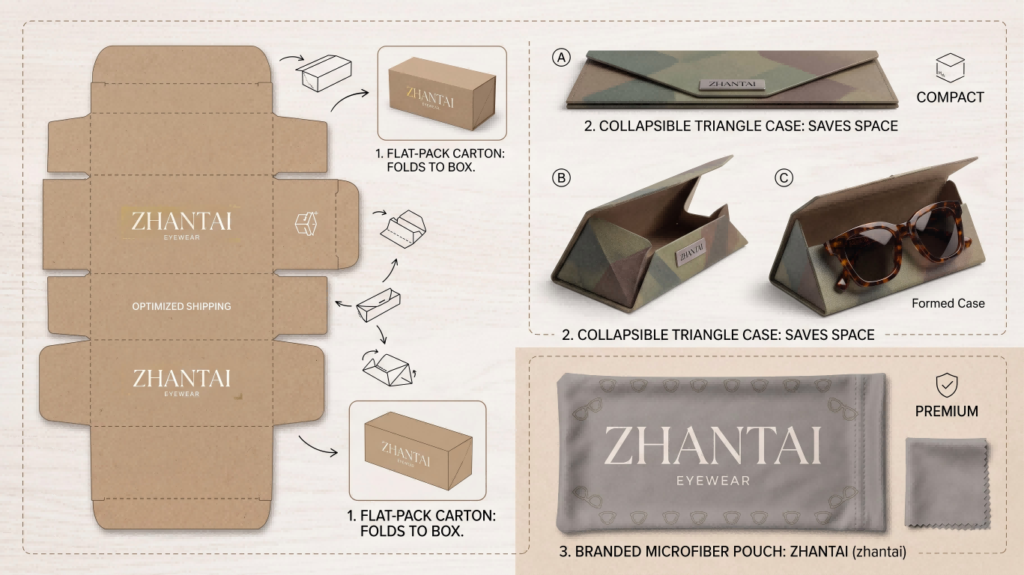
Folding Cartons (Cardboard Boxes) Fast-fashion brands and supermarkets rely heavily on folding cartons. Factories print these boxes on flat, durable cardstock.
-
The Advantage: They ship completely flat. A warehouse team simply pops them into shape during the final assembly process. This dramatically reduces volumetric shipping weight and freight costs, making them highly profitable for large-scale operations. Modern printing techniques ensure these flat-pack boxes still look vibrant and professional.
The Protective Core: Eyewear Cases
The case sits inside the box and provides the primary physical defense for the frame.
EVA Hard Cases (The Sports Standard) Ethylene Vinyl Acetate (EVA) is a dense, shock-absorbing foam. Manufacturers mold EVA into highly durable zip-up hard cases. If you sell wrap-around TR90 sports frames or oversized shields, an EVA case is mandatory. It absorbs severe impacts, ensuring the glasses survive drops and rough handling in gym bags or backpacks.
Collapsible Triangle Cases This is the most innovative packaging solution in the modern eyewear market. These cases feature a rigid, faux-leather exterior and a velvet interior. When holding the glasses, they form a protective triangular prism. However, when the consumer removes the glasses, the case folds completely flat, slipping easily into a pocket or small purse.
-
The Logistics Win: Just like folding cartons, collapsible triangle cases ship flat from the manufacturer, saving brands thousands of dollars in international freight costs.
Soft Microfiber Pouches Every pair of sunglasses should include a microfiber pouch. This serves a dual purpose: it protects the frame from minor scratches and doubles as a premium cleaning cloth. If you sell clear or transparent frames, the lenses and the high-gloss plastic frames require frequent wiping to remove fingerprints. A branded microfiber pouch ensures the consumer always has a safe cleaning tool on hand.
High-Impact Branding and Finishing Techniques
A plain white box does nothing for your brand. To command attention on a retail shelf, you must utilize professional branding techniques. A premier eyewear packaging manufacturer offers several sophisticated finishing options to make your logo pop.
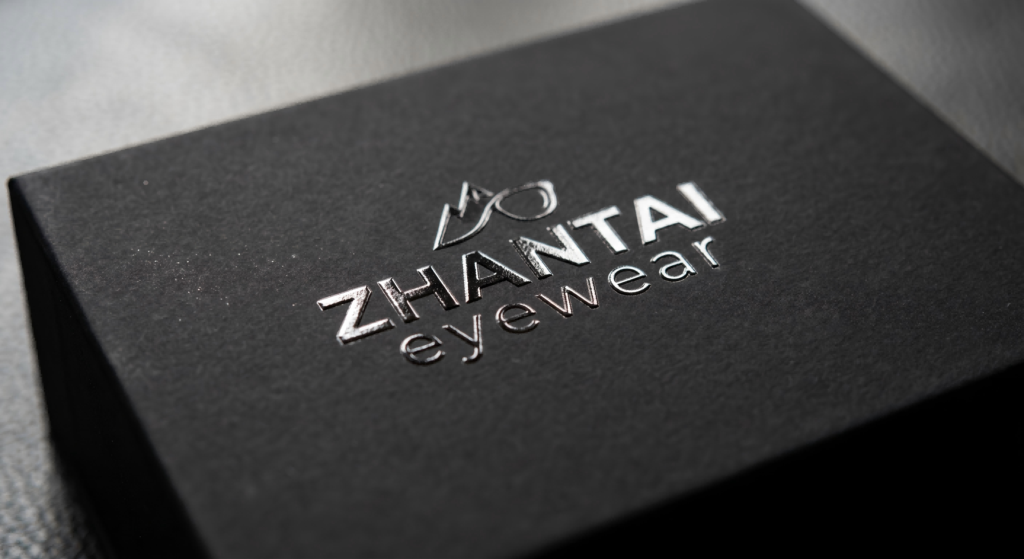
Hot Foil Stamping
This technique uses heat and pressure to apply a thin layer of metallic foil (usually gold, silver, or rose gold) to the surface of the box or the leather case. Hot stamping provides a highly reflective, luxurious finish that catches the retail lighting perfectly. It pairs exceptionally well with classic Tortoise frames, bridging the gap between traditional elegance and modern retail.
Embossing and Debossing
Visuals matter, but tactile feel creates a lasting memory.
-
Embossing pushes your logo outward from the material, creating a raised, 3D effect you can feel with your fingertips.
-
Debossing presses the logo down into the material, creating a sharp, indented impression. Both techniques add significant perceived value to rigid boxes and faux-leather cases without requiring flashy colors.
Spot UV Coating
If you prefer a minimalist aesthetic, Spot UV is the ultimate choice. The manufacturer applies a clear, high-gloss liquid coating exclusively to your logo, leaving the rest of the box in a flat matte finish. When the light hits the box, the logo shines brilliantly against the matte background. This creates a highly sophisticated, modern contrast.
Screen Printing and Pad Printing
For microfiber pouches and EVA sports cases, screen printing remains the industry standard. It forces thick, durable ink through a mesh stencil directly onto the fabric or foam. It produces crisp, vibrant colors that withstand heavy daily use without peeling or fading.
Aligning Packaging with Supply Chain Logistics
Many new retail buyers make the critical mistake of designing beautiful packaging without considering the logistical realities of global freight.
Shipping carriers charge based on “volumetric weight”—meaning they charge you for the physical space your cargo takes up on the airplane or shipping vessel, not just the actual scale weight. If you design a massive, non-collapsible rigid box for a standard pair of reading glasses, your shipping costs will completely obliterate your profit margins.
The Turnkey Manufacturing Advantage
The most efficient way to manage this risk is to consolidate your supply chain. Instead of ordering frames from one factory and boxes from another, you must partner with an eyewear packaging manufacturer that also produces the glasses.
When a single manufacturer handles the entire project—from injection molding the TR90 frames to printing the folding cartons—they ensure perfect synchronization.
-
Precision Fit: The factory engineers design the inner dimensions of the case to precisely match the exact millimeter measurements of the frames. Your oversized butterfly frames will never arrive in cases that are too small to zip shut.
-
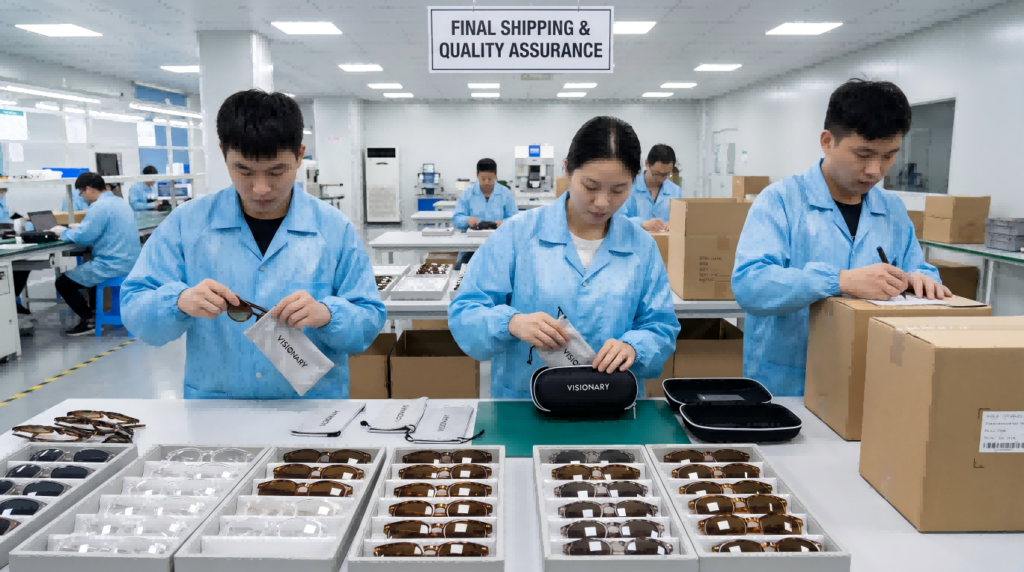
Streamlined Assembly: The factory workers place the finished glasses into the pouches, put the pouches into the cases, and pack everything into the final retail boxes before the shipment ever leaves the loading dock. You receive fully assembled, retail-ready units.
What to Look for in an Eyewear Packaging Manufacturer
When your procurement team evaluates a manufacturing partner to handle both your eyewear and your custom sunglasses packaging, you must demand excellence across several operational pillars.
Robust OEM/ODM Capabilities
You need a partner that translates your branding guidelines into physical reality. A top-tier manufacturer will assign dedicated engineers to develop your packaging structures. They will provide digital mockups and physical prototypes of your boxes and cases, allowing your team to test the unboxing experience before committing to mass production.
High-Volume Scalability (The MOQ Standard)
Retail success relies on economies of scale. To secure the aggressive unit pricing required to dominate the fast-fashion and supermarket sectors, your manufacturer must operate high-capacity production lines.
Professional manufacturers optimize their printing presses, foil stamping machines, and case assembly lines to support high-volume output. To guarantee this production efficiency and protect your B2B profit margins, premier factories operate with a strict Minimum Order Quantity (MOQ) of 1200 units per style. This volume ensures that the setup costs for your custom molds and printing plates spread out effectively, delivering the best possible ROI.
Strategic Global Logistics (The Wenzhou & Thailand Synergy)
Navigating international trade routes requires a resilient supply chain. Relying on a manufacturer confined to a single geographic location exposes your retail operation to shipping delays and regional export tariffs.
Leading manufacturers mitigate these risks through diversified production hubs. By operating a headquarters in Wenzhou—the historic heart of optical manufacturing—alongside a state-of-the-art facility in Thailand, a manufacturer provides immense strategic flexibility. This dual-hub approach allows global brands to bypass specific regional tariffs and streamlines direct freight shipping to distribution centers across the Americas and Europe.
Conclusion
Your product does not exist in a vacuum. In the highly competitive 2026 retail market, custom sunglasses packaging serves as the critical bridge between your brand’s promise and the consumer’s physical experience. By selecting the right combination of collapsible cases, branded microfiber pouches, and high-impact finishing techniques like Spot UV or hot foil stamping, you instantly elevate your product’s perceived value and drive impulse purchases.
Furthermore, by managing the volumetric weight of your packaging and consolidating your supply chain, you protect your profit margins against rising global freight costs.
At Zhantai Glasses, we do not just manufacture exceptional eyewear; we engineer complete retail solutions. As a premier eyewear packaging manufacturer, we synchronize the production of your transparent TR90 frames and classic Tortoise designs perfectly with your custom packaging requirements. Leveraging our deep Wenzhou expertise, our strategic Thailand production capabilities, and our commitment to flawless execution at an MOQ of 1200 units, we deliver the fully assembled, retail-ready products your brand needs to dominate the market.