Every year, parents spend billions of dollars on orthodontic braces, pediatric health checkups, and safety gear for their children. Yet, until recently, millions of parents overlooked one critical area: protecting their children’s eyes from intense solar radiation while correcting their vision.
In the past, parents forced children who wore prescription eyeglasses to make a frustrating compromise. They either bought cheap, non-prescription novelty sunglasses from toy stores—leaving their children functionally blind in the sun—or they kept them in clear eyeglasses, exposing their developing eyes to dangerous ultraviolet radiation.
Today, parental awareness has triggered a massive market surge. Pediatric kids prescription sunglasses have transitioned from a tiny optical sub-category into one of the most profitable, fast-growing segments in B2B eyewear sourcing.
However, manufacturing pediatric optical eyewear presents a unique engineering challenge. You are not simply shrinking an adult frame. You are designing a medical device that must also withstand the destructive abuse of the playground, survive strict chemical compliance audits, and protect an ocular system that remains exceptionally vulnerable to sunlight.
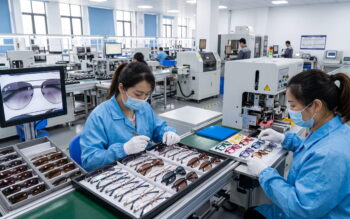
At Wenzhou Zhantai Glasses Co., Ltd., we build high-performance frames from the mold up. In this factory-direct guide, we explain the engineering, materials, and international safety compliance required to manufacture market-leading kids prescription sunglasses.
The Pediatric Ocular Vulnerability: Why Quality Matters
To successfully market and design pediatric eyewear, you must understand child biology.
The crystalline lens inside an adult eye naturally yellows over time, filtering out a significant amount of ultraviolet light. In contrast, an infant or young child possesses an almost crystal-clear crystalline lens. As a result, approximately 70% to 80% of a human’s lifetime ocular UV exposure occurs before the age of 18. Excessive sunlight penetrates straight to the child’s retina, increasing the long-term risk of cataracts, photokeratitis, and macular degeneration.
Furthermore, children spend significantly more time outdoors than adults. When an optometrist prescribes corrective lenses for myopia (nearsightedness) or hyperopia (farsightedness), those children need that exact prescription outdoors where they run, climb, and play sports.
Offering high-performance kids prescription sunglasses gives your brand a powerful, health-focused narrative. You are not selling a mere fashion accessory; you are providing essential pediatric health equipment that parents gladly invest in.
Material Selection: Indestructible and Chemically Pure
Adults occasionally sit on their glasses; children actively twist, bend, chew, and throw them. If you use standard brittle plastics like cheap Polycarbonate (PC) or traditional hard acrylics, the frames will snap into sharp, hazardous shards within days.
When B2B buyers develop kids prescription sunglasses, we steer them toward three specialized material categories:
TPEE (Thermoplastic Polyester Elastomer)
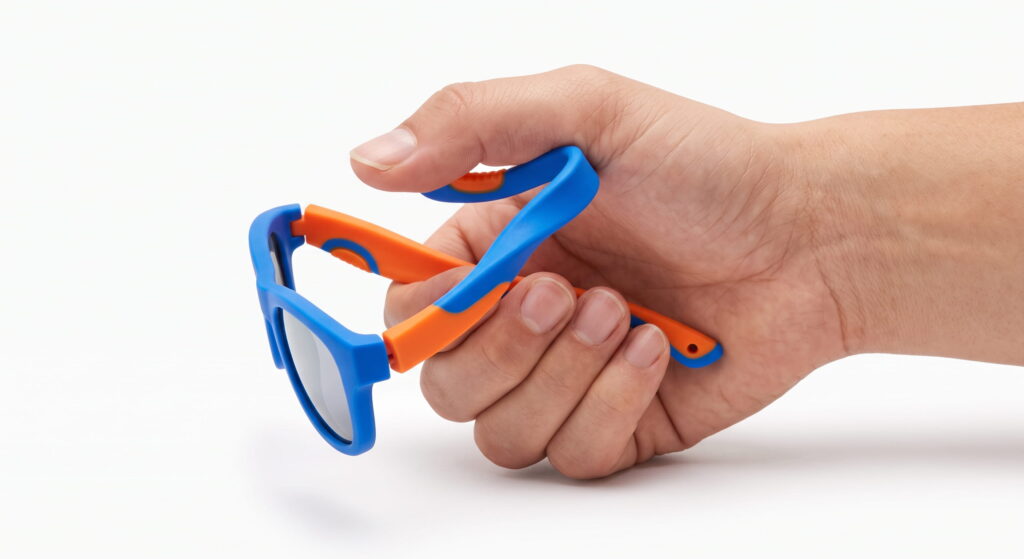
TPEE is the undisputed king of pediatric eyewear. This rubber-like polymer combines the strength of engineering plastic with the flexibility of rubber. You can twist a TPEE frame front a full 180 degrees, tie the temples in a knot, and step on the chassis. The material simply absorbs the impact and immediately returns to its original mold shape. TPEE is virtually indestructible, making it the safest choice for toddlers and active elementary school children.
Food-Grade Silicone and Bio-Nylon
Babies and toddlers explore the world with their mouths. If your frames contain toxic plasticizers, you face severe legal liabilities. We use certified food-grade, BPA-free silicone and bio-based nylons for the nose pads and temple tips. These materials feel soft against delicate skin, prevent slipping during sweat-heavy play, and remain completely non-toxic when a teething toddler chews on them.
TR90 (For Tweens and Teens)
As children grow into the tween demographic (ages 9 to 14), they often reject rubbery frames because they want to look like adults. For this segment, we utilize Swiss-grade TR90. It provides a sleek, polished aesthetic similar to high-end adult sports frames while offering the extreme memory flexibility and featherweight comfort required for youth athletics.
Pediatric Chassis Engineering: Safety-First Architecture
A child’s facial structure differs fundamentally from an adult’s. If you simply scale down an adult CAD file, the sunglasses will slide down the child’s nose and fall off constantly. Our engineers incorporate three vital structural adaptations into every pediatric frame:
-
Underdeveloped Nasal Bridges (Saddle Bridges): Young children lack a pronounced nasal bone. Their bridges are flat and wide. We design pediatric frames with deep, ergonomic “saddle bridges” or integrated soft-silicone nose pads that distribute the frame’s weight evenly across a flat nose, preventing painful pressure points.
-
180-Degree Screwless Flex Hinges: Tiny metal screws represent a severe choking hazard and a frequent point of mechanical failure. For children under six, we engineer screwless, interlocking flex hinges molded directly out of the TPEE material. For older kids, we utilize 180-degree outward-flexing spring hinges that prevent the arms from snapping when a child pulls the glasses off their face using only one hand.
-
Integrated Strap Attachments: We mold subtle anchor loops directly into the temple tips. This allows parents to clip an adjustable, elastic neoprene head-strap to the glasses, locking the kids prescription sunglasses securely in place during soccer games, playground tag, or trips to the beach.
Lens Technology: Impact Resistance is Non-Negotiable
When engineering kids prescription sunglasses, the lens material carries the highest safety liability. If a child takes a soccer ball directly to the face, the lens must not shatter into razor-sharp fragments.
CR-39 plastic and glass are strictly forbidden in pediatric eyewear manufacturing.
We mandate two specific materials for all children’s prescription sun lenses:
-
Optical-Grade Polycarbonate: Polycarbonate provides unmatched impact resistance. It is the same material used in bulletproof glass and riot shields. It bends and dents under catastrophic trauma rather than shattering into dangerous shards. Polycarbonate also possesses natural, built-in UV400 blocking capabilities, protecting children from 100% of UVA and UVB rays even before applying any surface treatments.
-
Trivex: For high-end boutique optical brands, we recommend Trivex. Trivex matches the shatterproof impact resistance of Polycarbonate but boasts a significantly higher Abbe value (45 vs. 30). This higher optical purity minimizes chromatic aberration (color fringing), providing hyper-sensitive young eyes with sharper, more comfortable vision.
The FDA Drop Ball Test (21 CFR 801.410)
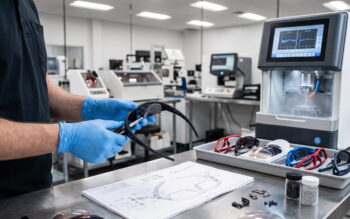
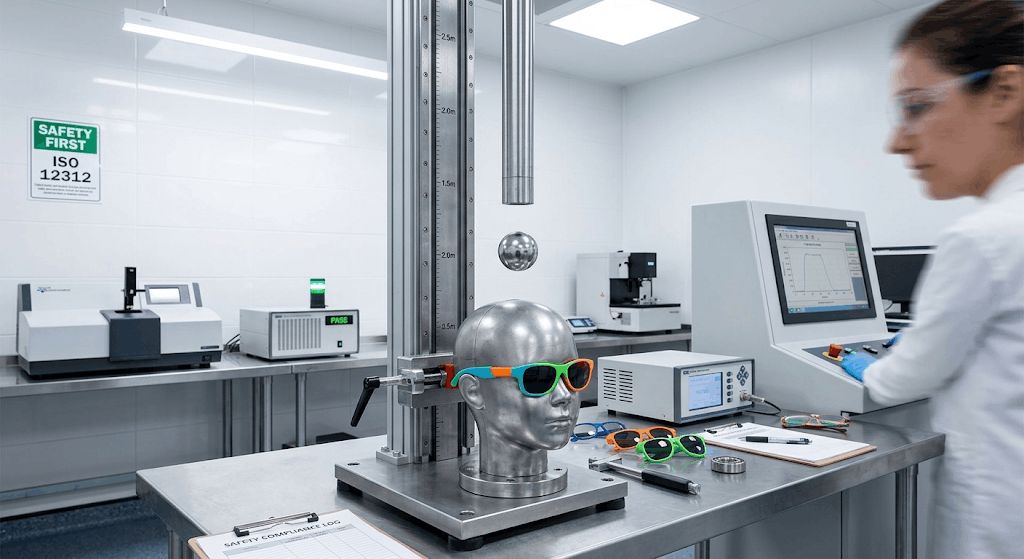
In our factory testing lab, our Quality Control team mounts finished pediatric lenses onto specialized test rigs and drops a 5/8-inch solid steel ball bearing from a height of 50 inches directly onto the optical center of the lens. Every single batch must pass this impact test without cracking, chipping, or dislodging from the frame bevel.
Overcoming RX Integration Challenges: Small PDs and Bevel Security
Grinding a medical prescription into small pediatric sunglasses introduces complex optical hurdles that many generalist factories fail to anticipate.
Managing Narrow Pupillary Distance (PD)
Children have much smaller pupillary distances (typically between 42mm and 52mm) compared to adults (60mm to 68mm). When our lab edges an adult-sized lens blank down to fit a small frame with a narrow PD, the optical center shifts drastically inward.
If the lab fails to calculate this decentration accurately, the lens induces an unwanted “prism effect.” The light bends incorrectly, forcing the child’s developing brain to strain to fuse the images, resulting in rapid eye fatigue, headaches, and dizziness. Our digital freeform edging software recalculates the optical center down to a fraction of a millimeter, ensuring that the prescription aligns perfectly with the child’s pupils.
Deep Safety V-Grooves
When an impact occurs from the front, a prescription lens must never pop backward toward the child’s eye. We machine our pediatric frames with an asymmetric, extra-deep internal V-groove. The back wall of the groove sits higher than the front wall. If a heavy impact strikes the lens, the physical architecture of the frame forces the lens to absorb the energy or pop outward, completely protecting the child’s eye from trauma.
International Safety Compliance and Chemical Testing
When you import kids prescription sunglasses, customs authorities and consumer safety agencies inspect your documentation far more aggressively than they do for adult fashion wear.
Your manufacturing partner must provide accredited laboratory testing certificates proving compliance with global child safety standards:
-
CPSIA (United States): The Consumer Product Safety Improvement Act strictly limits lead and phthalate content in children’s products. We formulate our raw polymers and color masterbatches to ensure zero detectable levels of toxic heavy metals, phthalates, or bisphenol compounds (BPA).
-
EN 71-3 (European Union): European authorities often classify eyewear intended for young children under strict toy safety standards. Our frames pass thorough saliva and sweat leaching tests, guaranteeing that children cannot extract toxic compounds if they suck on the temples.
-
California Proposition 65: We guarantee our paints, coatings, and plasticizers comply with California’s stringent chemical exposure thresholds, protecting your brand from predatory lawsuits.
B2B Sourcing Strategy: Dual-Injection and Packaging
To capture high-margin retail sales, your pediatric line must appeal to two different audiences simultaneously: the parent (who pays the bill and prioritizes safety) and the child (who wears the product and prioritizes fun).
-
Dual-Injection Colorways: Plain black frames bore children. At Zhantai, we utilize advanced dual-shot injection molding machines. We shoot two contrasting colors of molten TPEE into the same mold—for example, a matte navy-blue exterior with a bright lime-green interior. This creates vibrant, two-tone aesthetics without using any external paints that could chip or peel off over time.
-
Kid-Friendly Packaging Systems: Parents constantly worry about their kids losing their glasses. Provide complete, retail-ready kits. Include a semi-rigid EVA zippered hard-case with a carabiner clip (allowing the child to hook the case to their school backpack), an adjustable neoprene head-strap, and a fun, cartoon-printed microfiber cleaning cloth.
Conclusion: Partner with a Specialist
Building kids prescription sunglasses requires a zero-tolerance approach to quality control. A loose screw, a brittle plastic chassis, a misaligned optical center, or a non-compliant chemical coating can destroy an eyewear brand’s reputation overnight.
When you source pediatric eyewear, you must look past simple aesthetic mockups. Demand documented proof of CPSIA and EN 71 compliance, verify that your manufacturer utilizes shatterproof polycarbonate or Trivex lenses, and ensure their engineering team understands the delicate ergonomics of small nasal bridges and narrow pupillary distances.
At Wenzhou Zhantai Glasses Co., Ltd., we combine decades of high-volume manufacturing expertise with the clinical precision of medical-grade optical engineering. We help international brands develop durable, vibrant, and fully certified pediatric sunglass lines that pass every regulatory audit, withstand every playground adventure, and deliver the crystal-clear, sun-safe vision every child deserves.