Eyewear trends shift with every season. Bold neon colors fade from the runways, and extreme, experimental shapes often lose their novelty within a year. However, one aesthetic remains permanently anchored at the core of the global optical market: the Tortoise pattern.
For B2B optical buyers, wholesale distributors, and retail brand managers, predicting consumer demand requires careful market analysis. Stocking inventory is an investment, and dead stock destroys profit margins. Amidst constantly changing fashion cycles, maintaining a robust lineup of Tortoise eyewear is one of the few guaranteed strategies for achieving high sell-through rates and consistent return on investment.
But what makes this specific mottled pattern so enduring? And how do modern factories produce it at scale while maintaining a premium look? This guide explores the market dominance of tortoise acetate eyewear and exactly what you need to look for when partnering with a tortoise glasses frames manufacturer.
The Evolution of the Material: Why Acetate Wins
Historically, this distinct pattern was harvested from organic materials, a practice that was not only highly restricted but also resulted in fragile frames that dried out and cracked over time. Furthermore, organic materials were entirely unscalable for global commercial production.
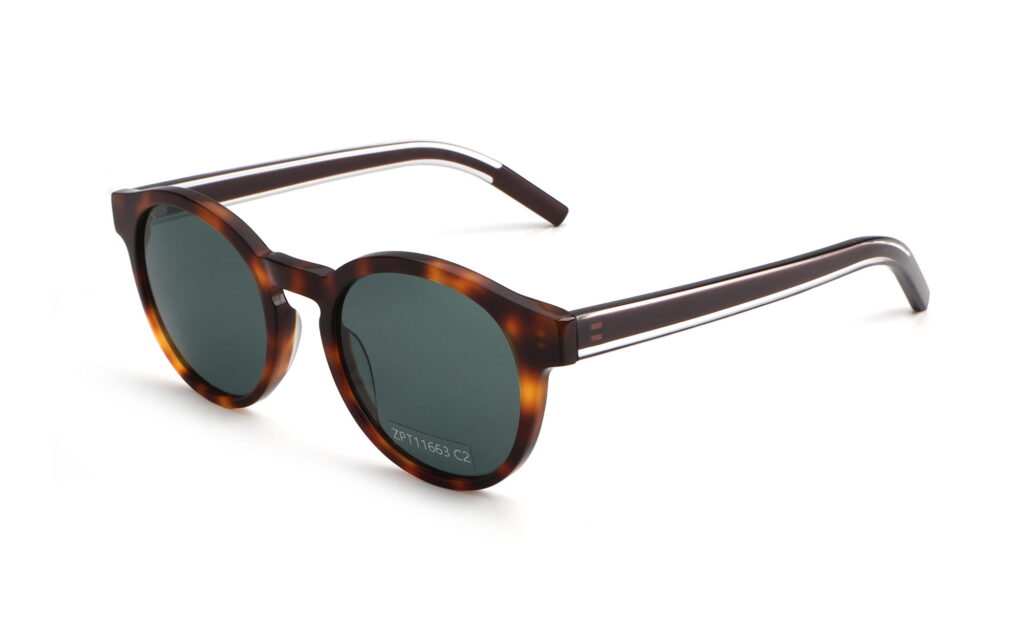
Today, the optical industry relies on a far superior engineering solution. Premium tortoise acetate eyewear delivers the deep, luxurious amber, brown, and honey tones of the classic pattern while offering exceptional mechanical advantages.
Acetate is a high-grade, cellulose-based polymer. Unlike basic injection-molded plastics, acetate is inherently hypoallergenic, making it universally safe for prolonged skin contact. It boasts excellent tensile strength, allowing frames to hold their shape perfectly while remaining flexible enough for optometrists to heat and adjust for a custom fit. Most importantly, acetate allows for a depth of color that cheaper materials simply cannot replicate.
Why Consumers (and Buyers) Consistently Choose Tortoise
Understanding the consumer psychology behind the pattern helps B2B buyers merchandise their collections more effectively. The demand for Tortoise frames does not stem from a temporary fad; it is built on universal design principles.
-
Universal Flattery Across Skin Tones
Standard black frames can sometimes look too harsh or severe on individuals with fair or warm complexions. Conversely, solid metal frames can wash out certain skin tones. The Tortoise pattern acts as a perfect visual bridge. The blend of warm browns, deep ambers, and subtle golden highlights complements virtually every human skin tone and hair color. It provides definition to the face without overpowering the wearer’s natural features.
-
The Ultimate Neutral Aesthetic
In the fashion industry, Tortoise operates as a “neutral.” Just like a classic navy suit or a tailored white shirt, a Tortoise frame pairs effortlessly with any wardrobe. Whether the end-user is wearing formal business attire or casual weekend wear, the frame adapts. This versatility makes it an easy daily choice for consumers, driving up the perceived value of the purchase.
-
A Gender-Neutral Foundation
Many eyewear colors skew heavily toward specific demographics, requiring brands to segment their inventory strictly. Tortoise is famously gender-neutral. A classic shape engineered in a Tortoise finish sells equally well in both the men’s and women’s optical categories. For wholesale buyers, this duality reduces inventory risk; a single well-designed Tortoise SKU can appeal to your entire customer base.
Inside the Factory: How a Tortoise Glasses Frames Manufacturer Operates
Creating high-quality tortoise acetate eyewear is a complex, multi-stage manufacturing process. B2B buyers must understand this process to distinguish between premium suppliers and low-tier factories.
Cheap discount glasses often use a process called surface printing—they mold a clear plastic frame and simply paint or print a Tortoise pattern onto the exterior. Within months of daily wear, the sweat and friction from the user’s face will cause this painted layer to chip and peel away, ruining the product and triggering warranty returns.
A professional tortoise glasses frames manufacturer builds the pattern into the material itself. Here is how the OEM production process works:
Step 1: Acetate Block Extrusion
The factory does not start with liquid plastic. They start with solid sheets of acetate. To create the Tortoise pattern, raw acetate is dyed in distinct batches—some dark brown, some amber, some clear. These different colored batches are chopped into pellets, mixed together, heated, and pressed through massive industrial rollers. The rolling process stretches and folds the colors together, creating that organic, mottled appearance. Because the pattern runs completely through the solid block, it can never scratch off or fade.
Step 2: Precision CNC Milling
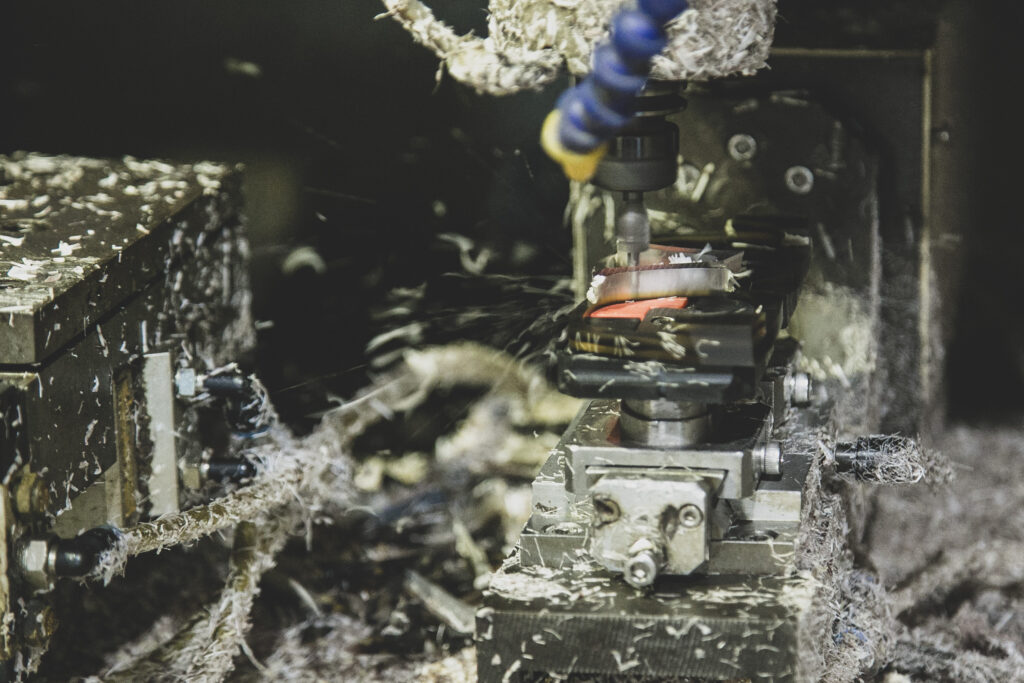
Once the factory receives the Tortoise acetate sheets, they load them into automated CNC (Computer Numerical Control) routing machines. The CNC machine cuts the frame fronts and the temples out of the solid sheet according to the precise 3D CAD design. This cold-carving process ensures extreme dimensional accuracy, guaranteeing that the lenses will snap into the grooves perfectly during final assembly.
Step 3: Wire Core Insertion
Because acetate becomes pliable when heated, the temples (the arms of the glasses) require internal reinforcement to maintain their shape. Technicians gently heat the carved Tortoise temples until they soften, then use a specialized machine to shoot a textured metal core wire straight down the center. This core wire allows the final user to bend and adjust the fit of the glasses behind their ears without snapping the frame.
Step 4: Tumbling and Hand Polishing
Fresh off the CNC machine, the cut frames have sharp, rough edges. The factory loads the raw frames into large tumbling barrels filled with wood pegs, bamboo chips, and polishing pastes. The frames tumble for up to 72 hours, slowly grinding away the harsh machining marks.
Finally, highly skilled artisans take the frames to a spinning buffing wheel. They apply polishing wax and hand-buff every angle of the Tortoise frame until the material achieves a flawless, glass-like high gloss. This hand-polishing step is what brings the deep amber colors to life, giving the frame its luxury retail appeal.
Scaling Your Collection: Sourcing and Volume
When expanding your eyewear brand’s catalog, partnering with the right manufacturing facility is the key to maintaining quality while controlling costs. The complexity of CNC routing, wire insertion, and hand-polishing requires significant factory setup and calibration for each specific design.
To optimize the manufacturing line and keep unit costs competitive for B2B clients, a professional tortoise glasses frames manufacturer typically structures production around a standard 1,200-unit minimum order quantity (MOQ).
This volume is the industry sweet spot. It allows the factory to source premium, consistent batches of raw Tortoise acetate directly from material suppliers, ensuring color uniformity across your entire order. It also justifies the rigorous quality control protocols required at the end of the assembly line—where inspectors check hinge alignment, frame symmetry, and polish quality before export packaging.
By committing to standard manufacturing volumes, optical brands can secure the precise engineering and high-end finishing required to compete in the global retail market.
Conclusion
Fashion trends are inherently unpredictable, but the demand for classic, well-engineered eyewear remains constant. The Tortoise pattern has survived decades of shifting aesthetics because it solves fundamental consumer needs: it flatters all skin tones, matches any wardrobe, and projects an aura of premium quality.
For optical buyers and brand developers, investing in tortoise acetate eyewear is a foundational business strategy. By avoiding cheap surface-printed plastics and partnering with a dedicated tortoise glasses frames manufacturer that utilizes true CNC acetate carving and rigorous hand-polishing, you guarantee a product that looks luxurious, feels robust, and consistently drives retail sales year after year.