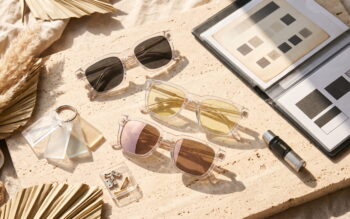
Buying trendy sunglasses successfully means matching fashion appeal with customer demand, feasible construction, verified lens performance, and a workable total cost. Start with your audience and sales channel, then translate visual inspiration into clear specifications. Evaluate physical samples for fit and assembly, compare quotations on equal terms, and document approval requirements before production. A strong collection needs more than an attractive photograph: it needs products your supplier can manufacture consistently and your customers will want to wear.
Key Takeaways
Effective wholesale selection connects design appeal with product specifications, sample evaluation, and commercial requirements.
- Choose trends for your customers. Use fashion coverage for inspiration, then assess styles against your sales history, customer feedback, and market positioning.
- Turn images into specifications. Define dimensions, materials, lenses, colors, and branding before comparing quotations.
- Evaluate the complete product. Appearance, fit, construction, and documented lens performance all contribute to purchasing value.
- Approve before scaling. Establish a physical reference sample, written specifications, and agreed production acceptance criteria.
What Makes Trendy Sunglasses Worth Adding to Your Collection?
A style deserves consideration when its appearance suits your customers and its specifications support your price, quality, and delivery requirements.

Match the Style to Your Target Customer
The right style connects a recognizable fashion direction with your customer’s preferences, wearing habits, and spending range. Start by defining who will buy the product and where they will wear it. A statement frame for a fashion boutique may need different proportions, colors, and detailing from everyday sunglasses sold through a broad retail chain.
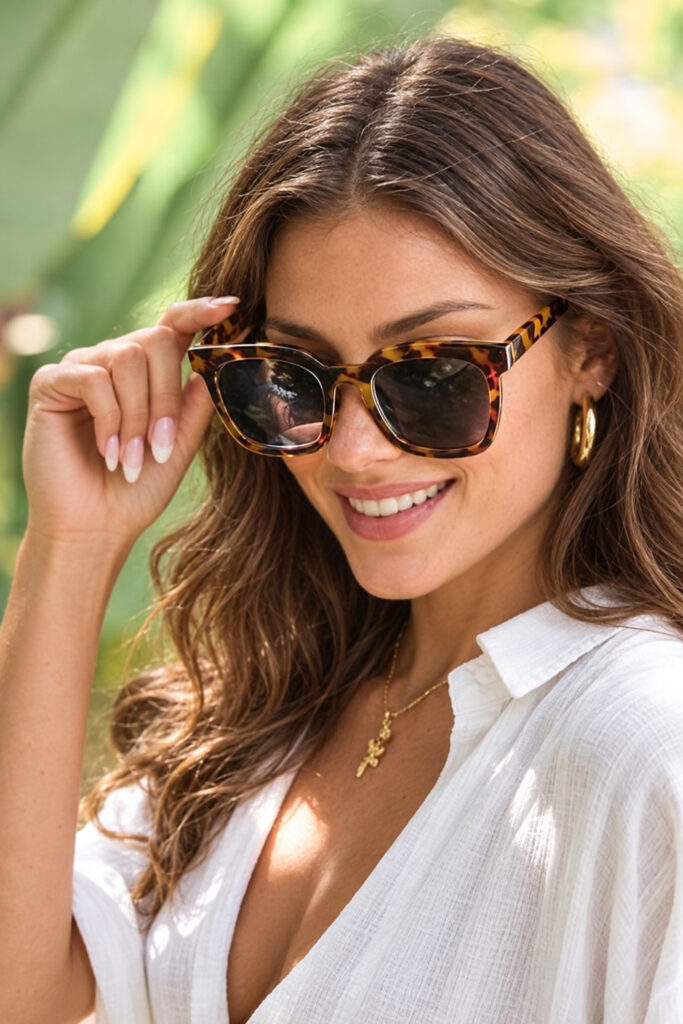
Tortoiseshell illustrates why buyers should look beyond a general color name. A dense arrangement of small dark-brown and amber markings creates a different visual effect from larger, irregular patches with translucent honey-colored areas. The first can appear darker and more uniform from a distance. The second can reveal more variation and a softer, more organic appearance.
The change you describe, from tightly packed markings toward more natural-looking color variation, is useful as a design-development direction rather than a universal replacement of older patterns. Dense and open patterns can coexist within the market. For example, MOSCOT’s tortoiseshell collection includes distinct color options such as Tortoise, Blonde, and Tobacco, illustrating why “tortoiseshell” alone is not a precise purchasing specification.
For a practical collection comparison, imagine the same square frame in two versions. One uses a dark base with closely spaced amber flecks and gray lenses. The other uses a translucent caramel base, larger brown patches, and brown gradient lenses. The silhouette remains familiar, but the overall impression changes considerably. These are useful sample-development options, not predictions that one will automatically outsell the other.
Also consider how customers discover the product. Online shoppers initially judge photographs, so subtle pattern differences must remain visible in product images. Store customers can immediately assess transparency, weight, and fit. Check samples under consistent lighting and on the face, because a pattern photographed against a white background may look darker when worn.
For tortoiseshell orders, specify the base color, patch size, pattern density, contrast, and translucency, then approve a physical reference. Agree on acceptable variation rather than assuming every frame will reproduce an identical arrangement.
Separate Fashion Visibility from Evidence of Demand
Fashion visibility identifies ideas worth investigating; sales and customer feedback help determine whether those ideas suit your business. Editorial coverage, social media, and AI-generated concepts can reveal appealing combinations, but they do not establish your likely order volume.
Suppose your current best-selling frame uses dense, dark tortoiseshell. You notice growing interest among your customers in lighter, more irregular patterns. Rather than replacing the existing version immediately, request the same frame in both finishes. Keeping the shape consistent makes it easier to evaluate whether customers prefer the new color treatment.
When testing, also control the lens configuration where possible. If you change the frame pattern, lens tint, silhouette, and price at the same time, you will have less confidence about what influenced the result.
The same principle applies to oversized frames. A bold design may attract attention in photographs, while sample feedback reveals cheek contact or excessive temple pressure. In that case, the visual direction may still be useful, but the dimensions need adjustment before purchasing.
Review sales by model and color, customer questions, and return reasons where available. Distinguish interest from completed purchases, and distinguish poor demand from poor execution. A product that disappoints because of fit does not necessarily invalidate the entire style category.
Use fashion signals to build a shortlist, then use product evaluation and your own commercial evidence to decide what to buy. Where quantities allow, a limited initial assortment can help evaluate unfamiliar options before a larger commitment.
Balance Seasonal Statements with Familiar Styles
A balanced collection gives customers recognizable choices while introducing selected changes in color, proportion, or detail. The appropriate mix depends on your market, sales history, and replenishment strategy.
Freshness does not always require a completely new frame. A familiar oval can be explored in translucent olive, a softer brown, or an open-pattern tortoiseshell. A square frame can retain its established dimensions while receiving a different lens tint or surface finish. These changes provide new visual options while preserving a known starting point for fit evaluation.
For example, a buyer could keep a successful square model in black and dense dark tortoiseshell, then add a lighter caramel tortoiseshell with broader, irregular markings. This creates a clear comparison between a familiar option and a seasonal variation. However, confirm the manufacturing method and any development requirements before assuming a color change will be simple or inexpensive.
Another collection could pair a restrained metal aviator with a more expressive version featuring a different lens treatment or temple detail. Zhantai’s guide to classic versus fashion aviator sunglasses for women explores this distinction within one familiar frame family.
Avoid multiplying color options without a clear reason. Each additional variation affects minimum quantities, stock allocation, photography, and replenishment decisions. Choose colors that have distinct roles in the assortment rather than several versions that look nearly identical when worn.
The aim is to introduce enough change to keep the collection interesting while keeping purchasing decisions grounded in customer needs. Zhantai welcomes your references and creative ideas and can help assess how pattern, color, construction, and cost work together in a feasible product.
From Fashion Inspiration to a Production-Ready Brief
A production-ready brief converts the desired appearance into dimensions, components, materials, and acceptance requirements that a manufacturer can evaluate.
Identify the Design Features That Matter Most
Tell the supplier which elements define the concept. These might include the lens outline, an unusual bridge, a thick temple, or a specific color combination.
Then identify what can change. If the silhouette is essential but a decorative insert is optional, the manufacturer can explore practical alternatives without losing the design’s identity.
Turn AI-Generated Concepts into Feasible Designs
AI-generated images can communicate creative ideas clearly, but they often leave construction unresolved. An image may show a very thin rim without explaining how it holds the lens. A sculptural temple may hide an impractical hinge connection.
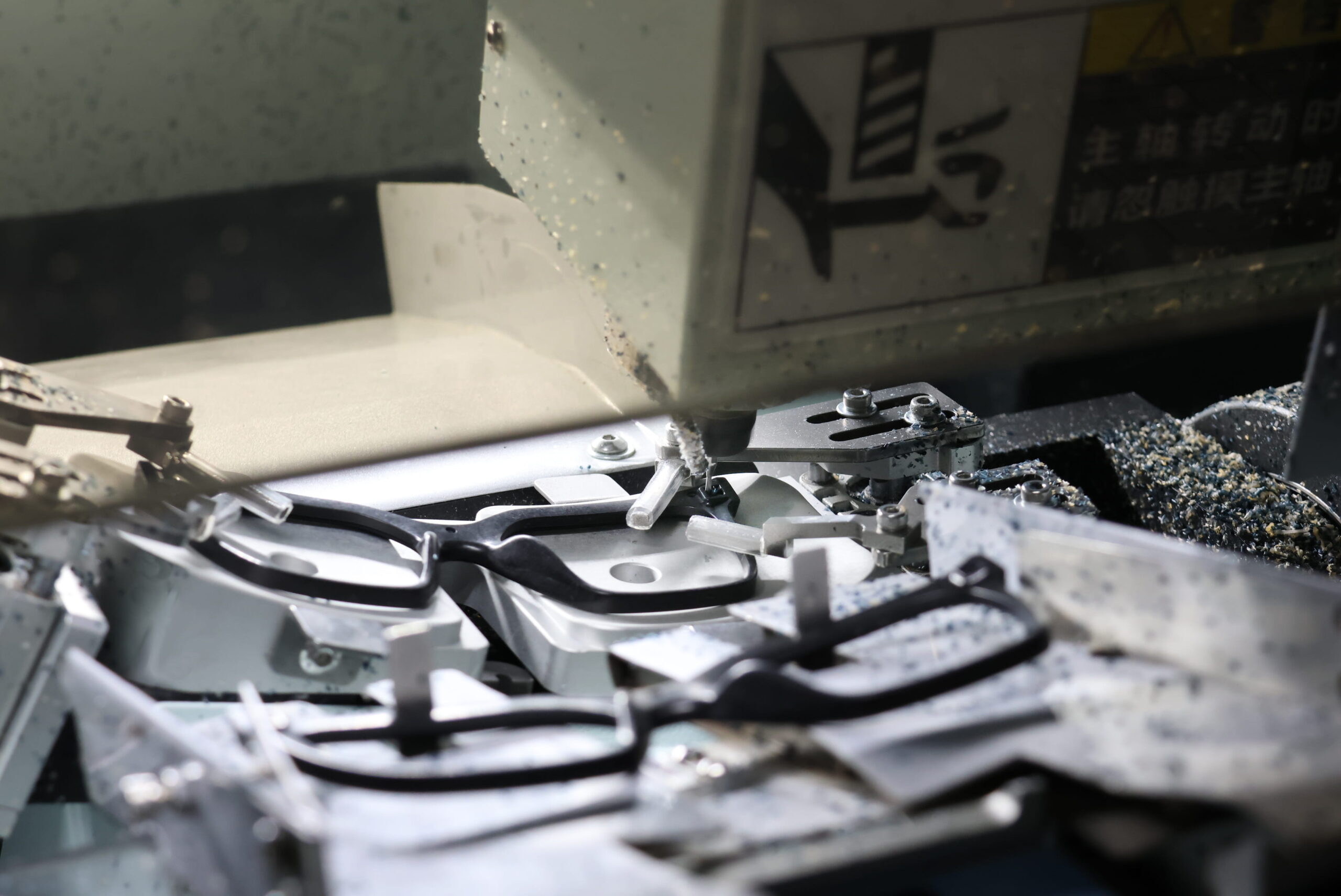
Development therefore involves tradeoffs. The frame may need additional thickness around a joint, a revised lens curve, or a different component arrangement. These adjustments can affect appearance, weight, tooling, and cost.
The goal is to preserve the concept’s defining features while making the product comfortable and practical to manufacture.
At Zhantai, we welcome customers’ ideas, including AI concepts. Share what you want to achieve and which details matter most. We can help assess feasibility, explain adjustments, and develop a workable direction for sampling.
Prepare a Clear Product Specification
Include overall dimensions, frame material and construction, lens requirements, color references, branding placement, packaging, quantity, and destination market.
Use reference images alongside written requirements. Where a particular existing model provides a useful starting point, its published specifications can structure the discussion. For example, Zhantai’s OEM rectangle plastic sunglasses page identifies the frame and lens materials rather than relying on appearance alone.
Compare Trend-Inspired Styles Before Requesting Quotes
Comparing silhouettes through sample checks and manufacturing questions helps buyers narrow their choices before investing in development.
The following framework supports selection. It does not rank styles by sales potential or assume that one shape is always cheaper.
| Style | Design appeal | What to check in samples | What to ask in the quotation |
| Retro oval | Slim, understated silhouette | Overall width, bridge contact, lens height | Are existing tooling and suitable sizes available? |
| Oversized square | Bold proportions and broad visual presence | Weight distribution, cheek clearance, temple pressure | How do thickness and construction affect cost? |
| Modern cat-eye | Upswept corners and expressive outline | Symmetry, edge finish, fit | Does the geometry require new tooling? |
| Metal aviator | Defined bridge and slim rims | Joint quality, alignment, nose-pad assembly | Which alloy, surface finish, and hardware are included? |
| Shield or wraparound | Continuous or strongly curved appearance | Curvature, coverage, optical performance | What lens-forming and testing requirements apply? |
Use the Comparison to Shortlist Samples
Select candidates that meet your customer and sourcing requirements. Then validate the assumptions behind your shortlist.
For example, a frame that appears compact in a photograph may have excessive width for your target wearer. Similarly, a visually lightweight metal design still requires assessment of its joints, hardware, and balance.
Choose Materials, Lenses, and Fit Together
Compare Frame Materials and Finished Construction
Acetate, injection-molded plastic, metal, and mixed-material designs offer different construction possibilities. Their suitability depends on the specific product.
Examine the actual finish and assembly. Look at edges, hinge installation, surface consistency, and component connections. Avoid approving a product simply because its material description sounds premium.
Specify Lens Appearance and Performance Separately
Tint, gradients, mirror treatments, polarization, and UV protection describe different properties. A lens can look dark or reflective without that appearance establishing its UV performance.
Polarization reduces reflected glare, while UV protection must be assessed separately. UCLA Health explains both distinctions in its guide to choosing protective sunglasses.
For procurement, specify the properties you require and request relevant test evidence. Confirm that the documentation applies to the selected product and lens configuration. A broad claim on a supplier’s website is not a substitute for checking the ordered specification.
Validate Fit on Representative Wearers
Printed lens width, bridge width, and temple length provide useful reference points, but they do not describe the whole wearing experience.
Assess overall width, bridge geometry, front curvature, and temple shape. Check for slipping, pressure, cheek contact, and uneven positioning. Use wearers representative of your intended customers and record specific feedback that can guide revisions.
Compare Wholesale Quotes on Equal Terms
Separate Unit Costs from One-Time Charges
Ask the supplier to identify tooling, sample development, and other setup charges separately from the unit price.
Confirm what the quoted unit includes. Lens treatments, decorative components, branded packaging, and inspection arrangements can change the scope. An attractive headline price may describe a simpler configuration than the one you intend to purchase.
Confirm MOQ, Color Allocation, and Lead-Time Assumptions
Clarify whether minimum quantities apply per model, per color, or across an agreed assortment.
Also ask when the production lead time begins. Final sample approval, packaging confirmation, or completion of new tooling may affect the schedule. Discuss these dependencies before promising a launch date to customers.
Assess Total Purchasing Cost
When sourcing trendy sunglasses, evaluate the cost of receiving acceptable goods, not just the factory unit price.
Depending on the quotation terms, your budget may also need to include testing, inspection, freight, insurance, duties, and import handling. Use the agreed delivery terms to avoid counting costs twice or overlooking exclusions.
A lower unit price creates value only when the product still meets the agreed requirements.
Approve Samples Before Committing to Production
Sample approval establishes the product reference, while written tolerances and inspection criteria define acceptable production variation.

Review Appearance, Assembly, and Documentation
Compare the sample with the brief rather than relying on memory. Assess color, alignment, hinge operation, surface finish, and lens retention.
Review relevant test documentation separately. A physical sample helps you judge the product, but it cannot establish every optical or protective property through visual inspection.
Record the Approved Sample and Change Rules
Identify the final approved sample and keep its corresponding specification. Record components, dimensions, finishes, and agreed tolerances.
Also define how substitutions will be handled. A change in resin, hardware, lens construction, or coating may require another review, even if the revised product looks similar.
Follow a Clear Approval Sequence
-
Submit the brief. Define the customer, design direction, specifications, quantity, budget, and destination market.
-
Review feasibility. Resolve construction questions, tooling needs, and cost tradeoffs.
-
Evaluate samples. Assess appearance, fit, assembly, and supporting documentation.
-
Confirm revisions. Review changes and approve the final sample with written requirements.
-
Inspect production. Check the order against the agreed specification and acceptance criteria.
Build Your Next Collection with Zhantai
Share Your Ideas and Sourcing Requirements
Bring your original sketches, AI concepts, or reference images you are authorized to use. Explain which visual details are essential and where you can accept adjustments.
With that context, the development discussion becomes more productive. Instead of guessing what an image means, buyer and manufacturer can work toward a shared specification.
Request a Catalog and a Project-Specific Quotation
For an existing-style program, request relevant catalog options and discuss available configurations. For a custom concept, begin with feasibility and sample requirements.
Provide your target quantity, budget, lens needs, destination market, and expected delivery timing. These details help identify realistic options and make the quotation more useful.
FAQ: Wholesale Buying Questions
Wholesale approval requires a defined specification, a physical reference, and clear commercial terms.
Can You Manufacture Sunglasses Directly from an AI-Generated Image?
No. An AI image alone is not a complete manufacturing specification. It can express the concept, but dimensions, materials, lens construction, hinge attachment, and fit still need to be defined. Feasibility review and sampling help resolve those details.