Six months. Nine factory visits. One trip to Japan.
That’s what it took before we got our first confirmed order from one of Japan’s biggest retail groups.
We don’t say that to complain. That process taught us more about what serious buyers actually need than most partnerships do in years.
Here’s how it happened — the negotiations, the product work, the quality problem we caught at the last minute, and what we did about it. We’re writing this down because we think other manufacturers and buyers might find it useful.
How it started
The Japanese retail group came to us while they were still deciding whether to sell sunglasses at all.
They weren’t sure the category made sense for their stores. They were studying the market, running internal discussions, figuring out pricing. We were one of a few manufacturers they were looking at — not as a confirmed partner, but as a source of information.
That changed how we approached the whole thing. In those early months, our job wasn’t really to sell. It was to explain.
Their team didn’t know eyewear well. They asked us about quality standards, lens certifications, how other brands in Japan had built their sunglasses lines. We answered everything. We sent documents, walked them through the factory, explained what UV400 means and why CE certification matters for Japanese retail.
Looking back, that was where the real trust got built. Any factory can give you a price. Not many can explain why one lens material holds up better under UV than another.

The problem no one talks about: finding the right person
Early on, we ran into something frustrating.
We couldn’t figure out who actually made decisions.
In large Japanese retail companies, decisions go through multiple departments. The person we were talking to wasn’t always the person who could say yes. And the person who could say yes wasn’t always in the room.
We spent weeks sending proposals that seemed to go nowhere. Follow-up emails got polite replies that didn’t move anything forward. It wasn’t that they were being difficult — it was just how their process works.
So we changed our approach. We stopped trying to perfect our pitch and started asking: who else needs to be involved? At what stage? Slowly, we started to understand how their decisions actually got made. Once we knew that, the conversations started moving.
Nine visits and one trip to Tokyo
By the time we got the confirmed order, their team had been to our factory nine times.
Each visit had a different focus. Early on, they wanted to see the basics — the size of the operation, the number of staff, the production layout. Later visits went deeper: quality control, documentation, how we handle defects. One visit was specifically about our records with other Japanese brands. They needed to know who else had already worked with us.
That was non-negotiable for them. They needed proof that other Japanese companies had already checked us out and trusted us. We’d been supplying Japanese clients since 2010, so we had the paperwork.
We also flew to their office in Tokyo. That trip wasn’t just symbolic. It actually changed things. Meeting people in their own building, sitting in their conference room instead of on a factory floor — it matters in Japanese business culture in ways that are hard to explain but easy to notice. The relationship moved faster in the two weeks after that visit than it had in the two months before it.
Passing the audit
The formal factory audit was the hardest part of the process.
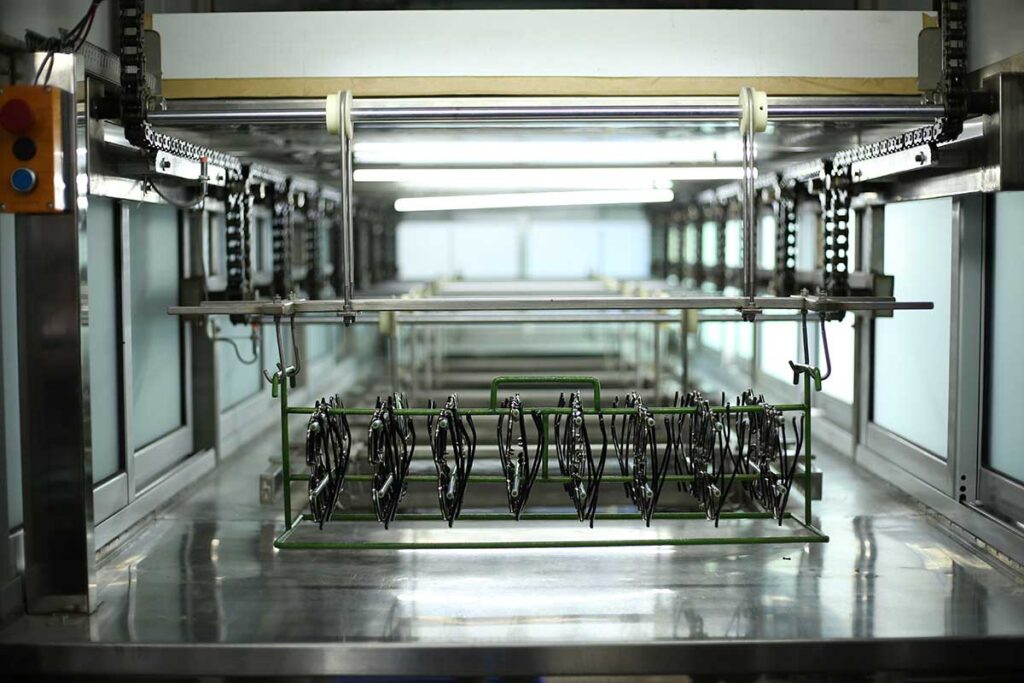
They needed to see a quality management system with documented steps at every stage of production. They ran a human rights audit alongside the quality audit. They checked staffing, production capacity, equipment, and how we manage our suppliers.
We prepared for months. Not by writing documents that looked good on paper — by actually reviewing our processes and finding the gaps.
Our quality control system was already solid. We check quality at multiple stages of production, not just at the end. But the audit pushed us to write down things we’d been doing from memory for years and turn them into proper procedures. That work ended up being useful long after the audit — it’s now how we train new QC staff.
We passed. But passing wasn’t the end. It was the start.
Getting the product right for Japan
Picking the right styles took longer than we expected.
They didn’t want a big range. They were testing the category, so they kept the selection small. That made each style more important — one weak product had nowhere to hide.
We didn’t just send our standard catalog and wait for feedback. We researched what had actually sold in Japanese sunglasses retail in recent seasons. We designed new styles based on those frames, updated the details, and presented options that already had some evidence behind them.
Color took the most time. Japanese consumers read color differently than buyers in Europe or North America. For this client, that meant lighter palettes — soft, neutral tones that work across different seasons. We built the color options around that research rather than our usual range.
For clients with larger assortment needs, we run a different process: we build a structured range covering multiple price points and occasions, then present it in phases so it doesn’t get overwhelming. The starting point is always the same — understand the market first, then build the product.
The moment that defined the partnership
We found a problem at final inspection.
The overall pass rate was fine. But during the last quality check before shipment, we found that some temple tips — the small caps on the ends of the frame arms — were coming loose on some pairs.
The sunglasses were still wearable. But “wearable” is not our standard, and it wasn’t what this client had come to expect.
We stopped. We counted every affected unit. We found the failure rate and traced it back to a batch of components from one of our suppliers.
Then we made a call that cost us time but nothing in terms of the relationship: we replaced every affected part. Full inspection on every single pair. We didn’t ship anything we weren’t sure about.
We also called the supplier that same day. We walked them through the failure and tightened the incoming material spec. The problem hasn’t come back.
The client saw how we handled it. They didn’t get a smooth, problem-free delivery. They saw a factory that found a problem, fixed it completely, and changed the process that caused it. In our experience, that’s more reassuring to serious buyers than a flawless shipment would have been. Any factory can have a good day. What matters is what you do on a bad one.
After the order shipped
We didn’t wait for them to tell us how things went.
Once the sunglasses were on the shelves, we sent someone to visit the stores. We looked at how the products were displayed, how customers interacted with them, whether anything looked off at the retail level. We talked to store staff where we could.
This is something we do with major clients. Supply chains tend to make manufacturers passive — you ship the goods and wait to hear if something’s wrong. We’d rather find out first. If something needs fixing for the next order, we want to know while there’s still time to do something about it.
The initial results were good. The partnership is continuing.
What this meant for us
Working with a buyer like this made us better at a few things at once.
Our quality documentation got tighter. Our supplier checks got more thorough. Our team learned a lot about how Japanese business works — the communication style, how meetings run, how decisions get made and passed on. That knowledge helps with every Japanese client we work with now.
We also got better at being patient. Six months of back-and-forth before a first order is a long time. There were moments when it was tempting to push harder or just move on. The right call was to keep showing up, keep answering questions honestly, and let the relationship develop at its own pace.
It did.
What we’d tell another manufacturer
A few things we learned from this:
The audit is not the finish line. It’s the starting point. They’re checking whether your quality system can hold up over time, not just whether it looks good on one visit.
Explaining your product is part of the job. If your buyer doesn’t know the category well, that’s your problem to solve. Treat it as an investment, not an inconvenience.
Problems handled well build more trust than problems that don’t appear. When something goes wrong — and something will — your response is what they’ll remember.
Go to them. Don’t just wait for them to come to you. We flew to Tokyo. It changed the conversation.
Zhantai Glasses is a sunglasses manufacturer based in Wenzhou, China, with over 35 years of OEM and ODM experience. We supply brands and wholesale buyers across 50+ countries. Get in touch: [email protected]