Rectangle sunglasses remain one of the most demanded frame styles in the global eyewear market. Their clean lines, structured appearance, and commercial versatility make them popular across fashion, driving, and lifestyle segments.
For brands and wholesalers, understanding how rectangle sunglasses fit different face shapes also supports better product selection and design decisions. This guide explains both consumer suitability and professional manufacturing logic.
What Are Rectangle Sunglasses?
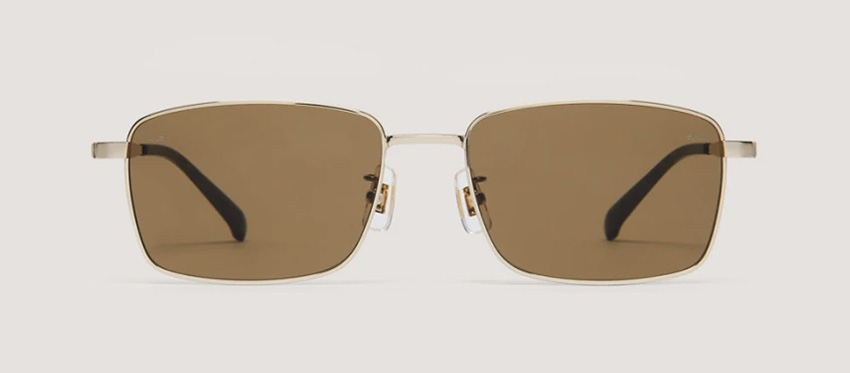
Rectangle eyewear feature lenses that are wider than they are tall. The frame design emphasizes horizontal balance, straight edges, and defined corners.
This shape creates a strong and confident look. It also offers practical advantages in coverage and stability.
Definition of Rectangle Sunglasses
Rectangle sunglasses use elongated lens proportions. The top and bottom edges usually remain straight or slightly softened. Corners may be sharp or subtly rounded.
Most men’s rectangle sunglasses styles focus on wider frames. This structure helps enhance facial definition and visual balance.
Why Rectangle Sunglasses Are So Popular
Rectangle sunglasses suit both men and women. They align well with modern fashion trends and everyday use scenarios.
Many drivers prefer it due to wide lens coverage. Fashion brands also favor this shape for its strong shelf presence and broad market acceptance.
From a manufacturing perspective, rectangle sunglasses offer flexible material and size options.
Rectangle Sunglasses for Different Face Shapes
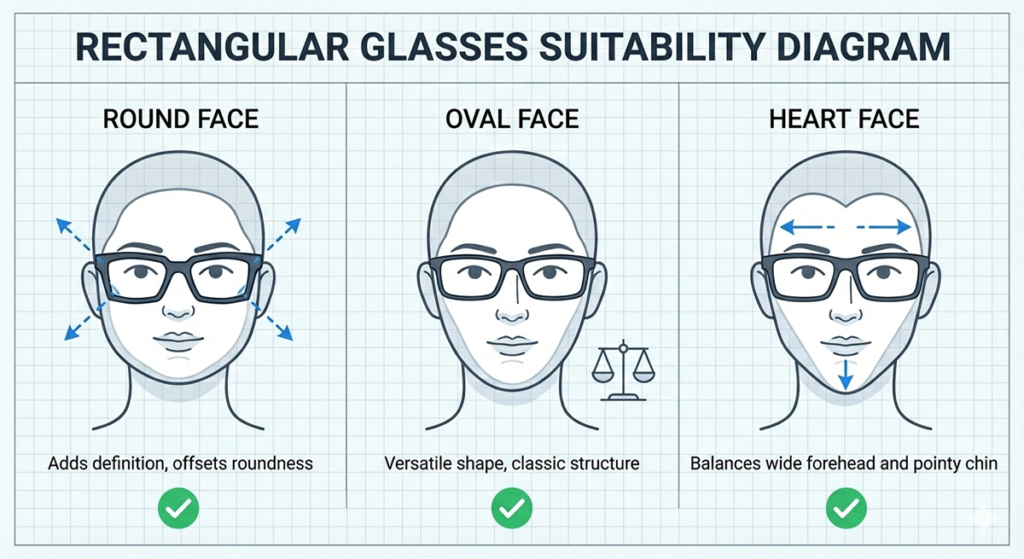
Rectangle Sunglasses for Round Faces
Round faces feature softer contours and limited angles. Rectangle sunglasses introduce structure and visual sharpness.
This shape makes the face appear slimmer. Men’s collections often prioritize this face type.
Medium to wide frames usually perform best.
Rectangle Sunglasses for Oval Faces
Oval faces maintain balanced proportions. Rectangle glasses add definition without overpowering the face.
Designers often use bolder frames for oval faces. Proper lens height and frame width maintain harmony.
This face shape offers the greatest design flexibility for brands.
Rectangle Sunglasses for Square Faces
Square faces already feature strong angles. Rectangle sunglasses can appear heavy if poorly designed.
Factories often soften corners or reduce frame thickness. Lightweight materials improve comfort and wearability.
These adjustments help sunglasses work effectively on square faces.
Rectangle Sunglasses for Heart-Shaped Faces
Heart-shaped faces feature wider foreheads and narrower chins. Rectangle sunglasses help balance upper facial width.
Moderate frame width and neutral colors work best. Excessive top rim thickness should be avoided.
This balance improves both comfort and aesthetics.
Rectangle Sunglasses for Long or Rectangular Faces
Long faces require careful proportion control. Flat or narrow frames may exaggerate facial length.
Taller lenses and thicker rims improve visual balance. Many sunglasses manufacturers design specific molds for this face type.
How to Choose the Right Size of Rectangle Sunglasses
Sizing directly affects product acceptance. Frame width should align with facial width without extending beyond the temples.
Lens height determines coverage and comfort. The bridge must distribute weight evenly on the nose.
Temple length influences stability. Poor sizing leads to slipping, pressure, and customer complaints.
Professional factories develop multiple size options to support different markets.
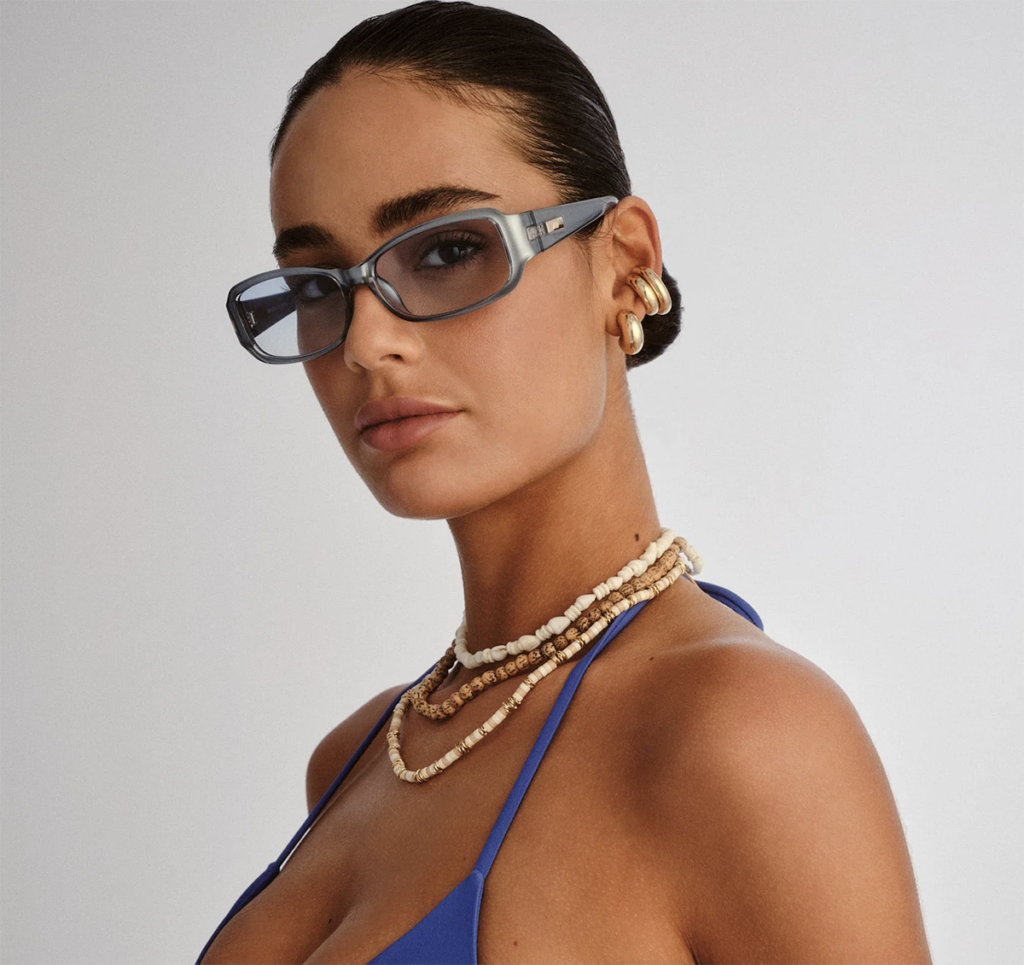
lespecs sunglasses
How Sunglass Factories Design Rectangle Sunglasses
A professional rectangle sunglasses manufacturer designs frames for both appearance and mass production. The process combines market research, ergonomics, and engineering.
From Market Trends to Frame Concept
A rectangle sunglasses factory studies global trends, sales data, and buyer feedback. Designers track regional preferences and category performance.
Men’s styles often dominate classic and driving segments. Slim frames suit European markets. Thicker frames perform well in North America.
Design teams convert these insights into frame concepts with clear positioning.
Face Shape and Ergonomics in Rectangle Sunglasses Design
Factories design frames based on real facial data. Engineers analyze nose height, cheekbone width, and head curvature. Sharp rectangular lines require precise adjustment. Lens height, frame curvature, and bridge angles affect comfort. A reliable rectangle sunglasses manufacturer balances structure with wearability.
Prototyping and Fit Testing
Factories use 3D modeling to shorten development cycles. Prototypes allow early evaluation of proportions and fit. Testing includes wear trials on different face shapes. Designers refine pressure points, hinge angles, and balance. Only stable and comfortable designs enter mass production.
Styling Value and Commercial Positioning
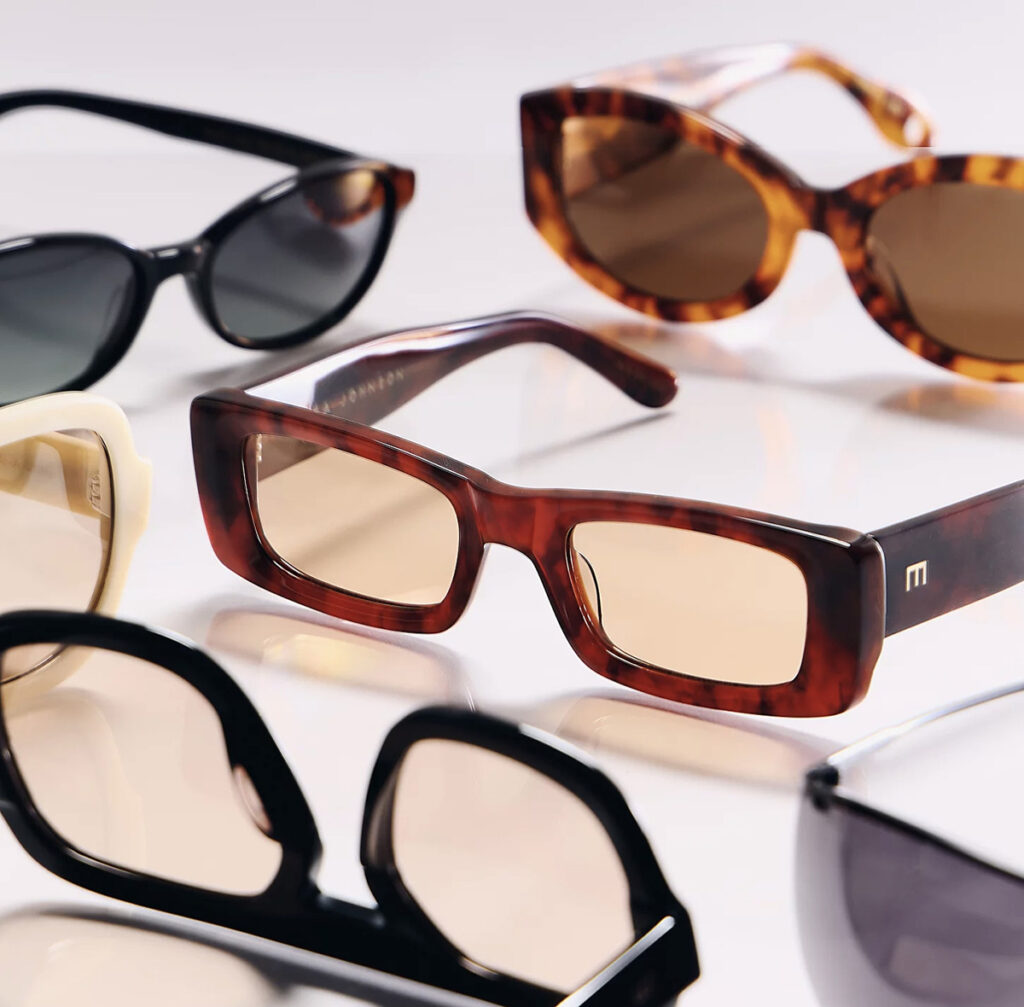
Rectangle sunglasses support a wide range of brand identities. Minimalist frames fit lifestyle brands. Bold designs suit fashion-forward collections. Mens styles pair well with structured apparel. This alignment improves cross-category sales. For brands, rectangle sunglasses remain a reliable core SKU with long lifecycle value.
Rectangle sunglasses combine strong aesthetics with commercial stability. Their versatility supports multiple face shapes and market segments. For brands and wholesalers, working with an experienced sunglasses factory ensures consistent quality and scalable production. Understanding both fit principles and manufacturing logic helps build successful eyewear collections.