In the competitive global optical market, material innovation drives retail margins. For decades, traditional metals and basic injected plastics dominated factory floors. However, a new standard for high-performance luxury has firmly established itself: carbon fiber.
The economic trajectory of this material is undeniable. The global carbon fiber eyewear market size sits at an estimated $210 million in 2025, and industry analysts project it to reach an impressive $327 million by 2032. Consumers increasingly demand frames that offer extreme durability without the heavy footprint of traditional metals.
For wholesale buyers, optical brand managers, and independent designers, navigating this high-tech category requires specialized knowledge. Partnering with a capable carbon fiber glasses frames manufacturer is vastly different from sourcing standard acetate or TR90 frames. This comprehensive B2B guide breaks down the manufacturing science, the strategic material comparisons, and the essential OEM customization points you need to successfully launch a carbon fiber product line.
The Application History and Growth in Eyewear
Carbon fiber originally gained fame in aerospace engineering and Formula 1 racing. It is defined by its unparalleled strength-to-weight ratio. The optical industry began experimenting with carbon fiber in the early 2000s, primarily targeting men’s sports and luxury automotive-branded eyewear.
Early iterations were plagued by stiffness. Because carbon fiber lacks natural elasticity, early frames were difficult to adjust and uncomfortable for wide face shapes. However, massive advancements in composite resins and hybrid manufacturing over the last decade have completely resolved these issues. Today, carbon fiber represents the pinnacle of “tech-luxury” in the optical world, appealing to affluent consumers who value engineering as much as aesthetics.
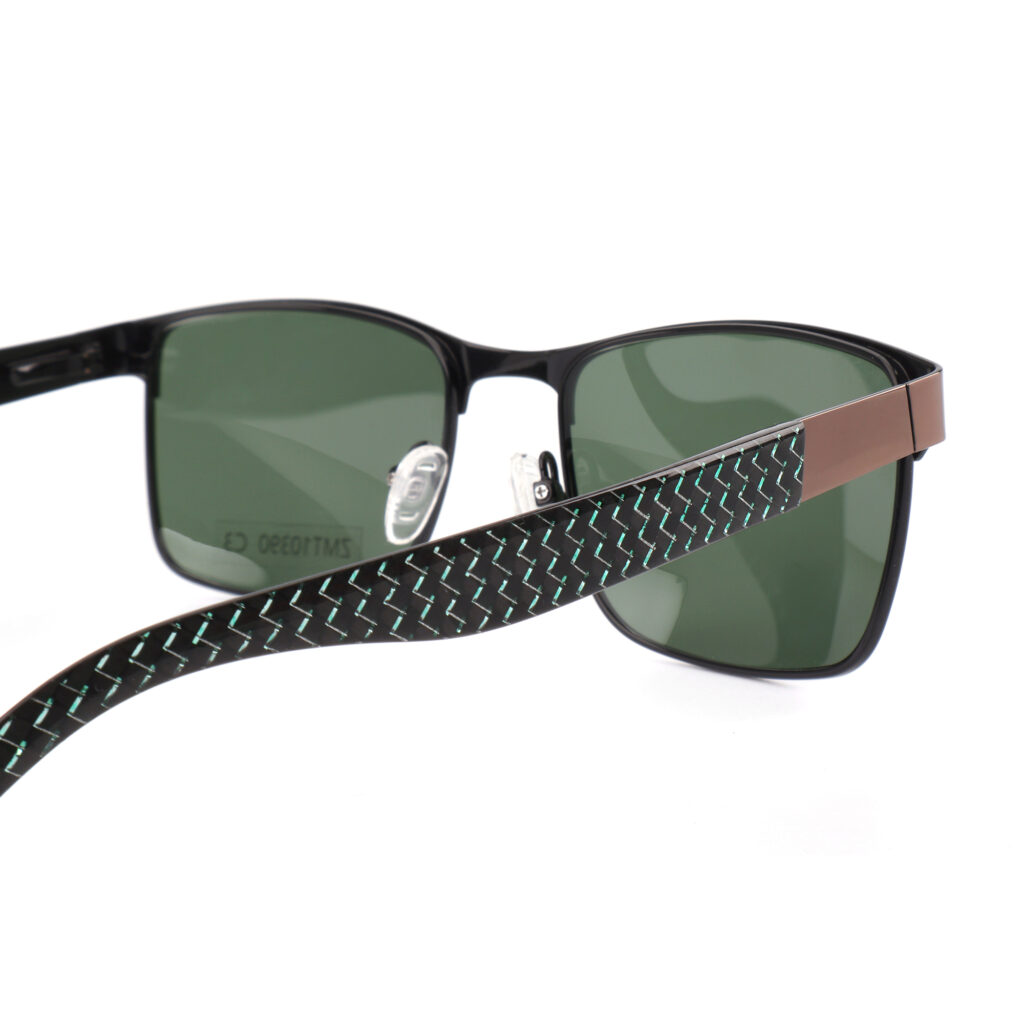 OEM Carbon Fiber Men Metal Sunglasses
Full Carbon vs. Composite vs. Hybrid Designs
When you approach a factory for an OEM project, you must specify the exact architecture of the frame. Not all “carbon fiber” eyewear is built the same way.
-
Full Carbon Fiber: These frames are carved entirely from solid carbon fiber blocks. They are ultra-light and incredibly strong, but they offer zero adjustability. Opticians cannot heat and bend them to fit a patient’s face, making them suitable only for sunglasses, not prescription lenses.
-
Carbon Fiber Composite: Here, manufacturers chop raw carbon fibers into tiny pieces and mix them into a nylon or resin base before injection molding. This improves flexibility but sacrifices the famous woven aesthetic.
-
The Hybrid (Carbon + Acetate/Titanium): This is the current industry gold standard and the most profitable B2B category. A premium carbon fiber glasses frames manufacturer will combine materials to maximize functionality. A highly popular design features a classic Tortoise acetate frame front (allowing for easy lens insertion and adjustment) paired with pure carbon fiber temples for weight reduction. Alternatively, modern brands frequently pair transparent or clear acetate fronts with matte carbon temples to create a striking, contemporary contrast.
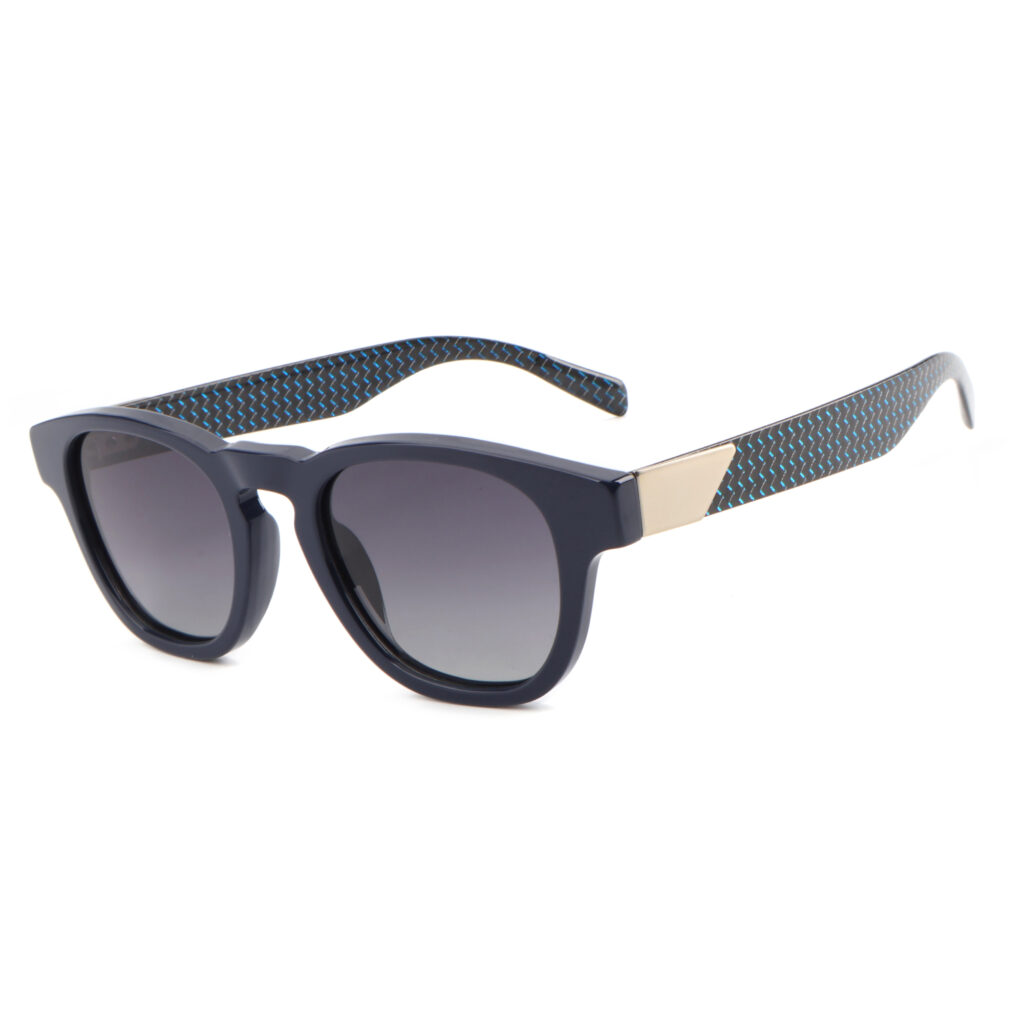 OEM Carbon Fiber Unisex Black Sunglasses
The Manufacturing Process: From Weaving to CNC
Creating genuine carbon eyewear is a highly complex, multi-stage industrial process that justifies its premium price point.
-
Weaving and Pre-Preg: Raw carbon filaments (thinner than human hair) are woven together into large sheets. These sheets are pre-impregnated (“pre-preg”) with specialized epoxy resins.
-
Laminating: To achieve the thickness required for a glasses frame, workers meticulously layer multiple pre-preg sheets on top of each other. The direction of the weave in each layer is alternated to ensure maximum multidirectional strength.
-
Curing: The laminated stacks go into an industrial autoclave. Extreme heat and massive pressure cure the resin, binding the layers into a solid, impenetrable carbon fiber block.
-
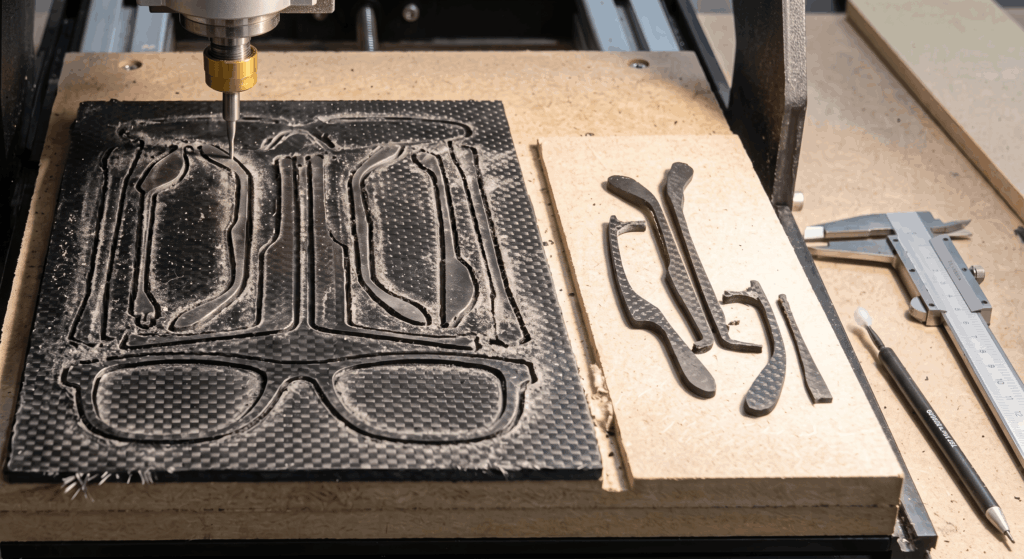
CNC Machining: This is the most critical phase. The factory uses multi-axis CNC routers to carve the frame shapes directly out of the solid carbon board. Because carbon fiber is incredibly abrasive, it destroys standard CNC drill bits rapidly, requiring factories to use diamond-coated tools.
Performance Showdown: Carbon Fiber vs. Titanium vs. TR90
For procurement managers, choosing the right material is essential. How does carbon fiber stack up against the other two industry heavyweights: Titanium and TR90?
-
Weight: Carbon fiber is the undisputed champion of lightweight materials, often weighing 20% to 30% less than Titanium, and noticeably lighter than TR90.
-
Strength: Carbon fiber boasts the highest tensile strength. It simply will not bend or warp out of shape. Titanium is highly durable and impact-resistant but is heavier. TR90 is designed for extreme flexibility, not rigid strength.
-
Cost: TR90 is the most economical, as it utilizes efficient injection molding. Titanium requires expensive raw materials and complex welding in oxygen-free chambers. Carbon fiber is typically the most expensive to manufacture due to the intense manual labor of lamination and the rapid wear on CNC tooling.
Cost Structure and Pricing
When reviewing quotes from a carbon fiber glasses frames manufacturer, first-time buyers are often surprised by the unit cost. A premium carbon fiber frame can easily cost double or triple the factory price of an acetate frame.
The cost structure is heavily weighted toward machining and waste. Unlike injection molding (where liquid plastic fills a mold with zero waste), CNC carving is a subtractive process. Cutting a frame out of a solid carbon board leaves behind a massive amount of expensive scrap material that cannot be melted down and reused. Furthermore, the diamond-tipped CNC drill bits must be replaced frequently to maintain clean edges on the carbon fiber, directly inflating the overhead cost per unit.
Market Positioning: Who Should Sell Carbon Fiber?
Due to the high wholesale cost, carbon fiber is not suited for fast-fashion or discount retail. To maximize ROI, brands should position carbon fiber product lines for specific demographics:
-
The Executive Professional: Men’s optical frames pairing a sleek titanium front with carbon fiber temples project an image of precise, modern professionalism.
-
Motorsport and Active Lifestyles: Brands affiliated with cycling, racing, or high-end outdoor pursuits can easily leverage the material’s aerospace pedigree to justify premium retail pricing.
-
Tech-Wear Fashion: As streetwear leans into technical fabrics and utility, carbon fiber serves as the ultimate tech-wear optical accessory.
OEM/ODM Customization Essentials
When you are ready to initiate a production run, communicating clearly with your factory is critical. Keep these specific OEM requirements in mind to ensure a flawless final product:
-
Specify the Hinge Design: Because carbon fiber does not flex, standard hinges will snap under pressure. You must instruct your manufacturer to use high-quality flexible spring hinges. Furthermore, screws cannot grip bare carbon fiber effectively. The factory must embed specialized metal anchor plates into the carbon fiber to hold the hinge screws securely.
-
Determine the Weave and Finish: The classic 3K twill weave is the most popular, but forged carbon (which looks like marbled stone) is rapidly gaining popularity in luxury sectors. You must also specify the clear coat: a matte finish offers a stealthy, modern look, while a high-gloss finish makes the woven pattern pop dramatically under retail lights.
-
Avoid Over-Complication: To keep defect rates low and maintain structural integrity, avoid asking the factory to carve overly complex, jagged, or hyper-thin shapes out of carbon fiber. Smooth, clean architectural lines work best for this rigid material.
Conclusion
The projected growth to $327 million by 2032 indicates that carbon fiber eyewear is transitioning from a niche luxury item to a highly demanded staple in the premium optical market. By understanding the intricate lamination and CNC processes, embracing hybrid designs that pair carbon with beautiful clear or Tortoise acetate, and partnering with an experienced carbon fiber glasses frames manufacturer, you can confidently elevate your brand’s catalog and capture the highly profitable tech-luxury demographic.