The true difference between designer and regular sunglasses comes down to four distinct pillars: optical lens quality, frame material density, manufacturing tolerances, and the massive brand premium. Designer sunglasses utilize shatter-resistant CR-39 or Nylon lenses, Italian acetate, and precision PVD metal plating. Regular sunglasses cut costs using cheap acrylic lenses, injected ABS plastics, and basic spray paint. While a luxury logo adds hundreds of dollars to the retail price, the actual factory cost difference between a cheap pair and a premium pair is heavily rooted in the raw materials and the hours spent hand-polishing the final frame.
If you are a B2B eyewear buyer, an independent brand owner, or just a curious consumer, understanding what makes sunglasses designer requires looking past the marketing campaigns. Step onto the factory floor at Wenzhou Zhantai Glasses Co., Ltd., and we evaluate quality through raw engineering. Here is the exact breakdown of how designer frames separate themselves from cheap gas station alternatives, millimeter by millimeter.
Dimension 1: Lens Quality and Optical Clarity
The most critical component of any eyewear is the lens. You look through it, not just at it.
Designer brands heavily prioritize optical clarity and eye safety. They specify lenses made from CR-39, premium Nylon, or high-grade TAC polarized wafers. These materials offer exceptional Abbe values (a measure of optical clarity), meaning they do not distort your peripheral vision. Furthermore, premium factories run a 100% UV400 inspection protocol. Every single lens batch passes through a spectrometer to guarantee complete protection against UVA and UVB rays.
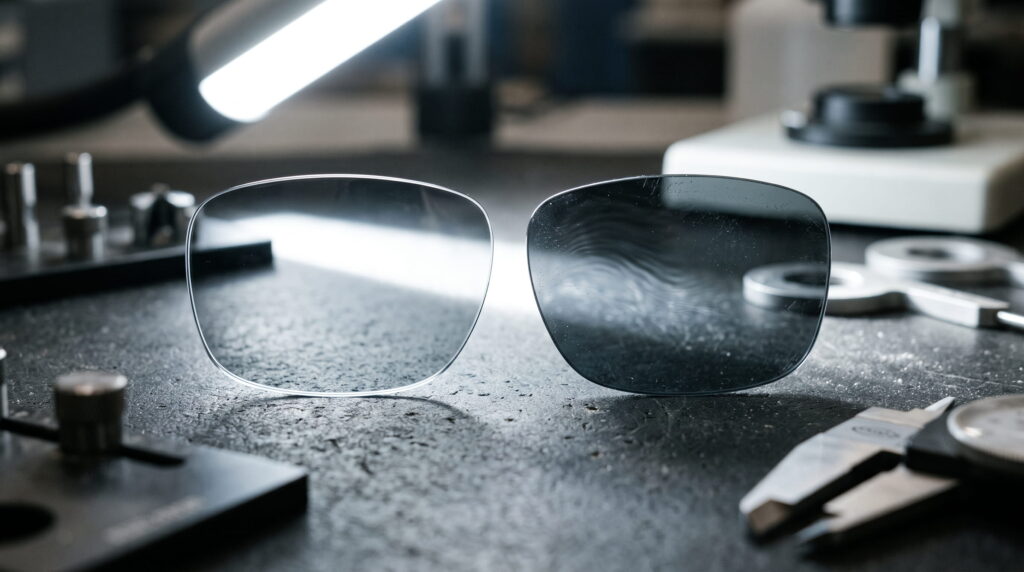
Regular sunglasses utilize cheap AC (Acrylic) lenses. Acrylic is brittle, scratches instantly, and possesses a poor Abbe value, which causes the “fishbowl” distortion effect that gives you a headache after an hour of wear. While a $10 pair of sunglasses might feature a “UV400” sticker, factory audits frequently reveal that cheap acrylic lenses often fail to block the full spectrum of harmful radiation.
From a factory perspective, both lenses might come out of similar injection molding machines. However, the steel molds used for designer optical lenses are polished to a microscopic level of precision. A cheap mold produces a wavy, uneven lens surface, which ruins the optics regardless of the plastic used.
Dimension 2: Frame Material and Tactile Weight
When you pick up a pair of sunglasses and it instantly feels “expensive,” you are registering the density of the frame material.
To understand designer vs regular sunglasses, look at the plastic. Designer brands exclusively use Cellulose Acetate—often sourced from Italian legacy manufacturers like Mazzucchelli. Acetate is carved from a solid block of plant-based polymer. It features rich, deep color variations, feels warm to the touch, and softens under heat, allowing opticians to bend the frame for a custom fit. For metal frames, premium brands specify beta-titanium or pure titanium, achieving incredible strength at a fraction of the weight.
Regular sunglasses rely on injection-molded plastics like ABS, PC (Polycarbonate), or even recycled scrap plastics. These frames feel hollow and rigid. Because the color is painted on the surface rather than running through the material, cheap plastics look flat and lifeless. The metal used in regular sunglasses is typically thin iron or basic alloys that bend easily and corrode when exposed to sweat.
The factory cost gap between these materials is distinct. Upgrading a frame from cheap injected plastic to premium carved acetate adds approximately $1.50 to $4.00 to the raw manufacturing cost of a single pair.
Dimension 3: Manufacturing Tolerance and Finish
The secret to luxury lies in the microscopic details. Two frames might look identical from ten feet away, but the manufacturing tolerances dictate how long they will survive real-world use.
-
Hinge Tolerances: The hinge is the only moving part on a sunglass frame. In a designer frame, the factory mills the hinge cavity with a tolerance of ±0.05mm. The metal hinge sits perfectly flush with the acetate, and the temple opens with a smooth, buttery resistance. Regular sunglasses operate on a ±0.3mm tolerance. The hinges are often glued or melted into place, resulting in wobbly arms that loosen within weeks.
-
The Polishing Process: Designer acetate frames undergo up to seven stages of barrel tumbling with bamboo pegs and pumice, followed by meticulous hand-polishing by skilled artisans on buffing wheels. This process takes days and results in a flawless, liquid-glass shine. Regular injected frames skip the polishing wheel entirely; they are simply popped out of the mold and sprayed with a glossy clear coat.
-
Surface Treatments: When plating a metal frame, designer brands mandate PVD (Physical Vapor Deposition) vacuum plating. This bonds the gold or silver finish at a molecular level, preventing sweat and saltwater from tarnishing the metal. Regular sunglasses use cheap liquid spray paint or basic electroplating, which has a peeling and chipping rate up to 10 times higher than PVD.
Dimension 4: The Brand Premium
If the raw material and manufacturing upgrades only cost a few dollars, why are designer sunglasses expensive? The answer is the brand premium, retail markups, and marketing overhead.
When you buy a luxury brand name, you are funding their Fifth Avenue flagship stores, celebrity endorsement contracts, and massive fashion week budgets. Here is a realistic factory breakdown of where your money goes when you purchase a $180 pair of designer sunglasses:
| Cost Component | Estimated Cost | What It Actually Pays For |
| Factory Materials & Labor | $8.00 – $15.00 | Italian acetate, CR-39 lenses, 5-barrel hinges, hand-polishing, strict QC |
| Packaging & Accessories | $2.00 – $4.00 | Leather hard case, microfiber cloth, branded rigid retail box |
| Logistics & Import Duties | $1.00 – $3.00 | Ocean or air freight, customs clearance, warehouse storage |
| Brand Marketing & Licensing | $40.00 – $60.00 | Celebrity campaigns, fashion magazine ads, brand licensing fees |
| Retail Markup (The Margin) | $80.00 – $100.00 | Physical store rent, sales staff commissions, brand profit |
| Total Retail Price | $180.00 |
You are paying for genuine factory quality, but you are also paying a $140 premium just for the logo stamped on the temple.
How a Factory-Grade Pair Reaches Designer-Grade Quality
You do not need to charge your customers $200 to provide them with luxury eyewear. If you want your independent brand to achieve this elite level of quality, you must partner with a manufacturer who understands the mechanics of premium construction.
At Wenzhou Zhantai Glasses Co., Ltd., we eliminate the bloated marketing markups and focus entirely on the engineering. When B2B brands work with us, they gain direct access to the same Mazzucchelli acetate, 5-axis CNC milling machines, and PVD vacuum coating chambers used by legacy Italian fashion houses. By cutting out the middlemen and focusing your budget directly on raw materials and precision hand-polishing, you can build a collection of sunglasses that rivals any luxury brand on the market, at a fraction of the retail price.
Frequently Asked Questions (FAQ)
Are designer sunglasses really better for your eyes?
Yes, primarily due to lens quality. Designer sunglasses use optical-grade materials like CR-39 or Nylon that eliminate visual distortion. Cheap acrylic lenses found in regular sunglasses often contain microscopic waves that force your eyes to constantly refocus, leading to severe eye strain and headaches over time.
Is the UV protection different between designer and regular sunglasses?
It can be. While many regular sunglasses claim to offer UV400 protection, independent testing frequently reveals that cheap lenses fail to block 100% of UVA and UVB rays consistently. Designer brands mandate strict factory spectrometer testing on every batch to guarantee complete, medical-grade UV protection.
How can you tell if sunglasses are high quality?
Check the weight, the hinges, and the clarity. High-quality acetate frames feel substantial and warm, not hollow and brittle. The hinges should open with smooth, firm resistance without wobbling. Finally, look at a straight line (like a door frame) through the lens; if the line bends or warps as you move your head, the lens is low quality.
Can you put prescription lenses in regular sunglasses?
Usually, no. Regular sunglasses made of cheap injected plastic do not have the structural integrity or deep lens grooves required to hold a thick prescription lens. If an optician applies heat to a cheap plastic frame to insert a lens, it will melt or snap. Designer acetate frames are specifically engineered to hold prescription lenses.
Do designer sunglasses last longer?
Significantly longer. The PVD metal plating on designer frames resists sweat corrosion, the CR-39 lenses resist scratching far better than acrylic, and the carved acetate frames maintain their shape for years. Regular sunglasses typically scratch, peel, or break at the hinge within a single summer season.