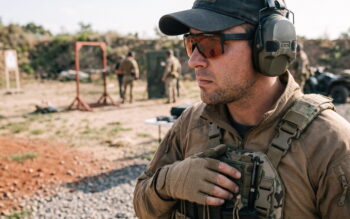
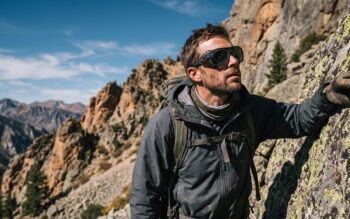
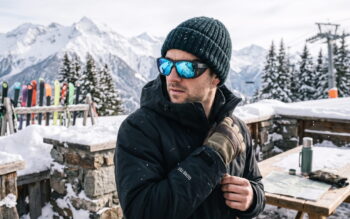
Anyone who has spent time at high altitudes knows that the sun hits differently above the tree line. For every 1,000 meters of elevation gained, ultraviolet (UV) radiation increases by approximately 10%. When you combine that thin atmosphere with the blinding, mirror-like surface of an alpine glacier, light stops being just an inconvenience—it becomes a physical hazard.
As an optical product engineer who has spent two decades on the manufacturing floor at Wenzhou Zhantai Glasses Co., Ltd., I regularly see outdoor enthusiasts and emerging activewear brands make a dangerous assumption: they treat all dark sports eyewear as the same. A hiker will mistakenly buy extreme glacier glasses and trip over roots in the shadows, or a brand will try to sell standard trail sunglasses to alpinists, risking their customers’ eyesight to snow blindness.
Whether you are a consumer planning your next summit, or a B2B buyer developing a new outdoor catalog, it is crucial to understand that mountaineering sunglasses and hiking sunglasses are two fundamentally different pieces of equipment. This guide will break down their exact definitions, the optical physics that separate them, their specific use cases, and the factory engineering required to build them correctly.
Defining the Gear: What Are We Actually Wearing?
Before we dive into the manufacturing specs, we must clearly define what these two categories are meant to achieve.
Hiking Sunglasses: These are dynamic visual tools engineered for fluctuating environments. A hiker constantly moves in and out of tree canopies, faces varying weather, and generates a lot of body heat. Therefore, hiking sunglasses are built for high-contrast vision, rapid heat dissipation, and lightweight comfort.
Mountaineering Sunglasses (Glacier Glasses): These are isolation tools engineered for extreme, static environments. Above the snowline, the environment is dominated by intense, multi-directional UV reflection and freezing winds. Mountaineering sunglasses are built to hermetically seal the eyes from lateral light leakage while utilizing ultra-dark lenses to prevent photokeratitis (retinal sunburn).
The Core Differences: Optical Standards and Frame Architecture
The divide between these two types of eyewear comes down to two primary manufacturing pillars: the Visible Light Transmission (VLT) of the lens, and the physical architecture of the frame.
-
The Optical Standard: Category 3 vs. Category 4
In optical manufacturing, lenses are categorized by how much visible light they allow to pass through.
-
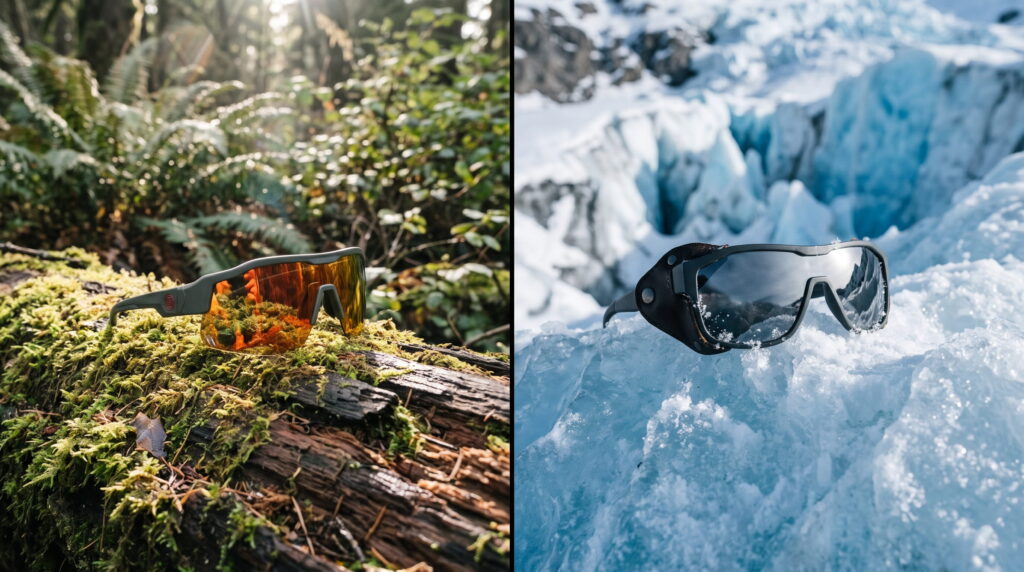
Hiking lenses usually utilize Category 3 standards. They let in roughly 8% to 18% of light. In the factory, we often use amber, copper, or rose-tinted Polycarbonate (PC) base dyes for these lenses. These colors absorb blue light, aggressively spiking the contrast of green leaves and brown dirt, allowing the hiker to clearly read the topography of the trail.
-
Mountaineering lenses demand Category 4 standards. They let in a mere 3% to 8% of light. To achieve this in the lab, we use heavy dark smoke or deep brown dyes, often paired with a dense silver or flash-mirror front coating to deflect maximum glare.
| Feature | Hiking Sunglasses | Mountaineering Sunglasses |
| Lens Standard | Category 3 (8% – 18% VLT) | Category 4 (3% – 8% VLT) |
| Primary Goal | High contrast, depth perception, glare reduction. | Absolute light blocking, UV/Infrared protection. |
| Frame Design | Aerodynamic, open chassis for maximum airflow. | Wrapped, closed chassis with physical side shields. |
| Fog Management | Relies on physical frame vents. | Relies on heavy internal hydrophilic chemical coatings. |
-
Peripheral Protection: The Side Shield Mechanism
UV light doesn’t just hit you from the front; on a glacier, it bounces upward off the snow and sneaks in through the sides of your face.
Hiking sunglasses leave the sides open. This is intentional. The open space allows body heat to escape, preventing the lenses from fogging up during a steep, sweaty ascent in the woods.
Mountaineering sunglasses must close this gap. During the manufacturing process, we engineer side shields (glacier shields) into the frame. For modern alpine brands, we use precision CNC-milled steel molds to create wide, sweeping TR90 side shields that are structurally integrated into the frame itself. For brands chasing a heritage aesthetic, we engineer precise locking cavities into the rims, allowing the user to snap on removable, perforated genuine leather or flexible TPU shields.
Use Cases and Crucial Safety Precautions
Understanding the engineering is only half the battle; wearing them in the correct scenario is a matter of safety.
When to wear Hiking Sunglasses:
-
Forest trails, canyon trekking, and general backpacking.
-
Mountain biking and trail running.
-
Everyday Driving: Category 3 lenses are the legal and safe standard for driving a vehicle in bright sunlight.
When to wear Mountaineering Sunglasses:
-
Glacier traverses, high-altitude alpine climbing, and polar expeditions.
-
Any sustained activity in open, treeless snowfields on a sunny day.
⚠️ The Safety Warning (A Note for Consumers and Brands):
You cannot drive a car while wearing Category 4 mountaineering sunglasses. Because the VLT is below 8%, they are dangerously dark. Entering a tunnel or driving into a shadow while wearing Cat 4 lenses will effectively render you blind. In many countries, driving with Cat 4 lenses is strictly illegal. As a manufacturer, we strongly advise our B2B clients to print “Not Suitable For Driving” on the inner temple of all Cat 4 models.
Conversely, wearing Cat 3 hiking sunglasses on a sunny glacier for 8 hours will likely result in snow blindness. The light leakage from the sides and the higher VLT will overwhelm the optic nerve.

The Factory Perspective: Engineering the Details
Creating gear that survives these extremes requires highly specialized factory interventions. When producing these lines at Wenzhou Zhantai, we implement several hidden technologies that elevate the product from a basic accessory to life-saving equipment.
-
Backside Anti-Reflective (AR) Coatings for Cat 4:
Because Category 4 lenses are so dark, they act like a mirror on the inside. If the sun is behind the climber, the light bounces off the inside of the lens directly into their pupil. To solve this, we apply a multi-layer blue or green vacuum AR coating to the interior surface. This absorbs the rear glare entirely, ensuring crystal-clear vision.
-
Dual-Injection Hydrophilic Silicone:
Both hikers and climbers sweat. If a frame slips down the nose during a dangerous descent, it can cause a fatal misstep. We use dual-injection molding to fuse a rigid TR90 frame core with soft, hydrophilic (water-absorbing) silicone nose pads and ear socks. This specialized silicone actually increases its coefficient of friction when exposed to sweat, locking the frame onto the face.
-
Integrated 3D Molded Logos:
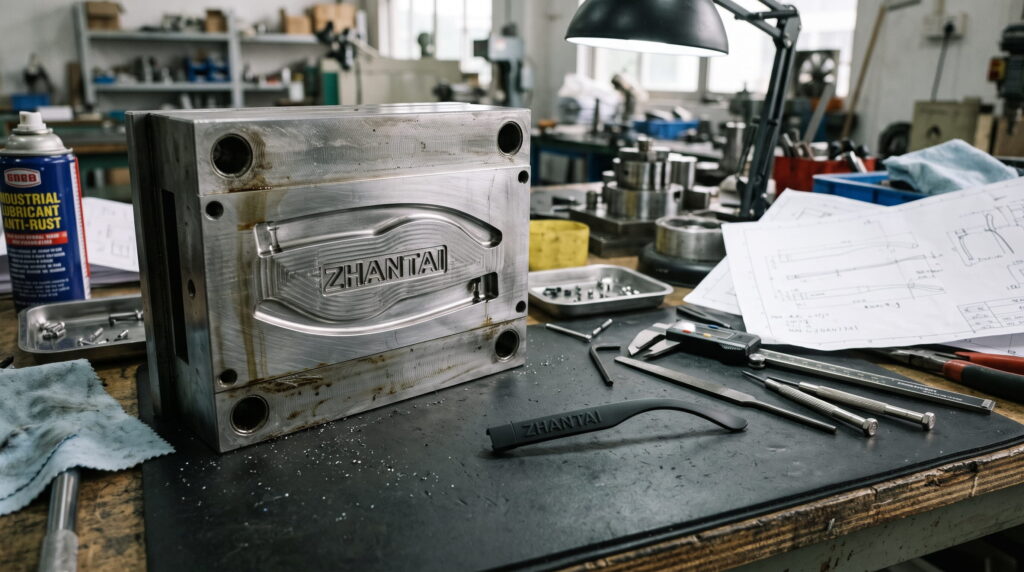
In rugged environments, surface-painted logos scrape off against rocks, tree branches, or climbing helmets within a week. To establish a premium brand identity, we precision-carve our clients’ logos directly into the steel injection mold. The logo emerges as a permanent, 3-dimensional structural component of the TR90 frame, guaranteeing it will never peel or fade.
For B2B Brands: The “One Mold, Two Markets” Sourcing Strategy
If you are a brand owner reading this, you might assume that launching both a hiking and a mountaineering line requires doubling your capital investment for two separate steel molds. That is not the case.
Intelligent supply chain management allows you to capture both markets efficiently. At Wenzhou Zhantai Glasses Co., Ltd., we help outdoor brands execute a highly profitable Colorway and Lens Split strategy.
Our standard Minimum Order Quantity (MOQ) for custom dual-injected TR90 outdoor frames is 1,200 pieces per model. However, we allow our B2B partners to split this single-mold volume across distinct optical setups:
-
The Hiking Setup: You can allocate 600 units to be injected in vibrant colors (like olive green or bright orange), fitted with Category 3 high-contrast amber lenses, and packaged without side shields.
-
The Mountaineering Setup: You can allocate the remaining 600 units to be injected in tactical matte black, fitted with Category 4 silver-mirror lenses (with backside AR coatings), and assembled with our custom removable leather side shields.
By utilizing one expertly engineered base chassis, you immediately launch a comprehensive, technically accurate outdoor collection.
Executing these clinical optical standards, applying dual coatings, and perfecting 3D injection molds cannot be rushed. We operate on a strict 55-day production cycle to ensure every piece of eyewear passes our rigorous thermal and optical lab tests, supported by standard transparent T/T payment terms (50% deposit, 50% balance before shipment).
Outdoor enthusiasts trust their gear with their lives, and by extension, they trust the brands that supply them. Understanding the profound manufacturing differences between a trail hike and a glacier summit is the first step in building that trust. Whether you are buying a single pair for your next adventure or engineering thousands for your next product launch, respect the light, and respect the optics.