Choosing men’s sunglasses involves more than finding an attractive frame. Shape, fit, lens specifications, and small decorative details all influence the final result.
Classic styles offer familiar silhouettes and straightforward styling. Meanwhile, designer sunglasses often introduce distinctive details that change how those familiar shapes look.
However, these categories overlap. A designer brand can create a classic frame, while an understated design can feature excellent materials and thoughtful construction.
This guide compares both approaches. You will learn how subtle design changes affect appearance and how to choose sunglasses that suit your needs.
Classic vs. Designer Men’s Sunglasses: What’s the Difference?
The difference often comes down to design emphasis rather than completely different frame shapes.
Classic sunglasses usually highlight proportion, simplicity, and familiar lines. Designer styles may build on those same foundations through carefully chosen modifications.
What Defines Classic Sunglasses?
Classic sunglasses use recognizable shapes with broad styling possibilities. Aviator, rectangular, round, and browline frames provide common examples.
Their designs often feature balanced proportions, restrained decoration, and versatile colors.
For example, a black rectangular frame can complement jeans, casual shirts, and tailored clothing. Similarly, a thin metal aviator offers several styling possibilities.
However, “classic” describes an aesthetic. It does not establish a particular price, material, or quality level.

What Defines Designer Sunglasses?
Designer sunglasses communicate a recognizable design identity. They may use distinctive proportions, decorative elements, branded temples, or unexpected color combinations.
Importantly, they do not always look extravagant.
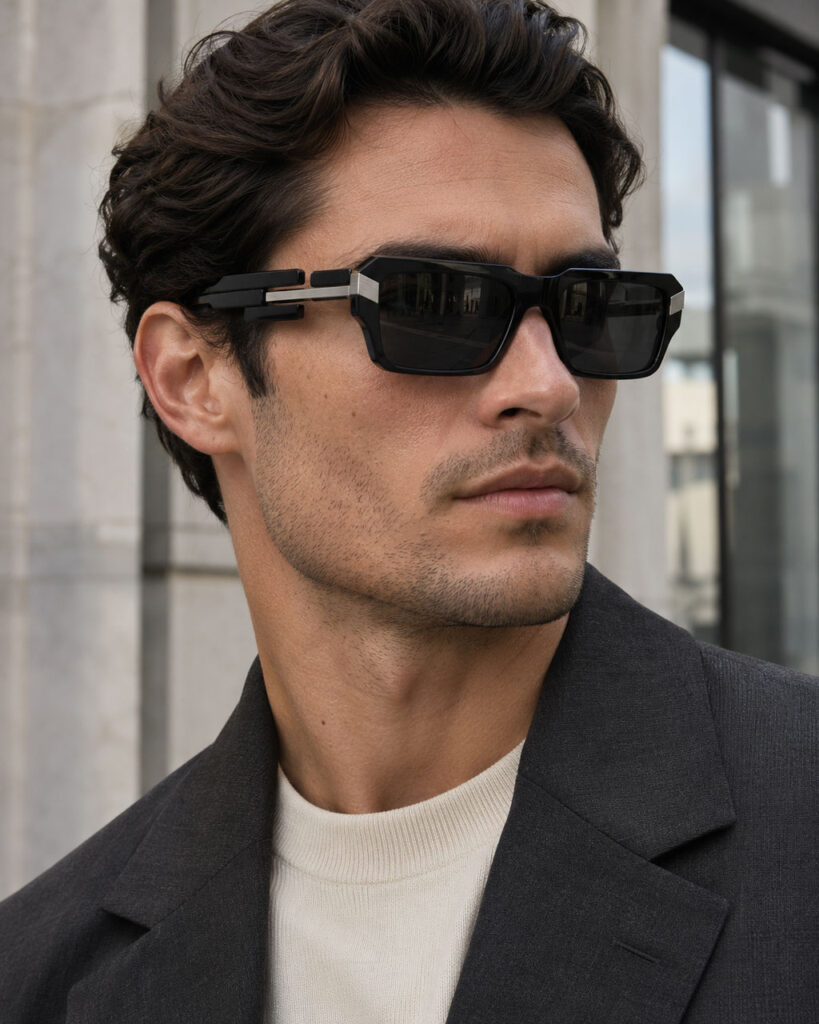
A small metal accent or slightly thicker upper rim can create a noticeable difference. Consequently, a familiar silhouette can gain a different personality.
If you search for “mens designer sunglasses,” examine these details alongside the brand name.
Can Designer Sunglasses Also Be Classic?
Yes. Classic shapes frequently provide the foundation for designer collections.
For instance, a designer might retain a rectangular silhouette while changing its corners, rim thickness, and temple construction.
Therefore, you can choose designer sunglasses without abandoning a timeless appearance.
The more useful question concerns your preference: subtle familiarity, stronger visual expression, or a balance between both.
Classic Men’s Sunglasses Styles to Know
Aviator Sunglasses
Aviators commonly feature curved lenses, thin rims, and a prominent bridge.
Their open metal construction can create a lighter visual effect than a thick acetate frame.
However, lens size and bridge design significantly influence their character. A compact aviator feels different from an oversized version with a double bridge.
Try silver for a cooler palette or gold for a warmer appearance.
Wayfarer-Style and Trapezoid Frames
These frames typically combine a substantial upper line with an angular, tapered outline.
As a result, they provide a defined shape that works well with casual clothing.
Black offers a straightforward option. Alternatively, tortoiseshell introduces patterns without requiring bright colors.
When comparing products, examine the upper corners and frame depth. Small differences can change the overall impression.
Round and Oval Sunglasses
Round frames introduce curved lines and a vintage reference. Oval frames offer a related appearance with a wider, flatter silhouette.
Thin metal versions can look delicate and understated. Meanwhile, thick acetate rims give the same shapes more visual weight.
Therefore, consider construction as carefully as the lens outline.
Rectangular and Browline Frames
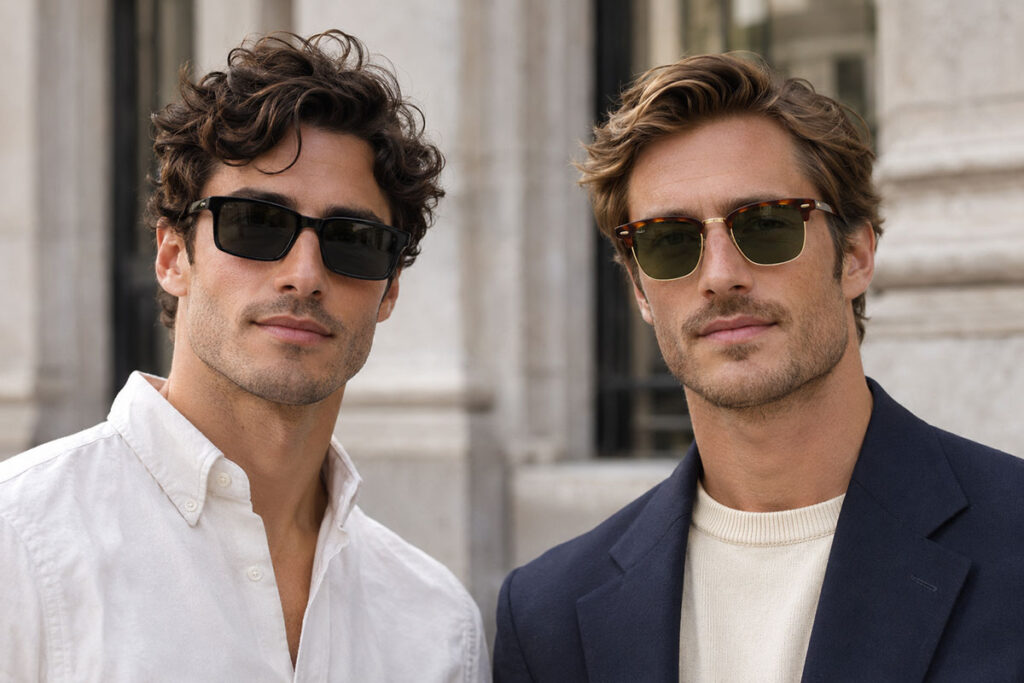
Rectangular sunglasses emphasize horizontal lines and defined corners. They can support both casual and more polished outfits.
Browline designs place greater visual emphasis on the upper frame.
However, neither category guarantees a particular mood. Color, thickness, and finishing details can make these shapes restrained, sporty, or expressive.
What Sets Men’s Designer Sunglasses Apart?
Designer styles often transform familiar frames through a series of small decisions.
Front metal ornaments, rim thickness, temple logos, and color combinations can dramatically change the complete design.
Front Metal Details Change the Focal Point
Metal accents can draw attention toward the upper corners, bridge, or outer edges.
For example, a small silver ornament can sharpen the appearance of a simple black frame.
Alternatively, warm gold details can create a softer contrast against brown or amber acetate.
Placement matters as much as size. A discreet corner accent creates a different effect from a prominent metal bridge.
Therefore, examine the front view carefully when comparing similar sunglasses.
Frame Thickness Changes the Visual Weight
Two frames can share almost identical lens shapes yet create very different impressions.
A thin rim exposes more of the face and reduces the frame’s visual presence. Conversely, a thicker rim makes the outline more prominent.
Designers can also vary thickness within one frame.
These adjustments influence the design without changing its basic category.
Temple Logos Shape the Side Profile
Temple design becomes especially noticeable when someone views you from the side.
A small engraved logo creates a restrained signature. Meanwhile, a large metal emblem turns the temple into a stronger decorative feature.
Wide temples can support prominent branding and contrasting colors. Slim temples usually create a more delicate profile.
Consequently, compare side photographs before making a decision.
Color Combinations Change the Entire Mood
Color can transform even the simplest frame.
Glossy black with gold accents creates a different impression from matte black with dark metal details.
Likewise, clear gray fronts and silver temples can feel lighter than solid black construction.
Two-tone designs introduce another option. A dark exterior and lighter interior can reveal subtle contrast as the wearer moves.
Therefore, judge the complete combination rather than selecting a frame color in isolation.
Materials and Finishes Complete the Design
Material information helps you understand what you are buying. However, material names alone do not establish comfort or construction quality.
Look closely at polished edges, hinge alignment, temple movement, and transitions between components.
Also, consider the finish. Glossy, matte, brushed, and translucent surfaces can make similar frames look noticeably different.
Classic vs. Designer Sunglasses: A Side-by-Side Comparison
When comparing men’s sunglasses, separate appearance from measurable product features.
A recognizable logo may influence your preference. Nevertheless, fit, lenses, and construction require their own assessment.
| Comparison point | Classic design approach | Designer design approach |
| Overall appearance | Familiar shapes and restrained styling | Familiar or experimental shapes with distinctive details |
| Decoration | Often minimal | May emphasize metal accents, logos, or special finishes |
| Frame proportions | Frequently balanced and conventional | May adjust thickness, corners, bridges, or temple width |
| Color choices | Often black, brown, tortoiseshell, or metal tones | May add contrasting, translucent, or unexpected combinations |
| Styling | Often easy to integrate into existing outfits | Can provide either subtle distinction or a strong focal point |
| Fit and comfort | Depend on the specific frame | Depend on the specific frame |
| Lens performance | Requires specification checks | Requires specification checks |
| Purchase value | Depends on features, use, and price | Also includes the value you place on design and branding |
Style and Versatility
Classic frames can simplify daily outfit choices. Their restrained appearance often allows clothing and other accessories to share attention.
Designer frames can offer similar versatility when their details remain subtle.
However, prominent logos or unusual proportions may become the main feature of your outfit.
Choose according to how much attention you want your sunglasses to attract.
Fit and Everyday Comfort
Brand positioning cannot tell you whether a frame fits your face.
Instead, compare dimensions, bridge support, temple pressure, and overall balance.
A visually appealing pair loses practical value if you constantly adjust it.
Therefore, try the sunglasses whenever possible or review the return policy carefully.
Lens Features and Protection
Check the lens specifications for each product you compare.
Look for clear information about UV protection, tint, polarization, and available prescription options.
Do not assume that darker lenses or a higher price establish better protection.
Likewise, check polarization separately from UV protection. These terms describe different lens features.
Price and Long-Term Value
A higher price may reflect design work, materials, manufacturing, branding, distribution, or after-sales support.
However, the balance varies between individual products.
Compare what the price includes. Then consider repair options, replacement parts, and how often you expect to wear the sunglasses.
How to Choose Men’s Sunglasses for Your Face and Fit
Style guides can suggest starting points. Nevertheless, your actual proportions and comfort should guide the final decision.
Use Face Shape as a Starting Point
Angular frames can introduce contrast against softer facial contours.
Meanwhile, curved frames can create a softer outline around more angular features.
However, these ideas are suggestions rather than fixed rules.
Try different shapes and observe the complete result. Your hairstyle, frame size, and personal preferences also influence the appearance.
Check Frame Width
The frame should sit comfortably across your face without excessive pressure at the temples.
If the sunglasses feel tight, compare a wider size or a different construction.
Conversely, an excessively wide frame may slide or extend farther than you prefer.
Use measurements from a comfortable existing pair as a useful reference.
Check Bridge Fit and Temple Length
The bridge should support the frame without persistent slipping or uncomfortable pressure.
Next, check how the temples rest around your ears.
Smile and move your head during a fitting. These simple movements can reveal cheek contact, instability, or pressure.
Consider Weight and Coverage
A substantial frame may create the appearance you want. However, consider how its weight feels during longer wear.
Also, compare lens height and side coverage.
A narrow fashion frame and a larger everyday frame provide different amounts of physical coverage around the eyes.
Which Style Fits Your Lifestyle?
The best men’s sunglasses should suit the situations where you actually wear them.
Start with your routine, then select the design details that support it.
For Work and Business-Casual Outfits
Consider rectangular frames, restrained browlines, or thin metal designs.
Black, dark tortoiseshell, silver, and gunmetal can coordinate with many work wardrobes.
If you prefer designer details, explore small front ornaments or discreet temple logos.
These features can add interest without dominating your appearance.
For Everyday Wear and Travel
Prioritize comfort, convenient storage, and straightforward outfit coordination.
Classic silhouettes offer useful starting points. However, understated designer frames can serve the same purpose.
Additionally, check whether the seller provides adjustments or replacement components.
A practical case also helps you protect the frame during travel.
For Fashion-Focused Outfits
Explore thicker rims, contrasting temples, geometric corners, or distinctive metal accents.
For example, a familiar rectangular frame can become expressive through a wider temple and contrasting logo.
Keep the rest of your accessories coordinated when the sunglasses carry several decorative elements.
Alternatively, choose one strong detail and build your outfit around it.
For Driving and Outdoor Activities
Review lens suitability for your intended activity rather than choosing by appearance alone.
Also, assess visibility, stability, and comfort during movement.
For specialized sports, look for eyewear designed for the activity’s specific requirements.
Everyday fashion sunglasses may not provide the impact protection or secure fit that certain activities require.
Are Men’s Designer Sunglasses Worth the Price?
Designer sunglasses can justify their price when their particular features matter to you.
However, the strongest purchase combines personal appeal with useful specifications and a comfortable fit.
When Paying More May Make Sense
You may value a distinctive silhouette, carefully finished details, or a particular brand’s design language.
Similarly, useful after-sales support can contribute to the purchase.
Nevertheless, verify what the seller actually provides. Avoid assuming that every premium product includes the same services.
When a Classic Pair May Meet Your Needs
A straightforward classic frame may suit you if you prefer easy styling and restrained details.
This approach can also help you focus your budget on fit and suitable lenses.
However, compare individual products. A classic appearance does not automatically mean a lower price.
Compare Specifications Before Brand Names
Create a shortlist based on dimensions, lens information, materials, and price.
Then compare the visual details that distinguish each pair.
Ask yourself whether you prefer the actual design or simply recognize the logo.
This approach helps you choose men’s sunglasses that reflect your priorities.
How Zhantai Glasses Supports Classic and Designer Eyewear Projects
At Zhantai Glasses, we support both classic and custom designer eyewear projects. However, these projects involve different preparation, tooling, and development processes.
Classic Styles: Existing Molds and Established Components
For many classic men’s sunglasses, we already have suitable production molds. Consequently, customers can often avoid separate mold development and its associated costs.
These established designs also make component sourcing more straightforward. We can usually identify matching hinges, temples, and other fittings for production.
As a result, classic styles offer a practical starting point for customers who prioritize simpler development and lower tooling costs.
Designer Styles: More Detailed Development and Custom Tooling
Custom designer styles often introduce specific changes to frame corners, rim thickness, temple construction, and decorative elements. These details frequently require new molds.
Therefore, we generally allow around one month for initial discussions to clarify the design, from drawings to physical execution.
During this stage, we review dimensions, materials, colors, construction, and finishing details with the customer.
However, some details only become clear after we produce a sample. We then discuss those features further and refine the design where necessary.
Exclusive metal ornaments can also require their own molds and separate production. Consequently, these components add development time alongside the frame itself.
The initial discussion period does not represent the complete project timeline. Sampling, revisions, and custom component production can extend the overall schedule.
Nevertheless, this investment allows us to develop a more distinctive finished product. Carefully coordinated details can transform a familiar silhouette into something striking.
Contact Zhantai Glasses to discuss your classic or designer eyewear project. We can review existing mold options or explore the development your custom design requires.
What to Check Before Buying Men’s Sunglasses
Before purchasing, review the product and the seller together.
Clear information makes comparisons easier and reduces uncertainty.
Verify Lens Information
Read the product description carefully and request missing specifications.
Confirm UV protection information and any claimed polarization.
If you need prescription lenses, ask whether the exact frame supports your prescription requirements.
Check Authenticity and Seller Credibility
For branded products, review the sales channel, seller history, purchase documentation, and available product information.
Do not rely on packaging or one decorative detail alone.
If important information conflicts, resolve those questions before ordering.
Review Returns, Warranties, and Repairs
Check the return window and any conditions affecting eligibility.
Also, ask what the warranty covers and how the seller handles repairs.
For expensive frames, replacement temples, nose pads, or other components may influence long-term ownership costs.
Frequently Asked Questions About Men’s Sunglasses
What Is the Difference Between Classic and Designer Sunglasses?
Classic describes an established design style. Designer describes a product associated with a particular designer or brand identity.
Therefore, one pair can belong to both categories.
Are Men’s Designer Sunglasses Always Better Quality?
No. Quality varies between individual products.
Compare materials, assembly, lens information, comfort, and after-sales support instead of relying only on branding.
Why Do Similar Frames Look So Different?
Small changes affect the complete design.
Front metal accents, rim thickness, temple logos, and color combinations can give similar silhouettes very different personalities.
Are Expensive Sunglasses Always Polarized?
No. Price does not confirm polarization.
Check the specifications for the exact model and lens option you plan to purchase.
How Do I Find the Right Size?
Compare frame width, bridge measurements, and temple length with a pair that fits comfortably.
Then assess pressure, slipping, and cheek contact during wear.
Can I Add Prescription Lenses?
Some frames support prescription lenses, while others have limitations.
Ask an optical professional to assess the specific frame and your prescription before purchasing.
Find the Right Balance of Style, Comfort, and Value
The right men’s sunglasses combine a design you enjoy with a fit you can comfortably wear.
First, identify your preferred silhouette. Next, compare the details that change its character, including metal accents, rim thickness, temple branding, and color.
Finally, verify lens specifications, seller policies, and the total purchase cost.
Classic and designer styles both offer worthwhile possibilities. Your priorities will determine which particular pair provides the strongest value.
Contact Zhantai Glasses to discuss your preferred frame shapes, colors, and design details.
Share whether you want a restrained classic look or a more distinctive style. Ask about available options, sizing, and lens specifications.