Choosing kids eyeglasses involves more than selecting a colorful frame. Materials, bridge support, lens compatibility, and repair options all influence everyday wear.
Flexible frames can accommodate some bending. Meanwhile, traditional frames offer more structured designs with different adjustment and styling possibilities.
However, neither category automatically provides the best solution for every child.
The best choice combines a suitable prescription, stable fit, appropriate lenses, and a frame that supports your child’s routine.
This guide compares TPE flexible frames with traditional alternatives. It also explains materials, age-related considerations, frame weight, and practical buying questions.
Flexible vs. Traditional Kids Eyeglasses: What’s the Difference?
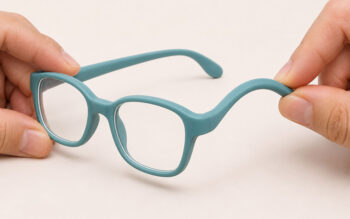
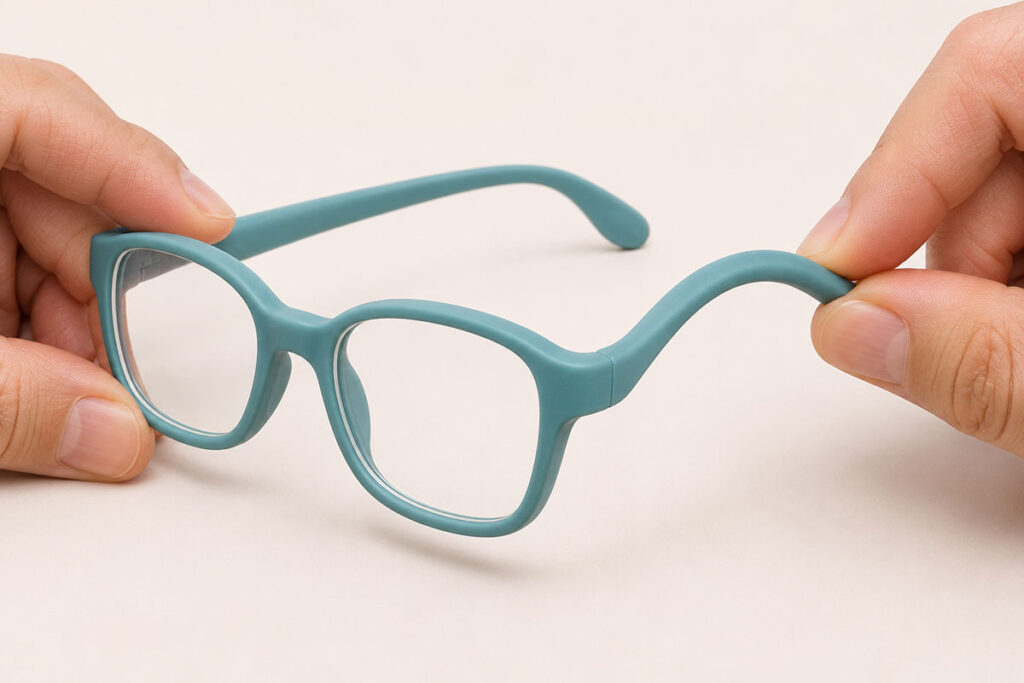
Flexible frames allow certain parts to bend during handling or wear. Traditional frames generally maintain a more defined structure.
Nevertheless, these categories overlap. Some structured frames include flexible temples, while others use spring hinges.
Therefore, compare the complete design rather than relying on one descriptive label.
TPE Flexible Frames
TPE stands for thermoplastic elastomer. This material category combines thermoplastic processing characteristics with rubber-like elasticity.
Manufacturers can use different formulations and hardness levels. Consequently, two TPE frames may feel and behave differently.
A soft frame may bend easily. However, its design must also hold the lenses securely and maintain an appropriate wearing position.
In this comparison, TPE soft frames represent the main flexible category. Other materials can also provide flexibility.
Traditional Frames
Here, traditional frames include more structured plastic and metal designs.
Examples include cellulose propionate, cellulose acetate, stainless steel, and titanium frames.
These materials offer different construction, adjustment, and finishing possibilities. However, the material name alone cannot establish comfort or durability.
Flexible Frames vs. Spring Hinges
Frame flexibility and hinge movement describe different features.
A flexible temple bends through its material or construction. A spring hinge allows additional movement at the connection between the temple and front.
Therefore, a frame can include spring hinges without having a soft front.
Likewise, a one-piece soft frame may not require conventional hinges.
Kids Eyeglasses Materials Explained
Understanding materials makes product comparisons easier. However, always check the actual formulation, construction, and manufacturer’s instructions.
| Material | What it means | What to compare |
| TPE | Thermoplastic elastomer family | Hardness, recovery, lens retention, and construction |
| SEBS-based TPE | TPE compounds using SEBS polymers | Formulation, softness, and finished-frame performance |
| Silicone | A separate elastomer material | Soft-frame design, cleaning, and lens retention |
| TR90 | Transparent polyamide material | Weight, structural flexibility, and adjustment instructions |
| CP | Cellulose propionate | Molded construction, finish, and component availability |
| Acetate | Cellulose acetate | Color options, thickness, weight, and professional adjustment |
| Stainless steel | A metal used in frame construction | Temple design, joints, nose pads, and alloy information |
| Titanium | Pure titanium or titanium alloys | Exact composition, construction, weight, and adjustment |
| Ultem / PEI | Polyetherimide engineering thermoplastic | Material documentation, frame structure, and servicing |
TPE and SEBS-Based Compounds
TPE describes a material family rather than one fixed formula.
SEBS can serve as a base polymer in certain TPE compounds. Therefore, TPE and SEBS are related terms, rather than completely separate alternatives.
Kraton’s technical information identifies SEBS within its polymer product range. However, finished-frame performance still depends on the specific compound and design.
For buyers, useful questions include hardness, permitted adjustment methods, and replacement options.
Silicone vs. TPE
Silicone and TPE can both create soft-feeling components. However, they are different materials.
Do not assume they share identical cleaning, processing, or repair requirements.
Instead, compare the finished products. Look at bridge support, frame shape, lens retention, and any detachable components.
Also, follow the manufacturer’s cleaning instructions.
TR90
TR90 belongs to the transparent polyamide category. EMS-GRIVORY identifies Grilamid TR90 within its materials for optical applications.
TR90 frames can offer a useful combination of low weight and structural flexibility.
However, they should not automatically feel like soft TPE frames. Frame thickness, geometry, and construction also influence their behavior.
CP and Acetate
CP means cellulose propionate. Manufacturers can use it in molded frame designs.
Cellulose acetate provides another structured plastic option, including familiar sheet-based frame construction.
When comparing these materials, examine finish, thickness, total weight, and serviceability.
Also, ask an optician which adjustments the specific frame permits.
Stainless Steel, Titanium, and Ultem
Metal frames can use stainless steel, pure titanium, or different titanium alloys.
Beta titanium and pure titanium are not interchangeable descriptions. Ask for the actual material specification.
Meanwhile, Ultem refers to a PEI material family rather than a metal.
For each option, assess the complete frame. Joints, nose pads, temple geometry, and dimensions all contribute to the wearing experience.
Proprietary Material Names
Some brands use proprietary names for their materials.
If you compare products from Miraflex or Nano Vista, consult the documentation for the exact model.
Do not automatically classify a proprietary material as standard TPE or TR90 without confirmation.
TPE Flexible Frames vs. Traditional Frames: A Practical Comparison
When comparing kids eyeglasses, separate flexibility from fit, lens performance, and repairability.
A frame can perform well in one area while requiring compromises elsewhere.
| Factor | TPE flexible frames | Traditional structured frames |
| Flexibility | Depends on compound hardness and design | Depends on material, temples, and hinges |
| Shape retention | Requires assessment of recovery and lens support | Requires assessment of alignment and construction |
| Fit | Depends on bridge, temples, and retention features | Depends on dimensions and available adjustments |
| Weight | Varies with formulation and frame size | Varies with material and construction |
| Adjustment | May offer limited conventional adjustment | Some designs allow professional adjustment |
| Repairs | Depend on modularity and replacement availability | Depend on joints, components, and repair support |
| Lens compatibility | Requires confirmation for the specific prescription | Requires confirmation for the specific prescription |
| Ownership cost | Includes replacement components and servicing | Includes adjustments, repairs, and replacement components |
Flexibility Does Not Mean Unbreakable
Flexible frames can still suffer damage.
Repeated twisting, excessive force, heat, and unsuitable cleaning products may affect the frame.
Therefore, avoid treating flexibility as permission for deliberate bending.
Also, inspect lens retention and connection points after rough handling.
Softness Does Not Guarantee Better Fit
Soft material cannot compensate for an unsuitable bridge or incorrect frame width.
A frame that slips repeatedly may affect comfort and wearing consistency.
Conversely, a structured frame can feel comfortable when its dimensions and adjustments suit the child.
Compare Long-Term Costs
Look beyond the initial price.
Ask whether the supplier offers replacement temples, straps, nose pads, or other components.
Then consider adjustment services and warranty coverage.
A repairable frame may offer practical value. However, replacement costs and availability vary between products.
Choosing Eyeglasses for Kids by Age
Age groups provide useful starting points. Nevertheless, facial proportions, prescription needs, and individual development should guide the final selection.
AAPOS emphasizes proper sizing, comfort, and professional fitting when selecting children’s glasses.
Ages 0–2: Soft Construction and Secure Support
For infants and toddlers, discuss soft silicone or TPE frame options with an experienced pediatric dispensing professional.
Examine the bridge carefully. It should support the glasses in the intended position.
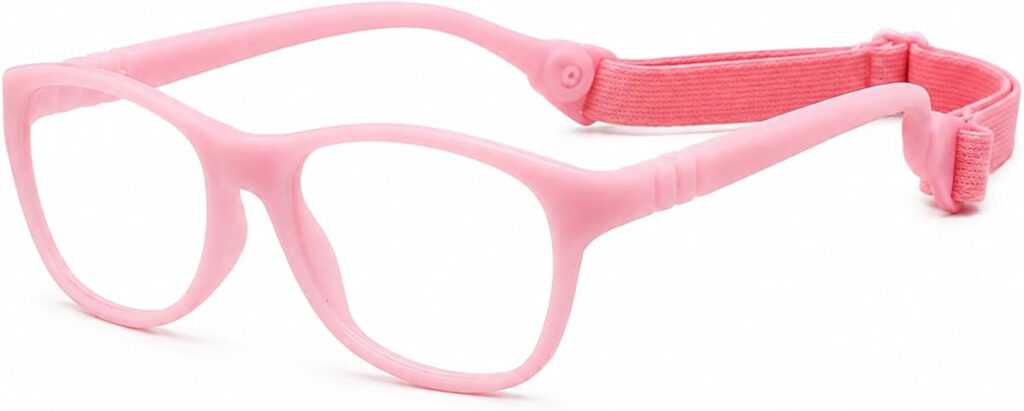
An integrated bridge and an appropriately fitted strap may help certain designs stay in place.
Also, inspect detachable components and exposed hardware.
Simpler construction can reduce the number of separate parts. However, a metal-free label alone does not establish overall suitability.
Ages 2–5: Flexible Designs for Everyday Movement
At this stage, compare TR90 and other flexible polymer designs alongside softer alternatives.
Some frames use cable temples that curve around the ears. Others use straps, spring hinges, or different retention systems.
These features perform different roles. Consequently, every child does not need all of them together.
Choose the combination that provides comfortable support without excessive pressure.
Ages 6–12: Lightweight Construction and Practical Adjustment
TR90 offers one material option for school-age children.
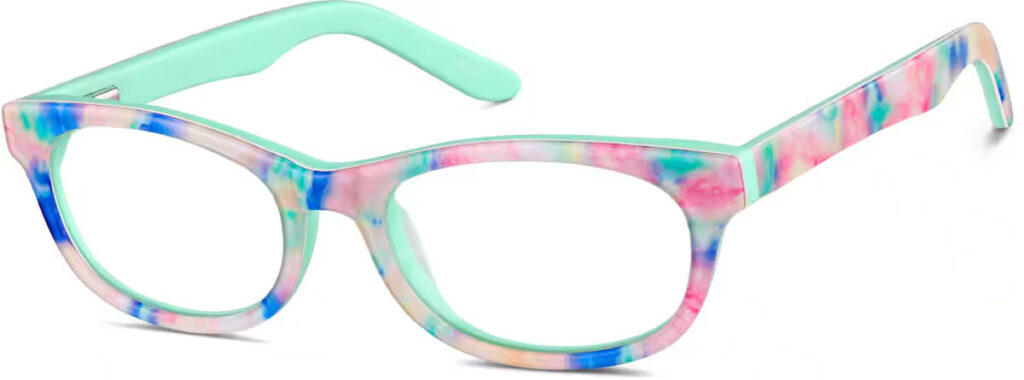
However, CP, acetate, and appropriately designed metal frames also deserve consideration.
Compare adjustment possibilities, hinge construction, spare parts, and daily comfort.
For example, a frame might display the measurements 47–16–125. These numbers describe dimensions, rather than an age recommendation.
Let children participate in color and shape choices after identifying suitable fits.
Ages 13+: More Style Options
Teenagers may prefer designs that resemble adult eyewear.
Acetate, titanium, beta titanium, and PEI frames provide different styling and construction possibilities.
Nevertheless, an adult-looking frame does not guarantee an appropriate size.
Continue to check bridge support, temple pressure, and prescription compatibility.
How to Check Fit, Weight, and Stability
Well-fitting kids eyeglasses should remain comfortable and stable during normal activities.
Start with dimensions, then assess how the complete pair behaves during wear.
Check Frame Width and Bridge Fit
The frame should sit comfortably without excessive temple pressure.
Meanwhile, the bridge should support the glasses without persistent slipping or painful marks.
Ask the optician to check the wearing position and lens alignment.
Also, ensure the frame does not rest heavily against the cheeks.
Understand Frame Measurements
A marking such as 47–16–125 usually indicates three measurements in millimeters:
- 47: lens width.
- 16: bridge size.
- 125: temple length.
However, these numbers do not describe every aspect of fit.
Bridge shape, front curvature, and temple design can make similarly marked frames fit differently.
Treat 15 Grams as a Design Reference
A complete frame weighing 15 grams or less, excluding lenses, can serve as a lightweight product-development target.
However, this figure is not a universal medical requirement.
Ask what the stated weight includes. Some listings describe the frame alone, while others may include demonstration lenses.
Prescription lenses change the final weight. Moreover, balance and pressure distribution matter alongside the number on a scale.
Test Everyday Movements
Ask your child to look down, turn their head, and smile.
Then check whether the glasses slide, tilt, or press against the cheeks.
If problems persist, request a professional adjustment or compare another frame.
Lens Materials and Coatings: What Parents Should Know
Frame material and lens material require separate decisions.
Soft eyeglasses for kids do not automatically include suitable impact-resistant lenses.
Polycarbonate Lenses
AAPOS recommends polycarbonate lenses for children unless their ophthalmologist advises otherwise.
Therefore, discuss lens selection with the professional handling your child’s prescription.
Also, ask about scratch-resistant treatment and appropriate cleaning methods.
Impact resistance does not mean a lens cannot suffer damage.
Trivex Lenses
Trivex provides another lens material to discuss with your eye care professional.
The American Academy of Ophthalmology states that Trivex lenses meet the same safety standards as polycarbonate lenses.
However, prescription requirements and product availability can influence the final recommendation.
Why Children Generally Avoid Glass Lenses
Glass lenses are generally unsuitable as a routine choice for children.
The International Agency for the Prevention of Blindness recommends impact-resistant lenses and advises against glass in school eye health programs.
However, professional recommendations and legal requirements are different matters.
For example, FDA guidance addresses impact resistance without universally restricting lenses to PC or Trivex.
Blue-Light Filtering Is Not the Main Priority
Do not select kids eyeglasses primarily because of blue-light marketing.
The American Academy of Pediatrics explains that families do not need special purchases to support healthier screen habits.
Prioritize the correct prescription, comfortable fit, regular breaks, and appropriate screen routines.
Also, avoid treating blue-light filtering as a substitute for prescribed myopia management.
Everyday Glasses vs. Sports Eyewear
A flexible frame does not automatically qualify as sports protective eyewear.
Likewise, impact-resistant lenses alone do not establish the protective performance of the complete product.
For specific sports, ask about eyewear designed and tested for that activity.
Questions to Ask Before Buying Kids Eyeglasses
Use these questions when comparing products online or visiting an optical shop:
- What is the exact frame material?
- Does the stated weight include lenses?
- Does this frame suit my child’s prescription?
- Can an optician adjust the bridge or temples?
- Which replacement parts are available?
- What does the warranty cover?
- Can we return the frame if it fits poorly?
- When should we schedule another fit check?
Clear answers make comparisons more useful than broad claims such as “super flexible” or “ultralight.”
Furthermore, ask your child how the glasses feel. Their feedback can reveal discomfort that photographs and measurements cannot show.
How to Care for Flexible and Traditional Frames
Good care supports the everyday performance of eyeglasses for kids.
However, different materials may require different handling.
Follow the Cleaning Instructions
Use cleaning methods recommended for the frame and lenses.
Avoid assuming that every soft material tolerates the same chemicals or temperatures.
For coated lenses, ask which cleaning products the lens supplier recommends.
Avoid Deliberate Bending and Excessive Heat
Teach children to remove glasses gently with both hands.
Also, discourage repeated twisting, even when the frame appears highly flexible.
Store the glasses in a suitable case. Keep them away from excessive heat.
Inspect Straps, Hinges, and Components
Check for loose parts, damaged straps, uneven temples, and changes in lens seating.
If something moves unexpectedly, stop forcing the component and contact the optical shop.
Professional inspection can help identify whether adjustment or replacement is necessary.
Recheck Fit as Your Child Grows
Children’s facial dimensions change over time.
Consequently, a previously comfortable frame may begin slipping or creating pressure.
Arrange a fit review when you notice these changes. Follow the review schedule recommended by your child’s eye care team.
Frequently Asked Questions About Kids Eyeglasses
Are All Flexible Kids Eyeglasses Made from TPE?
What Is the Difference Between TPE, Silicone, and TR90?
Are Flexible Frames Better Than Traditional Frames?
Does Every Child Need Spring Hinges?
Must Children’s Frames Weigh Less Than 15 Grams?
Should I Choose PC or Trivex Lenses?
Do Children Need Blue-Light Filtering Lenses?
Can Everyday Flexible Glasses Replace Sports Goggles?
Choose Kids Eyeglasses by Fit, Material, and Daily Needs