Designer sunglasses for men can express individuality through precise bridge details, temple accents, and coordinated finishes without relying on exaggerated shapes or bright colors. For wholesale buyers, the choice between an existing house design and custom development depends on the desired differentiation, construction requirements, budget, and launch schedule. Start with a wearable silhouette, identify the details that give it character, and validate those details through samples. The strongest result combines a distinctive appearance with comfortable fit and repeatable manufacturing.
Key Takeaways
A distinctive everyday frame combines thoughtful detailing, practical construction, and a sourcing route that matches the buyer’s requirements.
- Small details can establish identity. A bridge accent, textured insert, or engraved temple can differentiate a familiar silhouette.
- Decoration should support everyday wear. Component placement, smooth edges, weight distribution, and fit remain essential.
- Existing designs and custom development offer different starting points. Compare the actual modifications, tooling, sampling, and commercial terms.
- Samples make design quality assessable. Inspect attachment, alignment, finishing, and comfort before approving production.
What Defines Understated Designer Sunglasses for Men?
Understated designer character comes from deliberate proportions and coordinated details that add interest without overwhelming the wearer.
Familiar Shapes with Distinctive Details
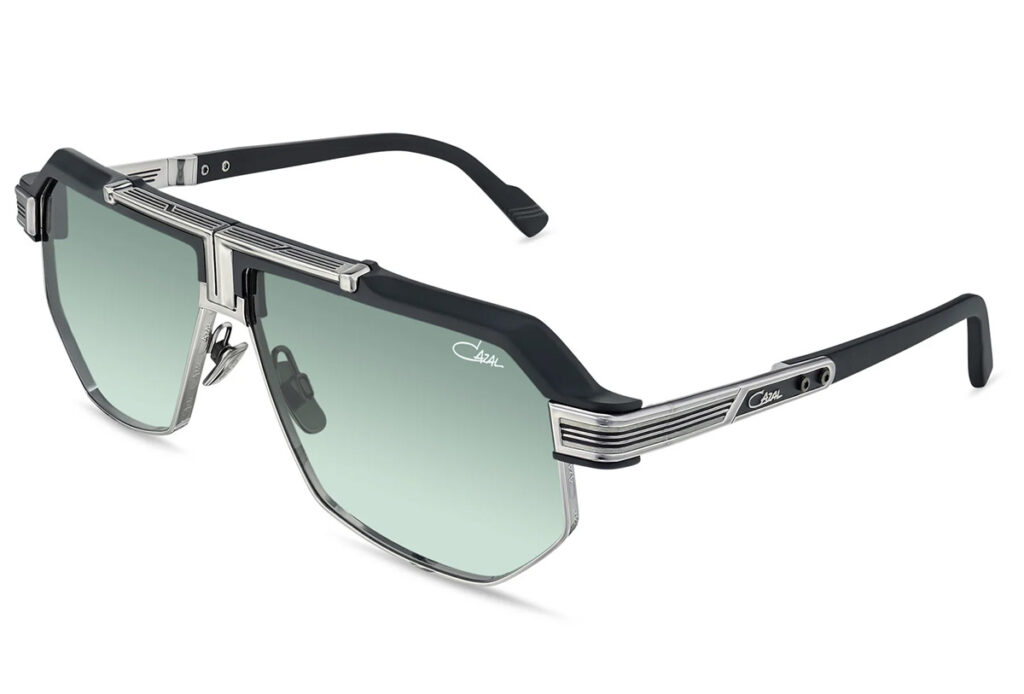
A rectangular, square, round, or aviator-inspired frame provides a recognizable starting point. Its character can then change through a small adjustment in the bridge, temple profile, or surface finish.
Consider two black rectangular frames with similar dimensions. One has a plain front and smooth temples. The other adds a narrow metal strip at the bridge and a recessed accent near the hinge. The second introduces another layer of detail while retaining a restrained overall appearance.
For buyers exploring a conventional base silhouette, Zhantai’s OEM rectangle plastic sunglasses provide a product reference for discussing materials, dimensions, and possible development requirements.
Individuality Without Visual Excess
A detail does not need to be large to be noticeable. Fine grooves, a contrasting surface, or a shaped metal insert can become visible when the wearer turns their head.
The important question is whether each detail contributes to the same design direction. Adding several unrelated ornaments can make a frame feel unresolved, even if each component looks attractive separately.
Original Design Versus Brand Imitation
Here, “designer” describes the intended design character rather than an affiliation with a particular luxury label.
Develop an original combination of proportions, textures, and decorative features. When using references, explain which general qualities you want to explore instead of requesting another brand’s logo or distinctive signature component.
Bridge Details: A Small Area with Strong Design Potential
Metal Accents and Decorative Covers
A restrained metal cover can introduce contrast against a dark frame. Alternatively, a narrow insert can follow the bridge line without changing the entire silhouette.
For example, a brushed gunmetal detail on a black frame creates a different effect from polished gold on translucent brown. Neither combination is inherently better. The choice should match the collection’s visual direction and target customer.
Clarify whether the component is decorative, structural, or serves both functions. Its appearance alone does not explain how it supports or attaches to the frame.
Engraving, Texture, and Geometric Lines
Fine grooves or a small geometric motif can give the bridge more character without adding a prominent separate part.
These details need to be judged at the actual product scale. An engraving that appears bold in an enlarged rendering may become indistinct on a finished component. Conversely, deep or crowded lines may look heavier than intended.
Review the detail on a physical sample, not only in a magnified drawing.
Proportion, Placement, and Wearing Clearance
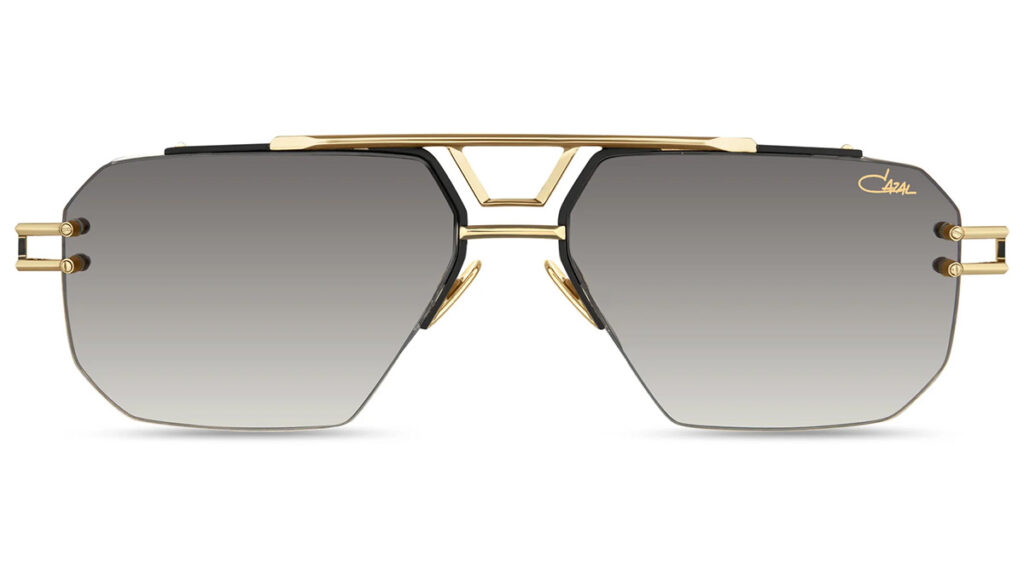
Inspect the bridge detail from the front, above, and inside the frame. Check symmetry, edge quality, and its relationship to the lens openings.
Also assess clearance around the nose. A decorative component should not create an unexpected contact point or interfere with the intended fit.
Temple Details: Personality from the Side
Temple decoration creates a distinctive side profile while allowing the front of the frame to remain simple.
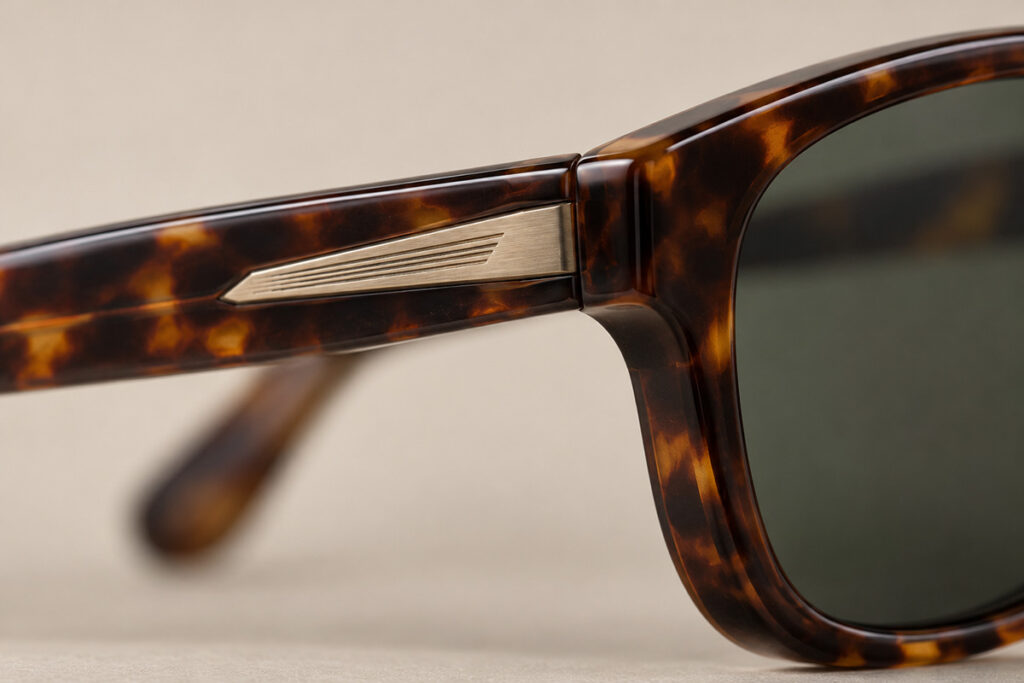
Small Metal Inserts and Sculpted Accents
A slim insert near the hinge can give a frame a recognizable side detail. A small relief or geometric plaque offers another direction.
Placement matters as much as shape. A component positioned close to the hinge may interact with moving parts, while a thicker insert farther along the temple may affect the profile or balance.
Ask the manufacturer to assess the available space and attachment method before finalizing the artwork.
Engraved Lines and Surface Transitions
Contrast can come from finish rather than color. A matte temple with a polished strip can introduce depth while keeping the palette restrained.
A translucent temple may also reveal an internal detail as part of the design. However, the sample should confirm that the visible components look intentional and consistent.
Coordinate the Bridge and Temples
Repeating a texture, finish, or geometric line helps connect separate areas of the frame.
For instance, a brushed bridge accent can be paired with a smaller temple insert in the same finish. Keeping the side detail less prominent may preserve the bridge as the main focal point.
A coherent design usually benefits more from controlled repetition than from additional decoration.
Why Restrained Details Work for Everyday Styling
Match Workwear, Casual Clothing, and Weekend Outfits
A dark rectangular frame with a muted metallic accent is one possible direction for customers who prefer a clean, structured appearance.
A brown frame with a softer metal finish provides another option. It can introduce warmth without depending on a bright color combination.
These are styling choices rather than universal male preferences. Evaluate them against your own customer profile. For a related silhouette discussion, explore Zhantai’s article on aviator sunglasses for men.
Keep Decoration Away from Pressure Points
Inspect the inside of the temples as carefully as the outside. Fasteners, inserts, or raised edges should not create uncomfortable contact.
Check whether added components affect weight distribution, temple movement, or case storage. A detail that looks refined on display may still require adjustment for daily use.
Preserve Lens and Fit Requirements
Decorative quality does not establish optical performance, UV protection, or comfortable fit.
Specify lens requirements separately and request relevant product evidence. Then assess the completed frame on representative wearers, including its bridge support, overall width, and temple pressure.
House Designs or Custom: Which Route Fits Your Collection?
Start with a Manufacturer’s Existing Design
A house design is a manufacturer’s existing design offered for buyer evaluation. It may provide a suitable combination of shape, construction, and decoration.
Ask which configurations are available and which changes are permitted. Do not assume that the design is held in stock, fully tested in every configuration, or exclusive to your brand.
Customize Selected Details
For some collections, the best starting point is an existing frame with focused modifications.
You might retain its geometry while changing an insert, engraving, finish, or branding position. However, even a small visual change can require a new component, tooling adjustment, or different assembly process.
The scope of the modification determines the development work, not its apparent size in a photograph.
Develop a New Frame and Decorative System
Full development becomes relevant when the required proportions and decorative features cannot be achieved through an existing design.
Define the complete frame and its components together. Confirm feasibility, tooling arrangements, sample stages, and commercial expectations before proceeding.
Document any agreed design ownership and exclusivity. These should be explicit project terms rather than assumptions based on the word “custom.”
Comparison Table: Existing Designs, Detail Customization, and Full Development
These three routes differ mainly in their starting point, modification scope, and validation requirements.
| Factor | Existing house design | Detail customization | Full custom development |
| Starting point | Available frame and component design | Existing frame with specified changes | New frame and component specifications |
| Differentiation | Depends on the selected model | Concentrated in selected features | Can extend across geometry and decoration |
| Tooling | Confirm existing tooling is suitable | New parts or changes may require tooling | Assess frame and component tooling |
| Sample review | Verify the offered configuration | Check modifications and integration | Validate the complete design |
| Timing | Confirm availability and approval requirements | Depends on modification and sample work | Depends on development scope and revisions |
| Cost | Quote the actual configuration | Include new parts, tooling, and assembly changes | Separate development, tooling, and unit costs |
| Exclusivity | Not implied | Requires agreement | Requires agreement |
For designer sunglasses for men, compare quotations against the same lens specification, finish, quantity, packaging, and inspection requirements. Otherwise, price differences may reflect different products rather than manufacturing efficiency.
How Buyers Should Evaluate Decorative Quality
Decorative quality should be assessed through placement, attachment, finishing, and its effect on the completed frame.

Check Alignment, Edges, and Finish Consistency
Compare the left and right sides for component placement and visual balance. Examine gaps, burrs, rough edges, and finish variation.
Inspect under consistent lighting and from several angles. A reflective part can conceal unevenness in one view and expose it in another.
Agree on acceptable variation using the approved sample and written requirements.
Confirm Attachment and Relevant Testing
Ask how each component is secured. The appropriate method depends on the frame material, component geometry, and expected use.
Agree on relevant attachment and finish-performance checks. Avoid accepting a broad durability statement without understanding what was tested and which configuration it covers.
Approve Samples Through a Clear Sequence
- Define the brief. Identify the silhouette, essential details, materials, lenses, budget, and target quantity.
- Review feasibility. Resolve component space, attachment, tooling, and assembly requirements.
- Develop samples. Evaluate the proposed details at their actual scale.
- Inspect fit and execution. Check comfort, alignment, finish, operation, and supporting documentation.
- Confirm revisions and approval. Record the final sample, specifications, tolerances, and change rules.
- Inspect production. Compare goods with the agreed requirements before shipment.
Develop Your Men’s Collection with Zhantai
Share Your References and Essential Details
We welcome original sketches, AI concepts, and reference images you are authorized to use.
Tell us which bridge or temple details define your concept. AI images can communicate the visual direction, but development still needs to resolve dimensions, component attachment, fit, and assembly.
Some adjustments may be necessary. Explaining their purpose helps preserve the creative idea while moving toward a workable product.
Request Suitable Designs and a Project-Specific Quote
Ask our team to discuss relevant existing designs or assess a custom direction.
Share your quantity, budget, lens requirements, destination market, and expected launch timing. These inputs help make the discussion specific and the quotation useful.
FAQ: Questions from B2B Eyewear Buyers
Can an Existing Frame Be Customized with Bridge or Temple Decoration?
Do Small Decorative Details Always Cost Less Than a New Frame?
Does Custom Development Automatically Give My Brand Exclusive Rights?
No. Exclusivity and ownership need to be addressed in the project agreement. Confirm the agreed scope for designs, decorative components, and tooling, including any territorial or time limits.
Ready to develop designer sunglasses for men with distinctive details and everyday appeal? Contact Zhantai to request the latest catalog or a tailored OEM/ODM quotation. Share your preferred silhouette, bridge and temple ideas, target quantity, and budget so we can help assess a practical manufacturing approach.