Newsroom

News Release |

Sunglasses UV Protected: How CR39, AC, and PC Affect UV400 Performance

CR39, AC, and PC describe the lens substrate, but none of these material names alone proves that the finished sunglasses are UV400 compliant. For sunglasses UV protected to the required level, buyers must define the UV specification separately and verify the completed lens configuration. CR39 is generally selected for optical quality, AC for cost-efficient plano fashion programs, and PC for impact resistance. The practical factory rule is simple: material builds the lens; testing proves its UV performance.

What Does “Sunglasses UV Protected” Actually Mean?

Sunglasses UV protected means the finished lenses meet a defined ultraviolet-transmission requirement, not merely that they look dark or use a familiar resin.

UV400 is a common commercial description for lenses designed to block ultraviolet radiation through wavelengths up to 400 nanometers. However, a buyer should not use lens color, polarization, or substrate name as substitute evidence. A dark smoke lens controls visible light, while UV protection concerns invisible ultraviolet transmission. A light gray, gradient, or even clear lens can still deliver strong UV protection when its material structure and treatment are correctly specified.

For general-use plano sunglasses, ISO 12312-1:2022 covers products intended to protect against solar radiation, including sunglasses used for road use and driving. The exact compliance route still depends on the destination market, product claim, and intended use. Therefore, buyers should define the applicable standard before sample approval, rather than asking the factory only for “UV400 lenses.”

The most important sourcing distinction is this: UV400 is a performance requirement; CR39, AC, and PC are material choices.

How Do CR39, AC, and PC Affect UV400 Performance?
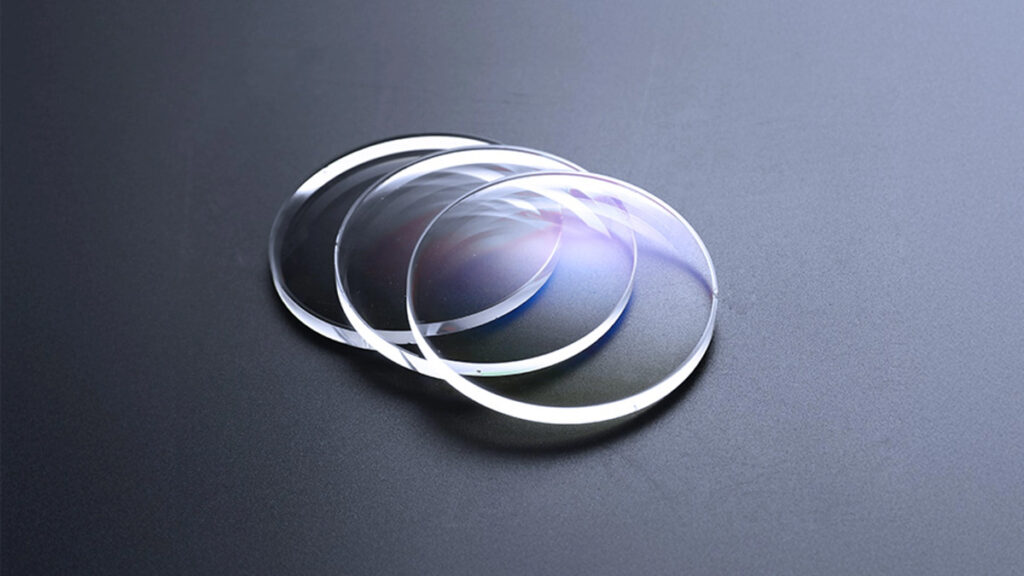
CR39, AC, and PC affect optical quality, impact behavior, tinting, cost, and processing, while the final UV400 result depends on the exact grade, additives, treatments, and finished-lens verification.
CR39 lenses
From the production floor, we do not ask which material is universally “best.” We first identify the product’s job. A prescription fashion sunglass and a high-wrap cycling model have different structural needs, even if both must meet the same UV requirement. The material decision should therefore follow the target market, selling price, lens geometry, optical expectations, and impact requirement.
Factory Comparison
CR39
AC / PMMA
PC
Primary reason to choose
Optical quality and tintability
Cost-efficient fashion production
Impact resistance and low weight
Typical sunglass program
Prescription or premium fashion
Plano fashion, promotional, wholesale
Sports, kids, wraparound, active use
Color development
Excellent for solid and gradient tints
Strong for mass-market colors and mirror effects
Depends on molded lens and coating structure
Impact performance
Lower than PC
Suitable for general fashion use
Highest of the three
Main factory control point
Optical power, tint uniformity, surface quality
Distortion, color, cost, UV formulation
Molding stress, impact, coating adhesion, UV grade
Does the material name prove UV400?
No
No
Not as a universal purchasing assumption
The table explains commercial positioning, not a pass-or-fail UV result. Two lenses made from the same broad material family may use different resin grades, absorbers, thicknesses, colors, or coatings. That is why a reliable specification names both the substrate and the required optical performance.

When Should Buyers Choose CR39 Sunglass Lenses?

Buyers should choose CR39 when optical clarity, prescription capability, and smooth tint development matter more than maximum impact resistance.
CR39 is a thermoset optical resin widely associated with prescription lenses. In sunglasses, it is especially useful for prescription sunwear, premium fashion programs, solid tints, and smooth gradients. Its optical behavior is a strong reason it remains relevant even though newer impact-resistant materials are available.
CR39 also accepts dye well, which gives a lens laboratory considerable control over gray, brown, green, and fashion tints. For women’s prescription sunglasses, a smooth top-dark to bottom-light gradient can be commercially valuable. Nevertheless, the tint result and UV performance must be approved separately. A beautiful gradient does not prove that ultraviolet transmission meets the required limit.
The principal trade-off is impact resistance. CR39 is not normally our first platform for aggressive wraparound sports eyewear, children’s sunglasses, or products with a demanding impact specification. In those cases, PC is usually more practical. For CR39 sunglasses lenses, buyers should pay close attention to optical power, prism, tint consistency, edge quality, and the final UV test result.

When Are AC Lenses the Practical Choice?

AC lenses are a practical choice for cost-sensitive plano fashion sunglasses that need attractive colors, efficient production, and a competitive wholesale price.
In the sunglasses supply chain, AC commonly refers to acrylic lens material, often associated with PMMA. Buyers should still confirm the supplier’s exact material designation because trade terminology is not always used consistently across factories and markets.
AC lenses are common in supermarket programs, promotional sunglasses, seasonal collections, and high-volume fashion orders. They can support smoke, brown, tea, gradient, and mirror looks at an efficient price. Their main commercial strengths are:
  • Competitive cost for high-volume plano sunglasses
  • Broad color and appearance options for fashion collections
  • Efficient production for stable, repeatable order programs
  • Compatibility with many injection and fashion frame structures
Low cost does not automatically mean poor UV performance. A properly formulated AC lens can meet the agreed UV requirement. Conversely, a dark low-cost lens with no verified specification should never be assumed to be UV400. In bulk production, we also monitor distortion, surface scratches, color variation, and left-right consistency because an acceptable UV reading alone does not make the entire lens acceptable.

Why Is PC Preferred for Sports and Impact-Sensitive Sunglasses?
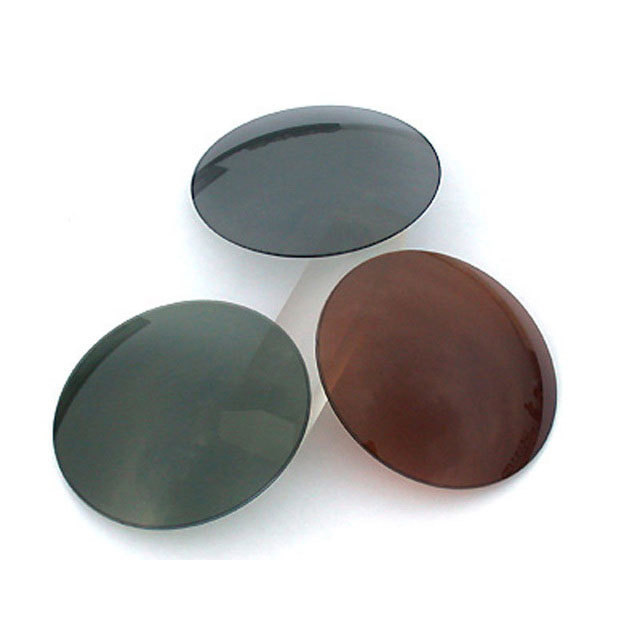
PC is preferred for sports and impact-sensitive sunglasses because it combines high impact resistance, low weight, and strong compatibility with curved lens designs.
Does CR39 Automatically Mean UV400?
PC sunglasses lenses are widely used in cycling, running, fishing, kids, safety-oriented, and wraparound products. Their toughness allows designers to build thin, lightweight shapes that would be less suitable for CR39. PC is also compatible with polarization, mirror finishes, hard coatings, and other functional treatments commonly requested for outdoor collections.
However, “PC” is still not a complete order specification. Some optical-grade PC materials have integrated UV-blocking characteristics, but buyers should not assume that every resin source, molded blank, or finished lens provides identical protection. The correct purchase specification is PC substrate + required UV performance + applicable test method.
PC production also has a specific factory risk: internal stress. Excessive molding stress or an overly tight lens fit can create rainbow patterns, optical distortion, or later cracking around the edge. This is why we inspect the lens again after it has been fitted into the frame. A loose lens is unacceptable, but forcing an oversized lens into the eyewire is not a quality solution.

Are Dark or Polarized Sunglasses Automatically UV400?

Darkness and polarization do not automatically prove UV400 because they control different properties of the lens.
Visible tint determines how much visible light reaches the eye and influences the filter category. Polarization reduces reflected glare from surfaces such as roads and water. UV protection limits ultraviolet transmission. These functions can be combined, but one does not certify the others.
This distinction matters in buyer approvals. A polarization test card can show whether the polarizing function is present, but it cannot measure UV transmission. Likewise, a basic UV tester does not confirm polarization-axis alignment. For buyers developing fishing, driving, or outdoor collections, our guide to sunglasses lens types provides additional context on polarized, gradient, mirrored, and other lens options.
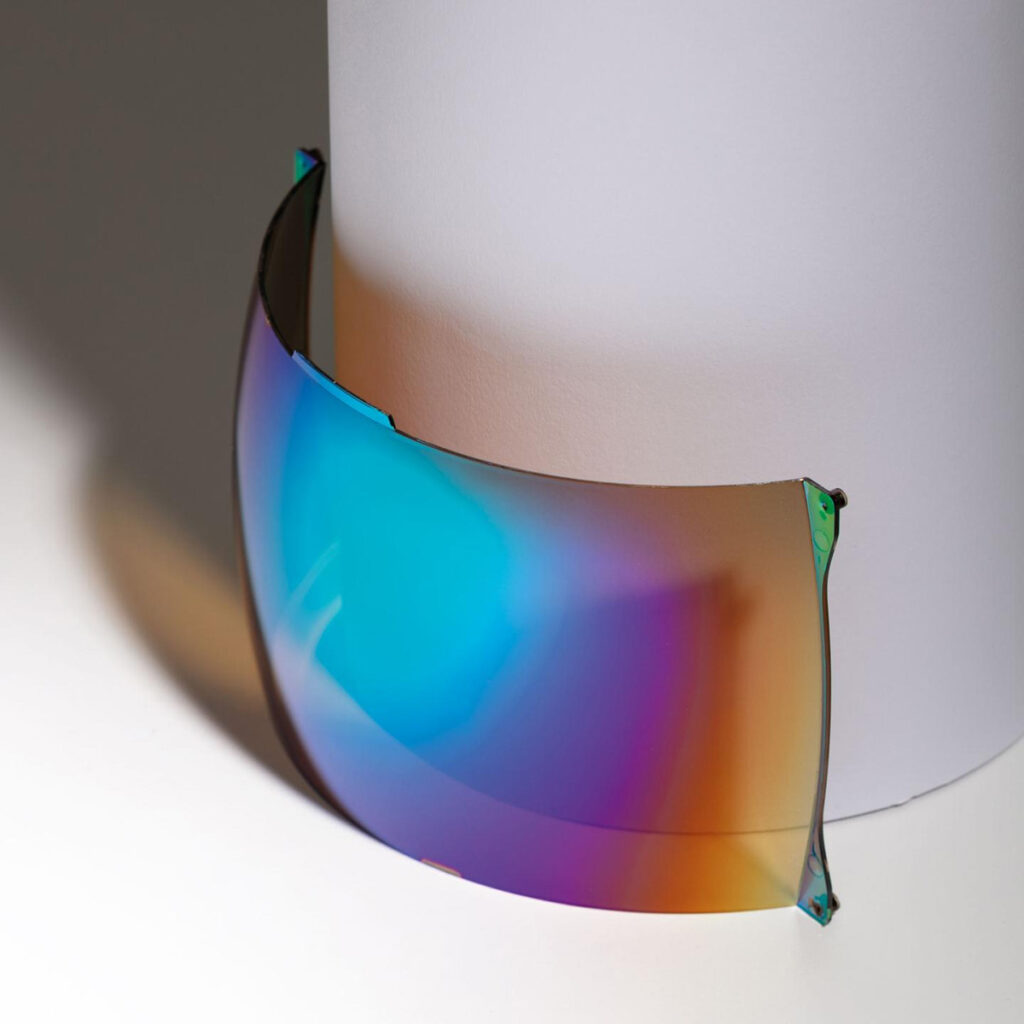
Mirror coating and rear anti-reflective coating are also separate decisions. A mirror can reduce visible light and create the intended appearance. Rear AR can reduce distracting reflections from the inner lens surface. Neither should replace a verified UV-blocking structure in the lens itself.

How Should a Factory Test Sunglasses UV Protected for Bulk Orders?
A factory should verify the actual finished lens configuration across production batches, then confirm optical and cosmetic performance again after frame assembly.
PC: Impact-Performance-Driven Lens Material
At Zhantai, the reliable approach is to connect incoming material control, in-process inspection, laboratory testing, and final quality control. You can review the broader system on our quality management page. For a UV-sensitive sunglass order, the core workflow is:
  1. Confirm the approved substrate, material grade, supplier, color, curvature, thickness, and batch identity before production.
  2. Measure ultraviolet transmission over the required wavelength range using the agreed method, then record results against the approved specification.
  3. Measure visible light transmission separately because lens darkness and UV performance are different variables.
  4. Test polarization efficiency and axis direction independently when polarized lenses are specified.
  5. Inspect tint, gradient transition, mirror color, haze, scratches, pinholes, and left-right consistency under controlled lighting.
  6. Recheck lenses after fitting for stress, distortion, edge damage, coating defects, and secure assembly.
  7. Sample early, middle, and late production, including different material batches and cartons, rather than testing only one ideal pre-production sample.

A handheld factory tester is useful for production screening, but regulated claims may require a qualified laboratory and the test method applicable to the destination market. Buyers should agree on reporting, sampling, and acceptance criteria before mass production. This avoids the common dispute in which a supplier and buyer both say “UV400” but have not defined how it will be verified.

What Should B2B Buyers Put on the Order Specification?

B2B buyers should specify lens material and every functional requirement as separate, measurable approval items.
For example, “black PC polarized UV400 lens” is a useful starting description, but it is not detailed enough for controlled production. The order sheet should also define visible light transmission or filter category, lens curvature, thickness, polarization axis, mirror or hard coating, optical tolerance, applicable market standard, test method, sampling plan, and approved master sample.
The same principle applies to AC and CR39 programs. Do not approve a lens only by appearance, and do not approve UV performance only from a resin name. A complete sunglass is a system. Material, geometry, color, functional film, coating, frame pressure, and testing all affect the result buyers eventually receive.
Brands planning a new collection can review Zhantai’s OEM and ODM sunglasses range to compare fashion, polarized, acetate, metal, and sports directions before selecting a lens platform.

Conclusion: Material Builds the Lens, Testing Proves UV400

The safest purchasing conclusion is that CR39, AC, and PC define different lens platforms, while finished-product testing proves whether sunglasses UV protected claims are supported.
CR39 is strongest when optical clarity, prescription use, and tintability lead the project. AC is commercially effective for cost-controlled plano fashion programs. PC is the preferred platform when impact resistance, low weight, and sports geometry matter. None of these positions removes the need to define UV performance separately.
If you are developing an OEM or ODM collection, send Zhantai your target market, product positioning, frame reference, lens functions, quantity, and target price. Contact our factory for a custom OEM quotation and request the latest sunglasses catalog. Our production and export teams will help you select the right substrate, UV specification, color, polarization, coating structure, and bulk inspection plan for a scalable order.

FAQ

These answers resolve the most common UV400 questions buyers raise during lens selection and sample approval.

Does CR39 Automatically Provide UV400?

No. CR39 is an optical resin platform. Its exact formulation, treatments, thickness, and finished spectral transmission must support the required claim.

Can Low-Cost AC Sunglasses Provide UV400 Protection?

Yes. AC sunglasses can provide the required UV protection when the correct grade or UV absorber is used and the finished lens passes the agreed test.

Does PC Automatically Mean UV400?

Not as a universal procurement assumption. Optical-grade PC can provide strong UV blocking, but the exact resin grade and finished PC lens still need to match the buyer’s specification.

Are Polarized Sunglasses Always UV Protected?

No. Polarization reduces reflected glare, whereas UV protection limits ultraviolet transmission. Specify and test both functions independently.

Which Material Is Best for Prescription Sunglasses?

CR39 is often the better choice when optical clarity and tintability are priorities. PC becomes more suitable when impact resistance is the leading requirement.

Which Material Is Best for Sports Sunglasses?

PC is generally the strongest choice among these three materials for impact-sensitive sports, wraparound, and active-use designs.
Recent Posts

How to Evaluate Sunglasses Samples: A B2B Buyer’s Testing Checklist


You spent weeks finalizing tech packs, debating CAD drawings, and waiting for international shipping. Finally, the courier hands you the box containing your new sunglasses prototypes. What you do in the next 24 hours dictates the success or failure of your entire retail collection. Many B2B buyers simply put the sample on their face, look […]

How to Evaluate Sunglasses Samples: A B2B Buyer’s Testing Checklist
Full Article

Eyewear Seasonal Sourcing Calendar: When to Order Sunglasses for Every Retail Season


In the eyewear industry, timing is just as critical as design and material quality. The most stunning sunglass collection will fail if it arrives at your warehouse in September instead of May. Many optical brand owners and wholesale buyers mistakenly believe they can simply place an order a month before their target launch date. In […]

Eyewear Seasonal Sourcing Calendar: When to Order Sunglasses for Every Retail Season
Full Article

Mirror Coating Technology: How Mirrored Sunglasses Are Manufactured


If you read our foundational guide on “What Are Mirrored Sunglasses,” you already understand the consumer appeal of these striking lenses. They offer ultimate privacy, drastically reduce glare in extreme environments, and provide a bold, fashion-forward aesthetic that dominates both the sports and luxury eyewear markets. But what actually happens behind the closed doors of […]

Mirror Coating Technology: How Mirrored Sunglasses Are Manufactured
Full Article

Professional Service Process

OEM/ODM service

Learn about the cooperation process
FAQs

Q1: What is your production capacity for OEM/ODM sunglasses orders?

Our total annual output exceeds 20 million pieces. For our primary injection styles, our capacity is between 800,000 and 1,000,000 pieces per month, while our metal production lines output 400,000 to 600,000 pieces per month. This large-scale capability allows us to support high-volume orders for global supermarkets and chain stores reliably.

Q2: What kind of customization services do you provide for fast-fashion brands?

We offer a complete product and packaging one-stop service. Our R&D team develops over 50 new sample designs per month based on market research and trend analytics. We fully support custom frames, lenses, and LOGO customization to match your exact brand identity.

Q3: How long is the typical lead time for samples and bulk production?

We pride ourselves on speed and efficiency. We offer fast sample-making within 7 to 15 days. If your project requires a new mold, it typically takes 20 to 30 days. For bulk order production, our standard lead time is 30 to 60 days.

Q4: Do your sunglasses meet international quality and safety standards?

Absolutely. We strictly follow quality control steps from raw materials (IQC) to finished products (OQC). Our factory and products hold comprehensive professional qualification certificates, including CE, FDA, ISO 9001, ISO 13485, BSCI, SMETA, and the Global Recycled Standard.

Q5: Do you have experience working with major global retailers?

Yes, Wenzhou Zhantai Glasses has over 30 years of company history and extensive experience manufacturing for top supermarkets, ecommerce platforms, and global brands. Our recognized quality control has earned us partnerships with industry leaders like Walmart, Disney, Muji, Safilo, and QUAY. By working with us, you receive factory prices with no middlemen.

Q6: What types of eyewear materials do you manufacture?

We work with a wide variety of materials across our 3 production lines. Our capabilities include injection PC and TR, metal, acetate, and eco-friendly materials. This diverse material expertise allows us to meet the specific price points and design requirements of different fast-fashion brands and supermarkets.

Q7: What are your main product categories?

Our main products are sunglasses, optical glasses, and reading glasses. While we specialize in injection sunglasses for retail chains, we also have dedicated production lines for optical frames and reading glasses to provide a comprehensive eyewear catalog.

Q8: What is your Minimum Order Quantity (MOQ)?

As an OEM/ODM factory focusing on large-scale production, our standard MOQ is 1200 pieces per model for 3-4 colors. However, we offer flexible solutions for trial orders or specific customization needs. Please contact our sales team to discuss your project.

Q9: Do you have manufacturing facilities outside of China?

Yes, we do. In addition to our main 10,000-square-meter headquarters in Wenzhou, China, we also operate a specialized manufacturing facility in Thailand. Having a dual-country production strategy allows us to provide our global clients with highly flexible supply chain solutions, optimize import logistics, and mitigate international trade risks (such as tariffs). This ensures uninterrupted, high-capacity delivery for major supermarkets and brands.

Q10: What is your company’s background and manufacturing scale?

Wenzhou Zhantai Glasses was founded in 1990, giving us over 30 years of deep expertise in eyewear manufacturing. Our headquarters covers a construction area of over 20,000 square meters and employs more than 500 skilled workers. Thanks to the trust of our global clients, we maintain a highly stable operational status; our annual turnover continues to grow steadily, reaching $40 million in 2025, with a projected figure of $45 million in 2026. We are a financially strong and scalable partner ready for long-term collaboration.

Get in touch

Let’s build your vision together. Backed by 30 years of manufacturing excellence, Zhantai Glasses offers the quality and customization your brand needs to stand out. From concept to global distribution, we handle the details so you can focus on growth.

Let's collaborate for exceptional eyewear. We look forward to a meaningful collaboration.

Wenzhou Zhantai Glasses

Beiwei No.2 Street, Ouhai District, Wenzhou City, Zhejiang Province, China.

[email protected]