The eyewear market has gotten brutally competitive. Buyers scroll through hundreds of options in seconds. A solid-color frame doesn’t stop anyone anymore — but a frame covered in a bold floral print or retro checkerboard pattern does.
Custom printing is how brands break out of commodity territory. You take a basic plastic sunglasses frame and turn it into something people actually want to own. The economics work too: a printed frame commands a noticeably higher retail price than a plain one, even when the manufacturing cost difference is modest.
Why plastic sunglasses work for printed designs
Plastic frames are the obvious choice for large print runs — and not just because of cost.
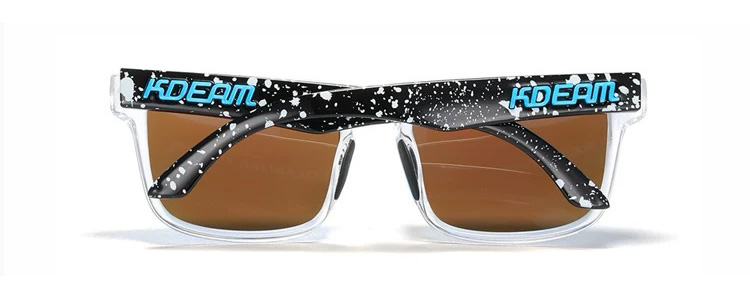
The frame surfaces give you real estate to work with. The temples run long enough for repeating patterns. The front piece handles bold graphics. Compare that to metal frames, where you’re basically etching on wire.
The demographic range helps too. Kids want cartoon prints. Teenagers buy into bold graphics and color-blocked designs. Adult collections sell tortoiseshell imitations and subtle marble effects. You can target completely different buyers just by changing the surface design, without retooling the underlying frame.
On margin, the gap between a plain frame and a printed frame at retail is real. Consumers pay more for something that looks like it belongs in a limited-edition collaboration, even when the base frame is identical.
The material question: why most factories use PC
Most mass-produced plastic sunglasses use PC (polycarbonate). It’s cost-effective, takes ink and film adhesion well, and produces sharp color output.
Worth being honest about the limits, though. PC doesn’t have the soft-touch feel of TPEE or memory plastics. If someone bends a PC frame hard, it stays bent — it doesn’t spring back. For a fashion sunglasses line aimed at adults who’ll treat them like accessories, that’s usually fine. For kids’ frames where durability under rough handling matters, it’s worth discussing with your factory.
For budget-friendly printed fashion lines, PC is the right call. The surface handles all three main printing methods without issues.
The three printing methods
Heat transfer print on plastic sunglasses
A design is printed onto a carrier film, which gets pressed onto the frame with heat and pressure. The ink transfers from film to plastic.
It’s the cheapest method per unit and handles multiple colors in one pass. The tradeoff is yield rate — if the film shifts slightly during pressing, the pattern misaligns and the frame gets rejected. The final edge definition isn’t quite as sharp as digital output either.
Best for: high-volume promotional giveaways, budget retail lines, projects where per-unit cost is the main constraint.
Water Transfer Printing (Hydro-Dipping)
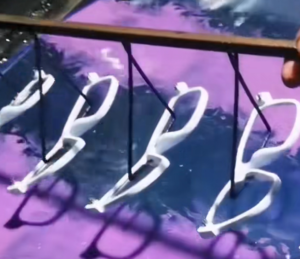
Water transfer printing solves a specific problem: wrapping a pattern completely around complex curves. We float a printed film on water, apply a chemical activator, and manually dip the frame. The water pressure forces the ink to wrap seamlessly around the plastic.
You get true 360-degree coverage. If you want a continuous wood-grain, camouflage, or carbon fiber pattern without harsh seam lines, this is your best option. It effectively makes a budget-friendly PC frame look like premium layered acetate.
But the yield rate is notoriously low. This is a highly manual process that relies entirely on the operator’s physical skill. If they dip the frame at slightly the wrong angle or speed, the pattern stretches and distorts instantly, and the frame goes into the reject bin. The frames also require a secondary clear-coat baking process just to protect the ink from scratching off. You have to factor the high defect rate and extra labor into your final costs.
Best for: Full-wrap patterns where seamless coverage matters more than a high-speed, high-yield production line.
Digital print on plastic sunglasses
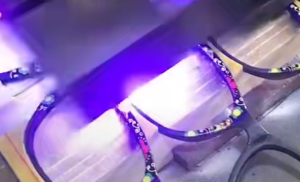
No films, no plates. Print heads controlled by software spray UV-curable ink directly onto the frame surface. The ink dries almost instantly.
The output quality is significantly better. You can print photographic-level gradients and complex artwork. Because the process is computer-controlled, yield rates are high — you’re not relying on someone manually positioning a film. The per-unit cost is higher, both because the machines are expensive to run and because the UV inks cost more.
Best for: boutique collections, pattern-forward fashion lines, any project where the print quality is part of the product story.
IMD (in-mold decoration)
IMD skips post-production printing entirely. A pre-printed decorative film goes inside the injection mold before the plastic is injected. The molten plastic fuses with the film as it cools. The pattern ends up under a layer of hardened plastic — physically part of the frame.
The result doesn’t scratch off, fade, or peel. It looks and feels like the pattern grew there. The process also has strong yield rates once machines are calibrated.
The barrier is volume. The mold setup and robotic positioning systems require significant upfront investment. IMD only makes sense for brands with consistent, high-volume orders.
Best for: global brands running tens of thousands of units per SKU on a repeating schedule.
Printing Technology Comparison Table
We prepared this simple comparison table to help your purchasing department. You can use this guide to match the right technology to your specific business model.
| Technology Type | Production Cost | Pattern Quality | Factory Yield Rate | Best Use Case |
| Heat Transfer | Very Cheap | Basic / Good | Lower | Promotional Items |
| Water Transfer Printing | Very Cheap | Basic / Good | Lower | Full-wrap patterns |
| Digital Printing | Expensive | Excellent | Very High | Premium Boutiques |
| IMD Injection | Moderate Price | Premium / Best | Very High | High quantity |
Designing for frames, not flat surfaces
Frame design behaves differently from flat graphic design.
Temple arms are long but narrow. Complex text becomes unreadable on that shape — the curves distort letterforms at small sizes. Repeating geometric patterns, abstract shapes, and floral prints work better because they read well from multiple angles and wrap around curves cleanly.
The frame front has more width to work with, but lens cutouts interrupt the visual field. Designs that treat the lenses as negative space, rather than fighting against them, tend to look more intentional.
We look at artwork before production and flag anything that won’t translate well physically. A gradient that renders beautifully on screen can look muddy on a curved plastic surface. Better to catch it at the review stage than after a sample run.
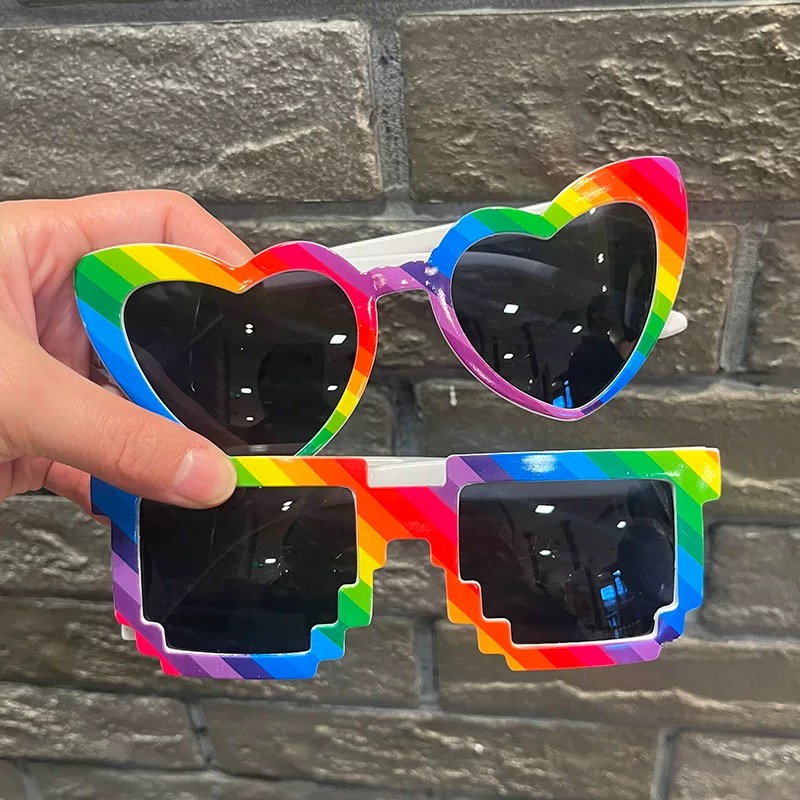
Production plastic sunglasses minimums
Setting up printing equipment takes time and resources. Our standard MOQ for custom printed frames is 1,200 pairs. Within that quantity, you can split across up to three color variations — 400 pairs per colorway.
That split matters for retail testing. You can run three distinct designs at once and see what actually sells before committing to a larger reorder.
Quality control on printed frames
Pattern quality means nothing if the frame fails on basics.
We inspect semi-finished frames before they enter the printing stage. Any frame with rough edges or injection surface flaws gets pulled — poor surface quality affects ink adhesion downstream. After printing, finished products go through hinge function checks, lens alignment verification, and pattern accuracy review.
For adhesion specifically: we apply tape to the printed surface and pull it off quickly. The ink has to stay intact. We also test frames under UV exposure to confirm the colors hold.
Certifications
Zhantai glasses products carry CE and FDA certifications. We run an in-house testing lab and can issue testing reports directly with your order. Raw material certificates for the plastic come with the documentation package — useful for customs clearance in markets with strict import requirements.
From file to finished product
The process runs in four steps.
Send us your artwork in high-resolution digital format. Our engineering team reviews it and recommends the appropriate printing method based on your budget and design complexity. We produce pre-production samples and ship them for your approval — you verify color accuracy, frame quality, and print registration before anything goes to mass production. After sign-off, production runs on automated lines. We handle packing and shipping to your warehouse.
Printed plastic sunglasses can anchor a collection or build a whole brand identity around them. The technology you choose — heat transfer, digital, or IMD — mostly comes down to volume and how much print quality matters to your customer. If you’re working on a custom program and want to talk through the tradeoffs, reach out to Wenzhou Zhantai Glasses and we’ll figure out what makes sense for your order.