Buyers return frames for two reasons: they broke, or they were uncomfortable. TR90 sunglasses address both problems at the material level. That’s not a marketing claim — it’s a property of the polymer itself. If you’re sourcing for an active lifestyle brand, a kids’ line, or any mid-range collection where durability matters, TR90 is worth understanding properly.
What TR90 actually is
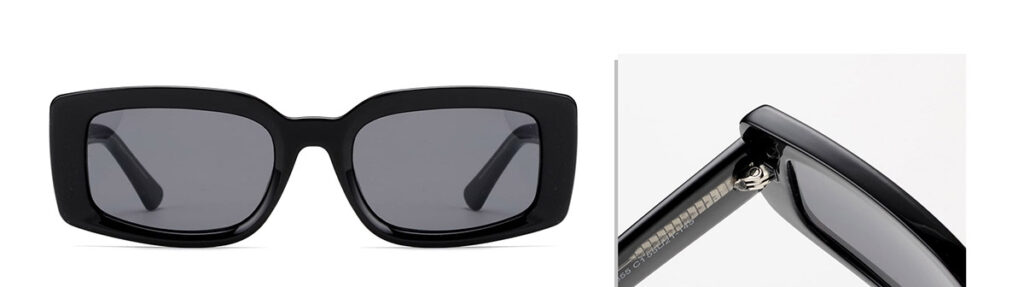
TR90 is a memory plastic, sometimes called “Swiss polymer” after its country of origin. The name refers to its defining behavior: bend it, and it returns to its original shape. That’s not something PC (polycarbonate) or acetate can do.
PC is the cheap, workhorse plastic. It takes printed patterns well, costs less, and handles basic use fine. But if someone bends a PC temple too far, it snaps or stays deformed. Acetate is the premium option — beautiful layered patterns, a tactile quality that reads as expensive. The tradeoff is weight and labor. Acetate frames are heavier, and crafting them requires significantly more manual work than injection-molded plastics.
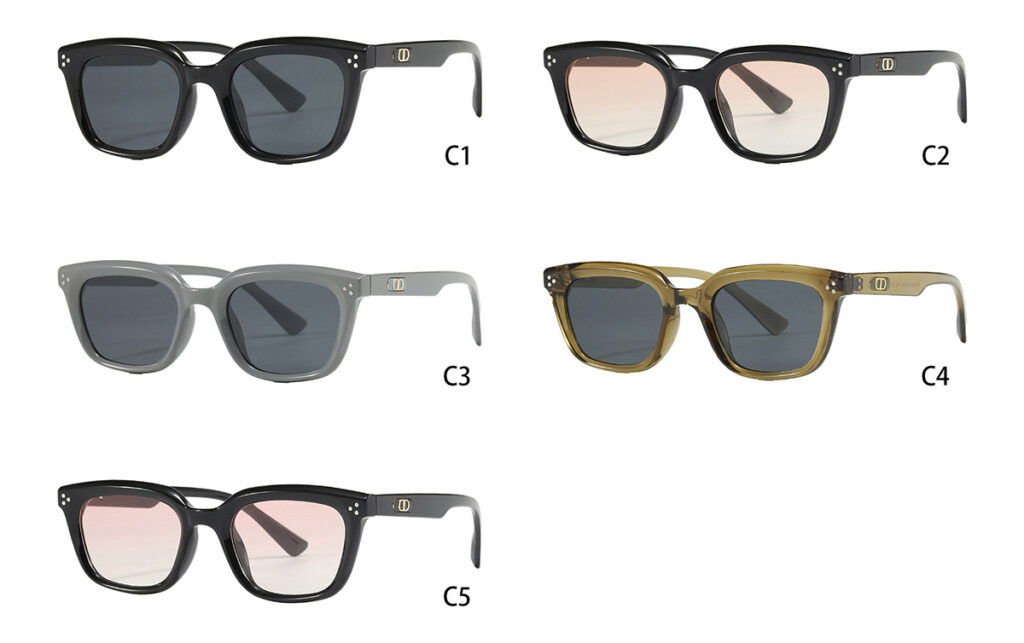
TR90 sits between them on price and above them on functional performance. The material is lighter than both acetate and PC. It absorbs impact rather than fracturing. And it holds its shape through the kind of daily abuse that sends other frames to the trash.
The weight question
Frame weight is one of those things consumers notice immediately but rarely articulate clearly in reviews. What they say is “these are so comfortable” or “I forget I’m wearing them.” What they mean is the frames aren’t pressing on their nose bridge or behind their ears after two hours.
A large TR90 frame can weigh noticeably less than the equivalent in acetate. For oversized sunglasses — where the frame front is wide and the temples are long — that difference is real. For kids’ frames, where the child is wearing them for an afternoon at the beach, it matters even more. The density of TR90 is 1.14–1.15 g/cm³, the density of PC (polycarbonate) is 1.20 g/cm³ and the acetate density is 1.32 g/cm³.
This isn’t a soft selling point. Comfort affects how long people actually wear the product and whether they recommend it.
Flexibility and what “unbreakable” means in practice
TR90 won’t break under normal stress. The temples flex significantly before returning to shape. If a customer sits on a pair, they’re more likely to find the frames bent than snapped. That’s recoverable. A broken hinge or a split frame front isn’t.
We stress-test TR90 frames in our lab — repeated bending cycles, impact tests — and the failure rate under normal-use scenarios is low. The material is also stable during shipping and storage, so you’re not dealing with warped frames by the time they reach retail.
One clarification worth making: TR90 isn’t infinitely adjustable. Unlike acetate, you can’t heat it to reshape the fit. Opticians who adjust acetate frames by warming them won’t have that option with TR90. The flip side is that TR90 holds its shape in hot, humid environments where acetate can slowly warp over time.
Material Selection: A Direct B2B Comparison
Your procurement team needs all the available facts to make the best sourcing decision. We have prepared this direct comparison of common eyewear materials to help your business choose the perfect frame material for your brand’s next collection.
| Material | Key Winner Feature | Relative Weight | Durability | Aesthetic Versatility | B2B Market Position |
| PC (Polycarbonate) | Cost-Effectiveness & Print | Average | Average | Average | Budget / Mass Market |
| Acetate (Cellulose) | Premium Layered Look & Texture | Heavy | Average | Excellent / Layered | Premium / Fashion |
| TR90 (Swiss Polymer) | Lightweight Comfort & Strength | Lightest | Excellent / Flexible | Good / Single Colors | Middle Market / Active |
| Metal (e.g., Titanium) | Durability & Minimalism | Light | Good | Simple | Premium |
Where TR90 fits in the market
The $30–$70 retail price range is where TR90 makes the most commercial sense. It’s a step up from basic PC frames — you can justify the price difference by pointing to the weight and durability — but it doesn’t require the premium that acetate commands.
For buyers sourcing wholesale sunglasses in this range, TR90 gives you a real story to tell. “Lightweight and flexible” isn’t vague when the material literally snaps back after bending. It’s a demo you can do in a showroom.
The honest limitation: color and pattern
TR90 has one area where it can’t match acetate: layered, translucent color patterns.
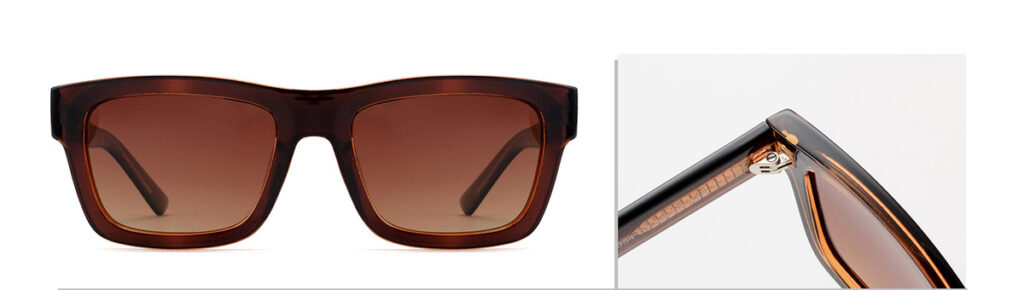
Acetate gets its characteristic look from bonded sheets of different colors. The depth you see in a tortoiseshell acetate frame comes from layers of material fused together. TR90 frames are injection-molded from a single material. You can paint them — we apply solid colors, color-blocking, and surface finishes that look good — but you can’t replicate that layered translucent quality within the TR90 material itself.
If a collection is specifically built around that aesthetic — fashion-forward, premium pattern work — acetate is the right call. TR90 is the right call when the brief is durability, comfort, and a clean color execution.
Certifications and quality control
All TR90 frames we produce go through stress and flexibility testing before leaving the facility. We can provide material safety certificates and quality documentation with B2B orders, which simplifies customs clearance in most markets.
Our manufacturing is CE and FDA certified. If you need specific test reports for a particular market, we can discuss that during sampling.
Working with us on TR90
We’ve been running TR90 production long enough to know where things go wrong — mold tolerances, hinge integration, paint adhesion on flexible surfaces. The material behaves differently from rigid plastics, and the production process reflects that.
If you’re planning a TR90 collection and want to talk through construction details, color options, or MOQ, reach out to Wenzhou Zhantai Glasses. We offer OEM and ODM options and can work from your existing designs or start from scratch.