Every eyewear brand knows that a frame is only as strong as its weakest point. In most cases, that critical point is the hinge. The tiny mechanism connecting the frame front to the temples handles massive amounts of daily stress. Consumers take their glasses off with one hand, wear them on top of their heads, and occasionally sit on them.
For B2B optical buyers, product managers, and eyewear brand founders, choosing the right hinge is not just a minor design detail. The choice between a standard hinge and a flex hinge dictates the wearer’s daily comfort, the overall lifespan of the frame, and ultimately, your return and warranty rates.
Deciding whether to incorporate spring hinge glasses into your upcoming collection requires a clear understanding of mechanical engineering, manufacturing costs, and your target demographic. Let’s break down the technical differences, the manufacturing realities, and the strategic advantages of both hinge types to help you optimize your product line.
What Is a Standard Hinge (Barrel Hinge)?
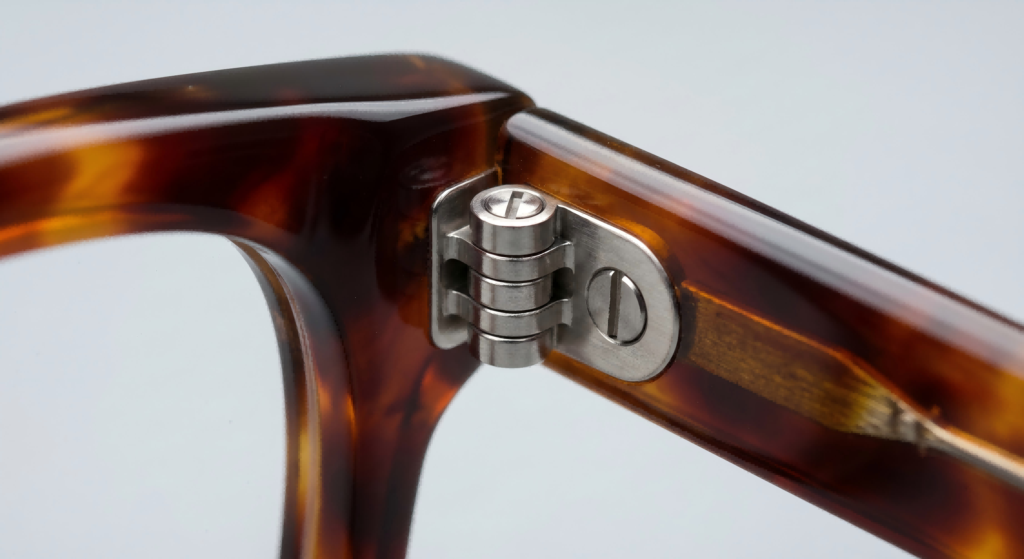
A standard hinge—often referred to as a barrel hinge—is the traditional, time-tested method of connecting the eyewear temple to the frame front.
It features interlocking metal loops (the barrels) secured by a tiny vertical screw. These hinges typically come in 3-barrel, 5-barrel, or 7-barrel configurations. The more barrels a hinge has, the wider and stronger the connection. A standard hinge opens exactly to 90 degrees and stops. It has no built-in “give” or outward flexibility.
The Advantages of Standard Hinges
-
High Durability in Thick Frames: When paired with a robust 5-barrel or 7-barrel configuration, standard hinges offer incredible structural integrity.
-
Ease of Repair: If a standard hinge breaks or becomes loose, an optometrist or end-user can usually fix it by simply tightening or replacing the tiny screw.
-
Vintage Aesthetic: High-end, classic eyewear brands often prefer standard hinges, specifically rivet hinges that show the metal pins on the front of the frame.
The Disadvantages of Standard Hinges
-
Prone to Stretching: Because they stop at 90 degrees, any outward pressure—like pulling the glasses off with one hand—forces the frame material itself to bend. Over time, the screws loosen, and the glasses lose their grip, constantly slipping down the wearer’s nose.
-
Less Forgiving Fit: Standard hinges do not adapt to different face widths. If the frame is too narrow for the wearer, the rigid temples will pinch the sides of their head, causing discomfort.
What Is a Spring Hinge (Flex Hinge)?
A spring hinge contains a small, highly engineered internal spring and piston mechanism hidden inside the hinge housing.
This mechanism allows the temple to open past the standard 90-degree angle—often flexing outward up to 100 or 110 degrees. Once the wearer releases the outward pressure, the spring instantly snaps the temple back into its original position. This intelligent design makes spring hinge glasses the go-to choice for brands prioritizing comfort and fit.
The Advantages of Spring Hinges
-
Universal Comfort and Fit: The outward flex allows the frame to gently expand to accommodate wider face shapes without pinching the temples. The spring maintains a gentle, constant inward pressure, keeping the frames securely positioned on the wearer’s face.
-
Shock Absorption: When a user pulls their glasses off with one hand, the spring absorbs the mechanical stress. This prevents the frame front from warping and stops the hinge screws from backing out over time.
-
Ideal for Active Lifestyles: Because they grip the head securely without causing pain, spring hinge glasses perform exceptionally well for sports eyewear and daily active use.
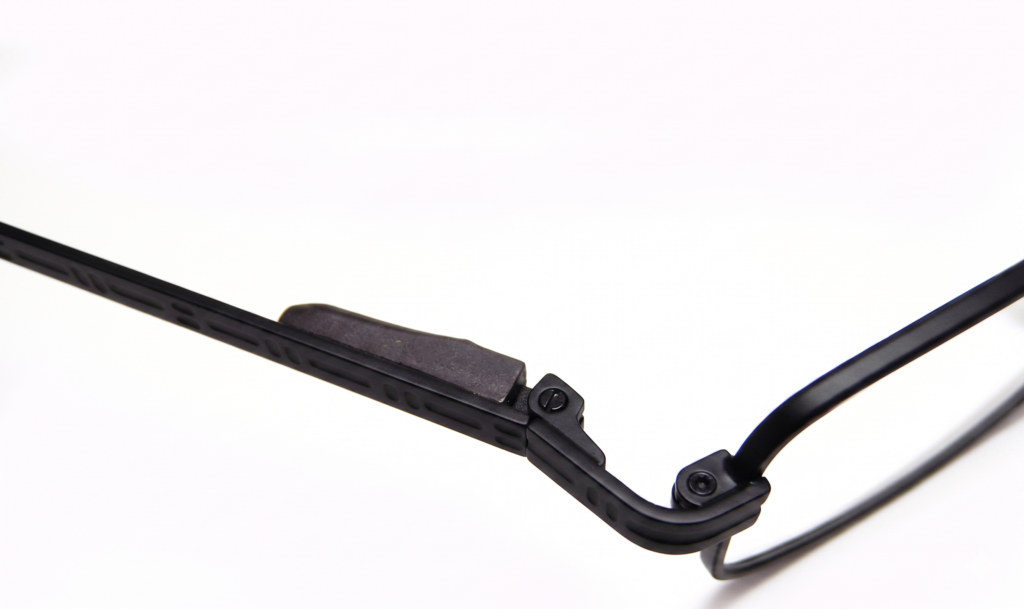
The Disadvantages of Spring Hinges
-
Difficult to Repair: If the internal spring mechanism snaps or seizes up, the user cannot easily repair it. They usually must replace the entire temple.
-
Slightly Higher Manufacturing Cost: Integrating a micro-spring mechanism requires more complex machining and high-quality parts, slightly raising the unit cost of the frame.
Material Synergy: Matching the Hinge to the Frame
As an eyewear buyer, you must consider how the hinge interacts with the core material of your frames. A professional manufacturing partner will guide you on the best pairings.
Acetate Frames
Acetate offers incredible design versatility, whether you are launching a modern, transparent Clear frame or a rich, vintage Tortoise pattern. Because acetate is a rigid material, pulling the glasses open puts immense strain on the bridge and the temples. Adding a high-quality spring hinge to an acetate frame creates a premium product. It gives the heavy material a lightweight, adaptable feel on the face, drastically improving customer satisfaction.
Stainless Steel Frames
Metal frames, particularly ultra-thin stainless steel, rely entirely on the hinge for structure. Because the metal temples are thin, they can dig into the side of the wearer’s head if the fit is too tight. Therefore, spring hinge glasses dominate the metal eyewear category. The flex hinge ensures the metal temples rest softly against the skin, providing that “barely-there” comfort that buyers expect from premium steel frames.
TR90 Frames
TR90 is an advanced memory polymer known for its extreme flexibility. Since the TR90 material itself can bend and snap back into shape, some designers argue that standard hinges are sufficient. However, combining a TR90 frame with a spring hinge creates the ultimate indestructible frame. This combination is highly sought after in children’s eyewear, where maximum durability is non-negotiable.
The Factory Perspective: Manufacturing Quality Control
Not all hinges deliver the same performance. When you source spring hinge glasses from a manufacturer, you must evaluate the quality of the internal components. Cheap springs lose their tension after just a few months of use, leaving the temples flopping loosely.
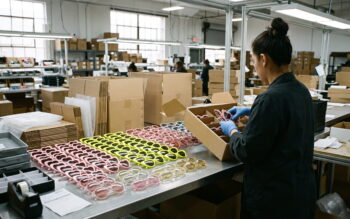
A top-tier eyewear factory maintains strict quality control over its hardware. During the assembly process, technicians run the hinges through rigorous testing. Quality manufacturers utilize mechanical testing machines that repeatedly open and close the spring hinge tens of thousands of times to simulate years of daily wear.
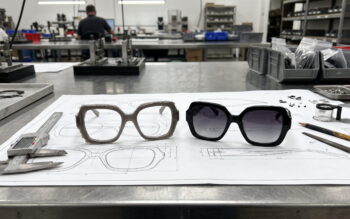
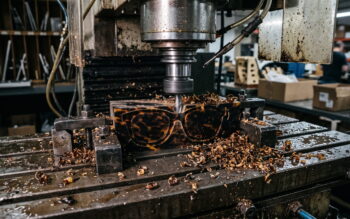
Furthermore, the integration of the hinge into the frame demands absolute precision. For metal frames, factories use high-end laser welding to attach the hinge housing seamlessly. For plastic or acetate frames, CNC machines mill exact pockets so the hinge sits perfectly flush with the frame surface. If you want to avoid high return rates, partner with a factory that views the hinge as an engineering priority, not an afterthought.
ROI and Business Strategy: Which Should You Choose?
Deciding between standard hinges and spring hinges comes down to your brand positioning, target audience, and profit margins.
Choose Standard Hinges If:
-
You are producing chunky, vintage-inspired heavyweight acetate frames where the aesthetic demands classic rivet hinges.
-
Your brand positions itself in the ultra-luxury, bespoke market where customers expect traditional, easily repairable craftsmanship.
-
You are designing extremely budget-friendly fast-fashion sunglasses where keeping the unit cost to the absolute minimum is the only priority.
Choose Spring Hinge Glasses If:
-
You are building a collection of lightweight stainless steel optical frames meant for all-day office wear.
-
Your target audience includes athletes, children, or anyone requiring high-durability eyewear.
-
You want to reduce your warranty claims. The extra few cents spent on a high-quality spring hinge dramatically lowers the number of broken frames your retail partners have to deal with.
-
You sell online. Because spring hinges adapt to a wider variety of face shapes, your customers are less likely to return the glasses due to a poor fit.
Conclusion
The hinge may be the smallest component of an eyewear frame, but it carries the heaviest burden. While standard barrel hinges offer rugged simplicity and a classic aesthetic, the modern eyewear market increasingly demands functional comfort.
For most B2B buyers looking to build a resilient, high-selling optical line, spring hinge glasses offer the best return on investment. By absorbing the shock of daily wear and providing a comfortable, adaptive fit for a wide range of face shapes, spring hinges elevate the perceived value of your product.
When planning your next production run, work closely with your manufacturing partner to select premium hinge hardware that matches your chosen materials. Whether you are producing sleek stainless steel frames or timeless Tortoise acetate, the right hinge ensures your customers keep coming back for your brand, not for repairs.