Every optical retailer knows the frustration of handling customer returns for bent or broken frames. Consumers demand eyewear that survives the rigors of daily life—whether that means accidentally sitting on them, falling asleep reading, or dealing with active toddlers. To meet this demand, optical brands are increasingly turning to advanced materials, and nothing solves the durability problem quite like memory metal glasses frames.
As a leading manufacturer at Wenzhou Zhantai Glasses Co., Ltd., we see a massive shift in B2B procurement toward ultra-flexible, high-end metals. The Wenzhou optical manufacturing hub has matured rapidly, and our region now boasts world-class production capabilities for these complex alloys, standing shoulder-to-shoulder with the most advanced factories globally.
This comprehensive guide dives deep into the science behind the material, the critical differences between various titanium alloys, and the exact manufacturing processes required to produce premium memory metal glasses frames for your brand.
What is Memory Metal? The Science of Nitinol
When people say “memory metal,” they are almost always referring to Nitinol. Nitinol is a unique metal alloy composed of roughly equal parts nickel and titanium (Nickel Titanium Naval Ordnance Laboratory).
Unlike traditional metals that bend permanently when you apply force, Nitinol possesses a property called “superelasticity” (or pseudoelasticity). When you bend a standard stainless steel frame, you stretch the metallic bonds to their breaking point, causing permanent deformation. When you bend Nitinol, the atomic structure actually undergoes a reversible phase transformation.
The metal shifts from an “Austenite” phase to a “Martensite” phase under physical stress. The moment you release that stress—when you let go of the twisted temple arm—the atomic structure instantly snaps back to its original Austenite shape.
This means a wearer can twist the bridge of their memory metal glasses frames a full 90 degrees, and the frame will spring right back into perfect optical alignment.

Material Showdown: Memory Metal vs. Beta-Titanium vs. Pure Titanium
Buyers often confuse the different titanium variants. If you are sourcing optical frames, you must understand how these materials perform differently to market them correctly.
Pure Titanium
Pure titanium is the gold standard for hypoallergenic, ultra-lightweight eyewear. It resists corrosion perfectly, making it ideal for high-end luxury frames. However, pure titanium is relatively rigid. It holds its shape beautifully, but if a customer applies extreme force, it will bend permanently or break at the hinge.
Beta-Titanium (β-Titanium)
Factories create Beta-Titanium by alloying titanium with elements like vanadium, aluminum, or molybdenum. This alloy offers excellent flexibility and springiness, making it highly popular for thin temple arms. It provides a comfortable, clamping fit on the wearer’s head. However, Beta-Titanium has a yield point. If you bend it too far, it will not snap back.
Memory Metal (Nitinol)
Nitinol takes flexibility to the extreme limit. While Beta-Titanium flexes, Nitinol survives severe trauma. You can literally tie a Nitinol temple wire into a loose knot, and it will untie itself and return perfectly straight. It is heavier than pure titanium, but it offers unmatched durability.
The Manufacturing Challenge: Heat Treatment and Welding
Building memory metal glasses frames is incredibly difficult. You cannot simply cut and stamp Nitinol like standard copper or steel. It requires highly specialized engineering. Here in Wenzhou, the manufacturing ecosystem—including established regional players and our own advanced production lines at Zhantai—has perfected these processes over years of rigorous R&D.
Precision Heat Treatment
Nitinol does not naturally possess its memory properties right out of the ground. Engineers must “teach” the metal its resting shape. We do this by clamping the raw Nitinol wire into a heavy steel mold (setting the shape of the bridge or temple) and then firing it in a vacuum furnace at approximately 500°C for a highly specific duration. If we miss the temperature target by even a few degrees, the metal loses its superelasticity and becomes brittle.
Argon Arc Welding
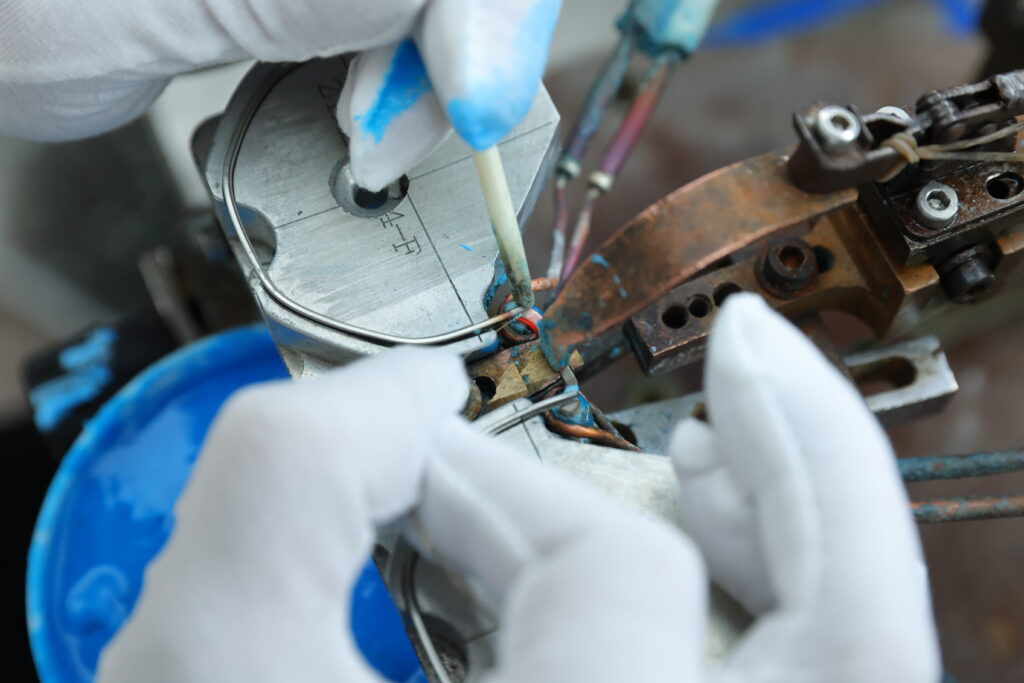
Welding Nitinol is notoriously complex. Because it contains titanium, the metal violently absorbs oxygen when heated, turning black and shattering instantly. To assemble a memory metal frame, our technicians use specialized Argon Arc welding machines. We flood the welding joint with inert argon gas, creating a protective shield that allows the nickel-titanium to fuse securely to the hinges and rim wires without oxidizing.
Ideal Applications for Memory Metal
Because of its unique properties, Nitinol is not meant for every single frame style. It excels in specific optical niches where durability is the primary selling point.
Children’s Eyewear
Kids destroy glasses. They pull them off with one hand, step on them, and fall on the playground. Memory metal is the ultimate solution for pediatric optics. A memory metal bridge ensures the frame survives the playground and keeps the prescription lenses properly aligned with the child’s eyes.
Sports and Active Lifestyles
Golfers, cyclists, and runners need frames that grip securely without causing pressure headaches. Memory metal temples provide a constant, gentle tension that keeps the frame locked onto the face during heavy movement, while surviving the inevitable drops and impacts of outdoor sports.
Daily Optical Combinations
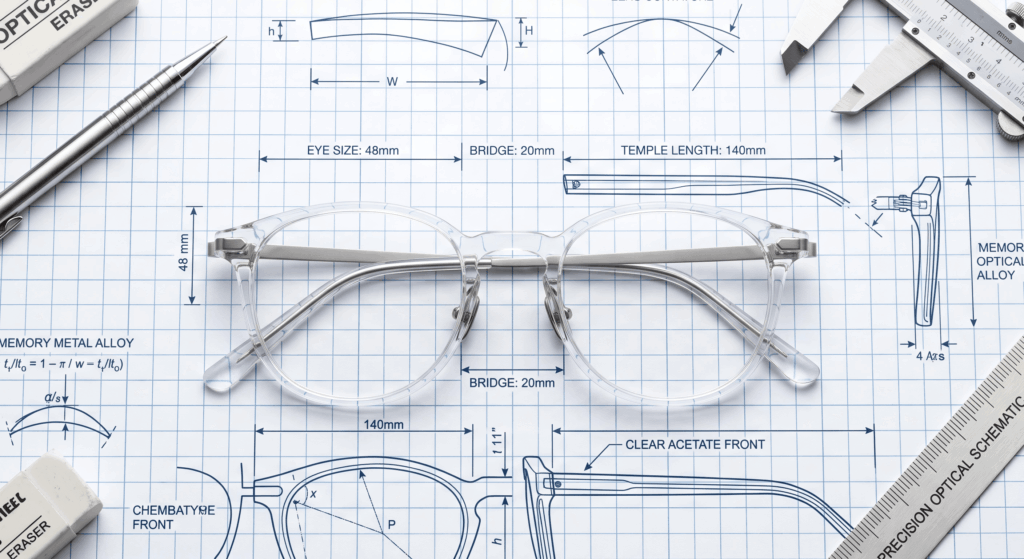
Modern fashion demands style alongside durability. We see massive B2B demand for hybrid frames. For example, we frequently pair a beautiful, vintage-inspired Tortoise acetate front (or a modern, sleek transparent acetate front) with ultra-thin memory metal temples. This gives the consumer the aesthetic depth of premium acetate, combined with the indestructible comfort of a flexible temple.
B2B Sourcing Essentials for Memory Metal
If you are planning to add memory metal glasses frames to your upcoming optical collection, you need to navigate the procurement process strategically.
Minimum Order Quantities (MOQ)
Because Nitinol raw material is expensive and requires specialized vacuum processing, factories cannot produce micro-batches efficiently. Expect the MOQ for genuine memory metal frames to be slightly higher than standard stainless steel—typically around 600 to 1,000 pieces per model, depending on the complexity of the design.
Pricing Structure
Nitinol is a premium material. The raw alloy costs significantly more than TR90 or standard monel. Furthermore, the slow, precise welding and heat-treatment processes increase labor costs. You should expect wholesale pricing to sit just below or parallel to pure titanium frames. However, the retail markup potential is massive, as consumers gladly pay a premium for “unbreakable” glasses.
Compliance and Certifications
Because Nitinol contains 50% nickel, you must ensure your manufacturer understands international compliance. If you sell in Europe, the frames must pass strict CE regulations regarding nickel release. Premium factories utilize advanced electroplating and specialized protective clear-coats to seal the metal entirely, ensuring the frames remain 100% hypoallergenic and compliant with all global standards.
Market Trends and Consumer Perception
The optical industry is moving away from disposable fast fashion. Consumers now view their eyewear as a long-term investment. They want lightweight comfort, but they absolutely refuse to compromise on durability.
Marketing memory metal glasses frames gives your brand a powerful narrative. You are no longer just selling a color or a shape; you are selling advanced engineering, peace of mind, and long-lasting value.
When you partner with a capable manufacturer who masters the exact science of heat treatment and argon welding, you eliminate defect rates and guarantee customer satisfaction. By integrating Nitinol into your optical catalog—whether in rugged kids’ frames or sophisticated clear acetate hybrids—you position your eyewear brand at the cutting edge of modern optical technology.