In the eyewear industry, the physical frame provides the function, but the logo provides the value. A blank pair of sunglasses might sell for ten dollars, but the exact same frame featuring a recognizable, high-quality brand mark can command ten times that price.
When B2B buyers and brand owners initiate a manufacturing order, they often spend months obsessing over frame shapes and lens colors, only to treat the logo as a last-minute afterthought. This is a critical mistake. The branding technique you choose dictates how consumers perceive your product. If your logo chips, fades, or rubs off after a week at the beach, the customer blames your brand, not the factory.
Successfully creating premium custom logo sunglasses requires matching your specific frame material and budget with the correct industrial application process. From high-volume budget prints to luxury metal inlays, we break down the seven core branding techniques you must know to elevate your eyewear collection.
Laser Engraving: The Standard for Precision and Permanence
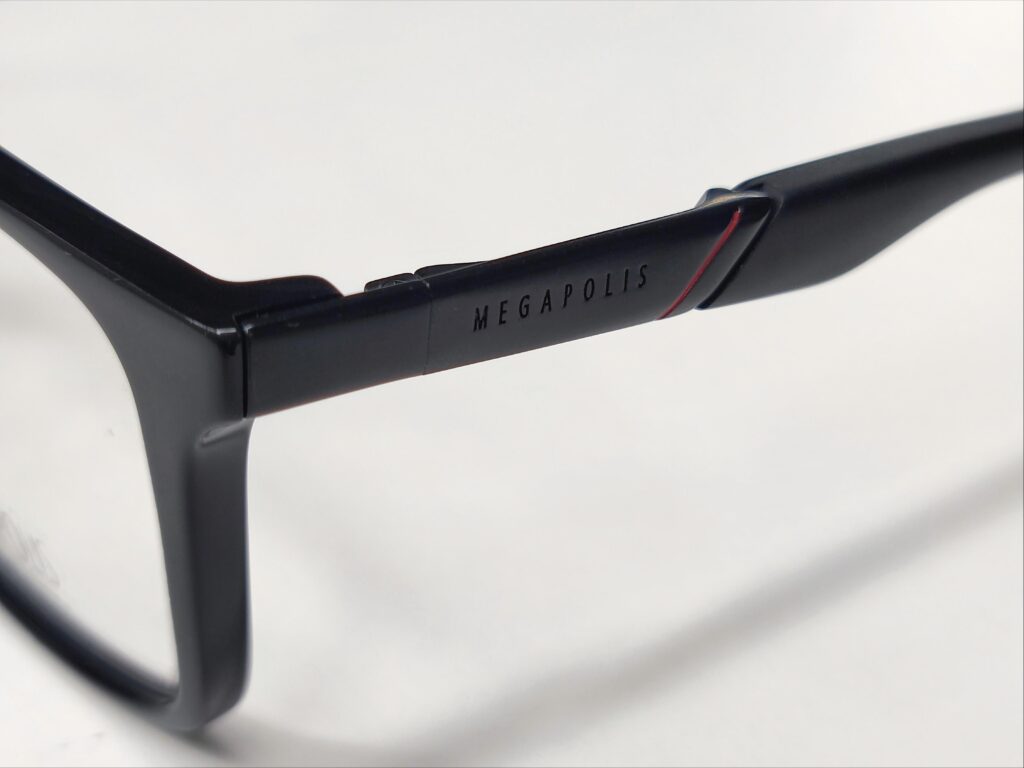
When you want a logo that will never fade, peel, or scratch off, you choose laser engraving. Factories utilize high-powered, computer-guided laser beams to physically burn or vaporize the surface layer of the frame material, etching your logo permanently into the temple or the lens itself.
Eyewear factories use two distinct types of lasers. We use Fiber Lasers to engrave titanium, stainless steel, and aluminum frames, achieving razor-sharp metallic contrast. We use CO2 Lasers for organic materials like wood, bamboo, and cellulose acetate.
-
Cost: Medium. The factory does not need to create physical printing screens, but laser machines process frames relatively slowly, increasing labor time.
-
Durability: Extreme. The logo literally becomes part of the physical frame.
-
Best Materials: Metal, Acetate, Wood. (Avoid using lasers on cheap PC or TR90 plastics, as the heat can melt or warp the surrounding area).
Silk Screen Printing: The High-Volume Workhorse
If you need to produce thousands of promotional custom logo sunglasses quickly and cost-effectively, silk screen printing is your best option.
Technicians stretch a fine mesh screen over a frame and block out a negative stencil of your logo. They place the screen directly over the sunglass temple and use a squeegee to force thick, opaque ink through the mesh. The ink transfers your logo onto the frame, and we immediately cure it in a drying oven.
While it is the most economical method for large production runs, silk screening requires flat, even surfaces.
-
Cost: Low. Highly economical for large bulk orders (high MOQ), though the initial setup fee for the custom mesh screen makes it impractical for tiny batches.
-
Durability: Medium. Good quality inks resist scratching, but aggressive friction or harsh chemical sunscreens can eventually degrade the print over several years.
-
Best Materials: Polycarbonate (PC), TR90, flat metal surfaces.
Pad Printing: The Solution for Curved Surfaces
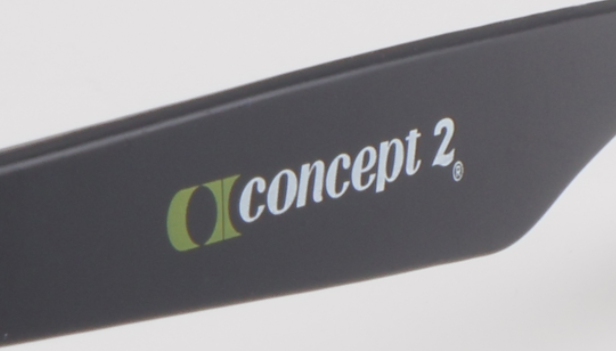
Look closely at a pair of wraparound sports sunglasses. The temples are heavily curved and contoured. A flat silk screen cannot press ink onto those complex curves. To brand these frames, factories use pad printing.
First, we etch your logo into a flat metal plate (a cliché) and flood it with ink. A soft, flexible silicone pad presses down onto the metal plate, picking up the wet ink logo. The silicone pad then presses directly onto the curved sunglass temple. Because the silicone perfectly wraps around the physical shape of the frame, it deposits the ink flawlessly across aggressive curves and tight corners.
-
Cost: Low to Medium. Slightly more expensive than silk screening due to the creation of the metal cliché plates.
-
Durability: Medium. Similar to silk screening, the longevity depends entirely on the quality of the ink and the curing process.
-
Best Materials: TR90 sports frames, Nylon, heavily contoured PC frames.
Metal Logo Inlay: The Mark of Luxury
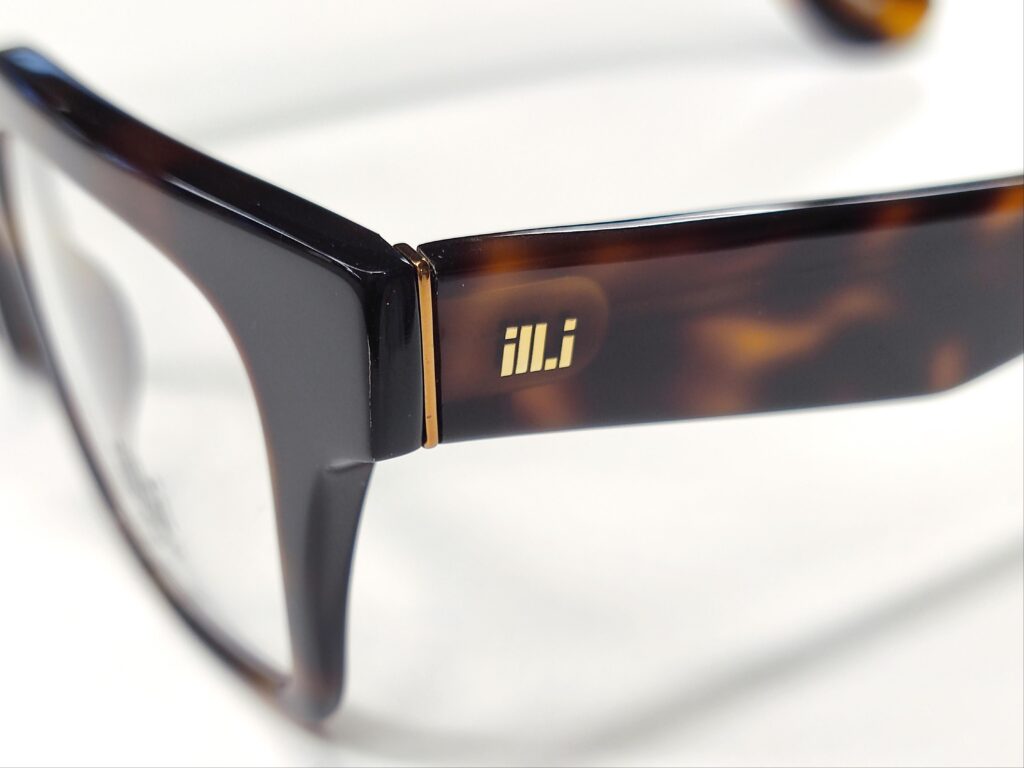
If you want your custom logo sunglasses to compete with elite Italian fashion houses or legacy American heritage brands, you must specify metal logo inlays (often called UP badges). This technique projects unmistakable luxury.
This is a highly labor-intensive process. First, our CNC machines route a microscopic cavity perfectly shaped like your logo into the side of a thick acetate temple. Next, technicians take a custom-cast, polished metal logo (often copper, zinc, or titanium) and manually press it into the cavity. Finally, we seal the metal inlay with a clear resin or polish the entire temple flat, ensuring the metal sits perfectly flush with the acetate surface.
When a consumer runs their thumb over the temple, it feels seamless, yet the metal catches the light brilliantly.
-
Cost: High. It requires custom metal casting, precision CNC machining, and manual assembly.
-
Durability: High. The metal badge is physically locked inside the frame chassis.
-
Best Materials: Cellulose Acetate, Horn, thick premium plastics.
Embossing, Debossing, and Hot Stamping: Tactile Branding
Tactile branding engages the consumer’s sense of touch.
-
Debossing: We press a heated metal die into the plastic or acetate, sinking your logo below the surface of the frame.
-
Embossing: The logo pushes outward, creating a raised, 3D texture.
-
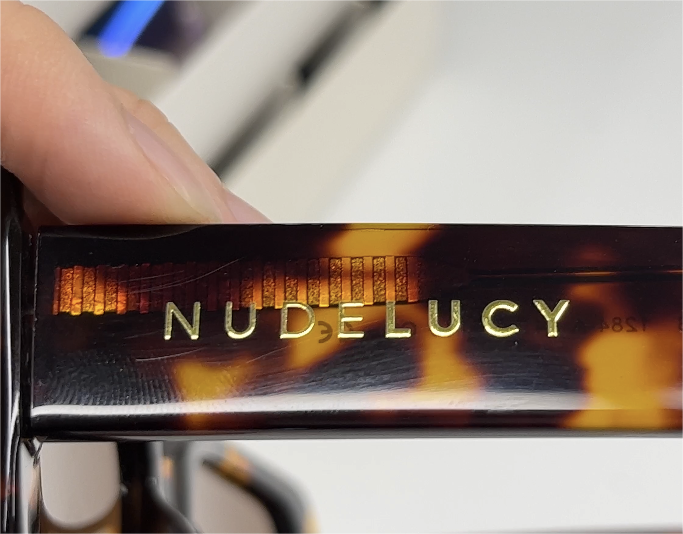
Hot Foil Stamping: We combine debossing with a layer of metallic foil (usually gold or silver). The heated die presses the foil directly into the recessed cavity, creating a brilliant, high-contrast logo that looks incredibly premium on dark frames.
-
Cost: Medium. Requires the factory to machine a custom brass or steel heated stamping die.
-
Durability: High. Even if the metallic foil eventually wears thin after years of heavy use, the physical recessed shape of the logo remains permanently stamped into the frame.
-
Best Materials: Acetate, genuine leather side-shields, premium plastics.
Water Transfer Printing (Hydro Dipping): For Full-Frame Patterns
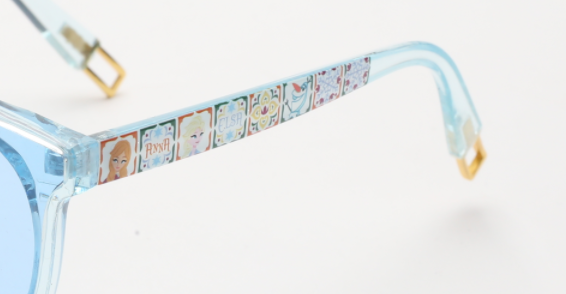
Sometimes a brand needs more than just a small logo on the temple. If your design requires complex, multi-color camouflage, floral patterns, or intricate full-frame graphic wraps, factories utilize water transfer printing.
We print your complex graphic design onto a specialized water-soluble film. We float this film on the surface of a temperature-controlled water tank and spray it with an activator solution that dissolves the film, leaving only the floating ink. A technician slowly dips the blank sunglass frame through the floating ink. The water pressure forces the ink to wrap seamlessly around every curve, edge, and corner of the frame simultaneously.
-
Cost: Medium to High. It requires extensive manual labor and a protective clear-coat finish.
-
Durability: Medium/High. We must spray the hydro-dipped frames with a strong, UV-cured protective clear coat. If that clear coat scratches, the pattern underneath becomes vulnerable.
-
Best Materials: PC, TR90, any rigid plastic frame.
UV Printing: The Fast Customization Solution
The modern retail landscape moves incredibly fast. For limited-edition capsule collections, dropshipping models, or highly colorful, photorealistic gradient logos, traditional screen printing takes too long and costs too much to set up.
UV printing solves this. Think of a UV printer as a highly advanced desktop inkjet printer designed for solid objects. The machine sprays liquid polymer ink directly onto the sunglass temples. Immediately behind the print head, an intense Ultraviolet (UV) light instantly cures and hardens the ink.
Because it is fully digital, UV printing requires zero physical molds, screens, or printing plates. You can print a completely different, multi-colored logo on every single pair of glasses in a 100-unit batch without slowing down the production line.
-
Cost: Low to Medium. Highly cost-effective for small runs and complex colors because it eliminates setup fees.
-
Durability: Medium. The UV-cured ink sits slightly raised on the surface and provides decent scratch resistance, though it does not bond as permanently as pad printing ink.
-
Best Materials: Flat PC frames, wood, flat metal temples.
The Branding Technique Selection Matrix
Choosing the right technique means balancing your raw material against your target retail price. Use this factory-direct matrix to match your next production run with the optimal branding technology:
| Frame Material | Budget Tier | Optimal Branding Technique | Why It Works |
| Cellulose Acetate | Premium / High | Metal Logo Inlay | Delivers unmatched luxury, flush textures, and permanent durability. |
| Cellulose Acetate | Mid-Range | Hot Foil Stamping | Provides a premium gold/silver aesthetic at a lower labor cost than metal inlays. |
| TR90 (Sports/Curved) | Mid-Range | Pad Printing | The silicone pad easily navigates the aggressive ergonomic curves of activewear frames. |
| Metal / Titanium | Premium | Laser Engraving | Cuts sharply through surface plating to reveal a clean, permanent, contrasting brand mark. |
| Polycarbonate (PC) | Volume / Budget | Silk Screen Printing | The most cost-effective method for massive runs (10,000+ units) of fast-fashion frames. |
| Any Material | Small Batch / Custom | UV Printing | Zero setup tooling costs allow for full-color, rapid deployment on limited capsule drops. |
Conclusion: Partner with Manufacturing Expertise
Your logo is the most valuable asset your business owns. Applying it to your eyewear incorrectly damages your brand equity faster than a broken hinge or a scratched lens.
When you order custom logo sunglasses, you must move beyond simply sending the factory a vector file. You must dictate the application method.
By understanding the distinct advantages of laser engraving for metals, the high-volume efficiency of silk screening for PC, and the luxurious depth of metal inlays for acetate, you take control of your product’s perceived retail value. Partner with a sophisticated manufacturer who understands the chemistry of these inks and the tolerances of these machines. When you match the right branding technique to the right material, your eyewear communicates premium quality before the customer even tries them on.