The global eyewear market shifts every year, and retail buyers feel that pressure directly. You need product that moves fast, not inventory that sits in a warehouse for two seasons. Getting the best sunglasses for men right isn’t about gut instinct — it’s about reading the market accurately and acting before your competitors do.
For 2026, the male eyewear market is sending clear signals. And no, it’s not about wild experimental shapes. Men buy conservatively. They want classics that work every day, not statement pieces that feel like a dare. So the 2026 story comes down to two specific shifts: frames are getting smaller, and lens colors are getting more interesting.
The 2026 Size Shift: Compact Is In
Oversized frames had a long run. That run is over for men.
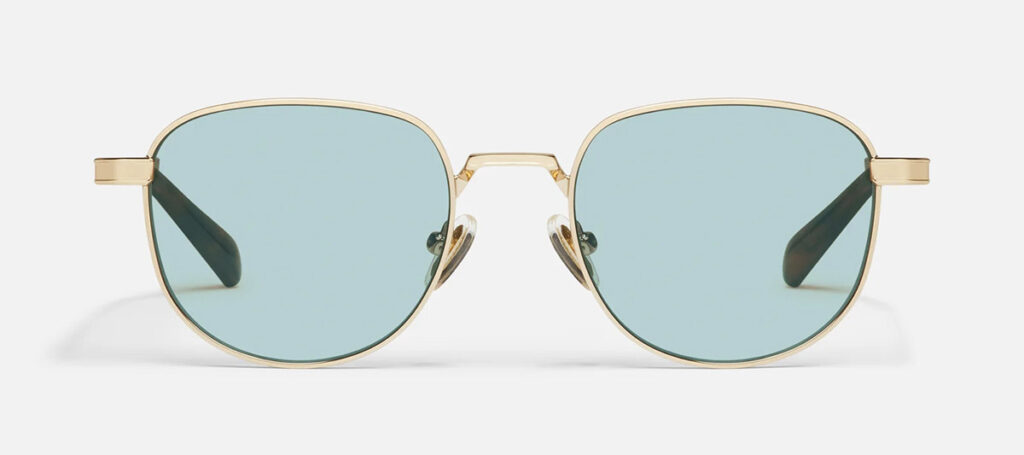
The shift is moving toward compact frames — lens widths in the 48mm to 52mm range. Buyers who haven’t adjusted their purchasing strategy yet are already behind. The reason this change is sticking isn’t just fashion. Smaller frames weigh less, which matters when you’re wearing them for eight hours straight. They look sharp with a suit and equally fine on the weekend. That kind of versatility is exactly what drives consistent sell-through at retail.
There’s also a practical side that men actually notice: compact frames don’t slide. They stay on your face when you’re moving. For a customer who jogs in the morning and has a client meeting at noon, that’s not a minor detail.
Your seasonal buy should reflect this. If your current orders are still heavy on large frames, recalibrate now.
Why Classic Shapes Hold Their Ground
Frame sizes are shrinking, but the shapes themselves haven’t changed — and they won’t.
Retailers sometimes panic about trend cycles, wondering whether last season’s shapes are already dead. For men’s eyewear, that anxiety is mostly wasted energy. Human faces are the same as they were fifty years ago. A strong jaw still looks best in a square frame. A round face still needs angular contrast to balance out. The geometry hasn’t changed because the faces haven’t changed.
The Aviator is still your best bet for broad appeal. Square frames remain the workhorse of casual retail. Rectangular frames serve the professional buyer who needs something understated. These three shapes alone can carry a well-curated men’s collection.
The other thing about men’s buying behavior: when a guy finds a frame shape that works for him, he doesn’t reinvent the wheel next time. He comes back and buys the same silhouette in a different color. That repeat behavior is steady revenue, and it comes from stocking the classics well rather than chasing novelty.
Keep your budget focused on quality execution within proven shapes. Experimental geometries are a budget drain with unpredictable returns. Classic shapes with excellent materials — that’s the formula that holds up season after season.
2026 Market Strategy Comparison Table
Procurement teams need clear guidelines to plan their factory orders. We created this comparison table to highlight the major market shifts.
| Market Strategy Element | Previous Retail Seasons | 2026 Retail Season | Direct Business Impact |
| Primary Frame Size | Oversized and very bulky | Compact and highly tailored | Higher daily comfort drives repeat purchases |
| Core Frame Shapes | Experimental geometries | Classic and traditional | Lower dead inventory risk for the retailer |
| Primary Lens Color | Solid black and dark grey | Tea colors and light blue | Increased fashion appeal and versatile usage |
| Primary Lens Style | Uniform dark tint | Gradient color transition | Better practical function for daily driving |
| Overall Aesthetic | Loud and aggressive | Quiet luxury and refined | Appeals to higher income professional demographics |
The Real Trend Driver: Lens Color Innovation
Classic frames are the foundation. But classic doesn’t mean boring — and in 2026, where the real product differentiation happens is inside the lens.
For most of eyewear’s history, men’s sunglasses meant black or dark grey. Functional, safe, forgettable. That’s changing. Men are increasingly treating sunglasses as part of how they put themselves together, not just sun protection. The result is a genuine lens color shift that retailers need to get ahead of, not react to.
Tea and Light Blue: The Two Colors to Order Now
Tea lenses are having a moment — and it’s not a fleeting one. The warm amber tone reads as vintage without being costumey. It pairs naturally with denim, leather, neutral fabrics — the stuff men actually wear. There’s also a practical upside: tea lenses improve contrast in flat or overcast light, which makes them genuinely useful on grey days, not just sunny ones.
Light blue is the more interesting story. It’s growing fast, and the reason has less to do with aesthetics than with how people experience wearing sunglasses around other people. Very dark lenses create a wall. You can’t see the wearer’s eyes, and that reads as guarded or unapproachable in normal social situations — a restaurant, a meeting, a conversation on the street. Light blue lenses let people see your eyes. That small change makes the whole experience feel less isolating.
The practical side matters too: you can keep them on indoors without looking rude. For a customer who wears sunglasses as part of their daily routine rather than just a beach accessory, that wearability is a real selling point.
If your next factory order doesn’t include both tea and light blue options, you’re leaving money on the table.
Gradient Lenses: Function That Looks Like Luxury
Solid tints are losing ground to gradients, and it’s easy to understand why once you think about how men actually use sunglasses.
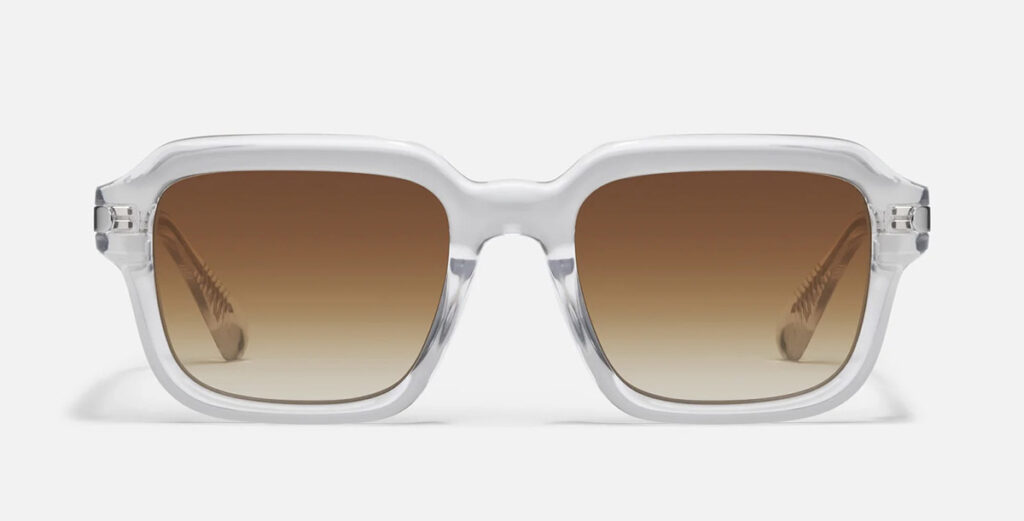
A gradient lens is dark at the top and fades to clear at the bottom. When you’re driving, the dark upper portion handles glare from above. The lighter lower portion means you can read your dashboard, glance at your phone mount, or check navigation without squinting or lifting your glasses. It’s not a gimmick — it solves a real daily problem.
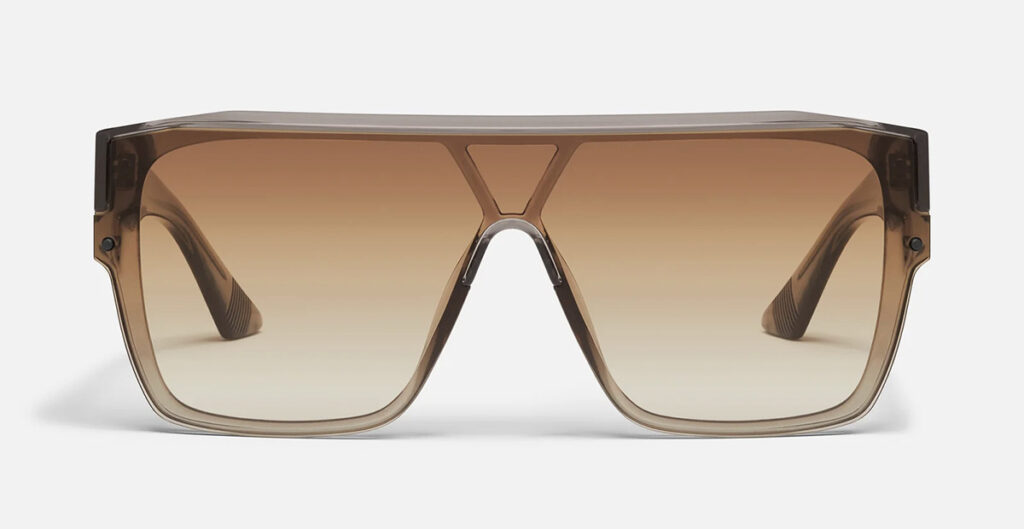
The visual effect is a bonus: gradients look expensive. A compact square frame with a brown gradient lens looks like a product from a brand charging three times the price. That perception gap is exactly where margin lives. Retailers can price gradient styles higher, and customers don’t push back because the product genuinely looks and feels premium.
Add gradients to your line. If you’re only running solid tints, you’re underpricing your potential.
Sourcing Your 2026 Collection with Wenzhou Zhantai Glasses
Executing these trends well requires a factory that actually understands what you’re building. The difference between a tea lens that looks rich and one that looks muddy comes down to dye consistency and color matching precision. The difference between a gradient that looks intentional and one that looks uneven comes down to process control at the dipping stage.
Zhantai has been making frames in Wenzhou since 1990. Our production lines run compact frames on high-precision injection and CNC machinery — the tolerances that make a small frame sit right on the face, not just look right in a photo. On the lens side, we handle the full range: tea tints with exact color matching, light blue tints in multiple densities, and gradient lenses with a controlled fade that holds consistent across a production run.
We work with B2B buyers across 50-plus countries. Our capacity handles large retail chain volumes without lead time surprises. Every frame and lens goes through quality control before it ships.
If you’re building your 2026 men’s collection and want to talk specifics — styles, MOQs, lead times — reach out to our international sales team. We’ll take it from there.
The 2026 men’s eyewear opportunity is specific: smaller frames, classic shapes, and lenses that do something interesting. That combination gives you product that sells broadly, doesn’t go stale mid-season, and has room for real margin on the lens differentiation.
The procurement shift isn’t complicated. Get out of oversized. Stock your proven shapes in compact sizing. And use the lens — color, tint, gradient — as the place where your collection actually has something to say.
Zhantai is ready when you are.