The watersports industry is booming, from casual weekend paddleboarding to competitive offshore sailing. However, the eyewear demands for aquatic environments are drastically different from everyday fashion or standard athletic wear. When consumers hit the water, they need sunglasses that won’t sink to the bottom of the lake, won’t fog up during intense activity, and can withstand the corrosive combination of saltwater and sunscreen.
For optical brands, surf shops, and outdoor retailers, tapping into this lucrative niche requires specialized product development. Partnering with the right waterproof sunglasses manufacturer is crucial to creating eyewear that performs under extreme conditions. This guide explores the essential materials, advanced lens coatings, and custom manufacturing techniques needed to successfully dominate the floating sunglasses wholesale market.
The Core Requirement: Buoyancy and Frame Materials
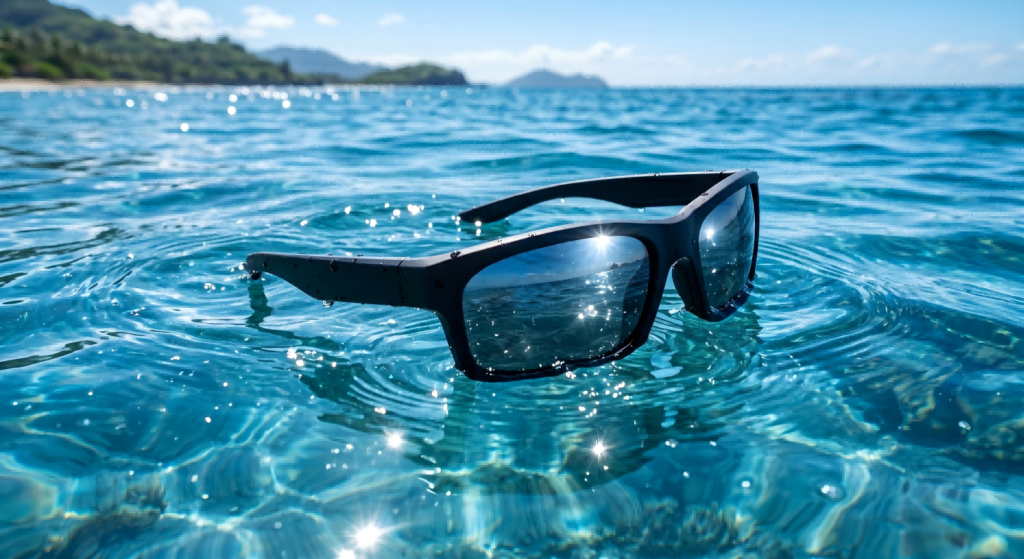
The most common pain point for watersport enthusiasts is losing their expensive sunglasses to the depths. Standard acetate or metal frames will sink instantly. To create true floating sunglasses, manufacturers must carefully select materials with a specific gravity lower than water (which is 1.0 g/cm³).
TPX (Polymethylpentene)
TPX is the gold standard for floating eyewear. This advanced, ultra-lightweight thermoplastic boasts a specific gravity of around 0.83 g/cm³, making it naturally buoyant without the need for bulky air chambers.
-
Advantages: It is highly transparent, durable, and exceptionally chemical resistant. It stands up to saltwater, chlorine, and the chemical solvents found in sunscreens better than almost any other plastic.
-
Manufacturing Reality: Because TPX naturally floats, designers can create sleek, slim frame profiles that look like standard athletic wear, rather than the chunky “life preserver” aesthetic of older floating glasses.
TR90 with Engineered Air Chambers
While standard TR90 (Nylon) has a specific gravity of about 1.14 g/cm³ (meaning it slowly sinks), some manufacturers use it for watersport frames by employing clever engineering.
-
The Technique: A skilled waterproof sunglasses manufacturer can injection-mold TR90 frames with hollow internal chambers. The trapped air provides the necessary buoyancy, allowing the frame to float while maintaining the extreme flexibility and impact resistance that TR90 is famous for.
Lens Technology for the Open Water
In the marine environment, the sun’s glare reflects intensely off the water’s surface, causing eye fatigue and blinding the wearer. The frame keeps the glasses afloat, but the lenses do the heavy lifting for performance.
Essential Polarization
Polarization is non-negotiable for watersport sunglasses. While standard tinted lenses only darken the environment, polarized lenses contain a specialized microscopic chemical film. This film acts like a Venetian blind, blocking horizontal light waves (the blinding glare reflecting off the water). This allows fishermen to see below the surface and helps sailors read the wind on the water.
When sourcing floating sunglasses wholesale, always specify TAC (Triacetate Cellulose) polarized lenses or premium Polycarbonate polarized lenses. TAC offers an excellent balance of high optical clarity and low weight, contributing to the overall buoyancy of the frame.
Hydrophobic and Oleophobic Coatings
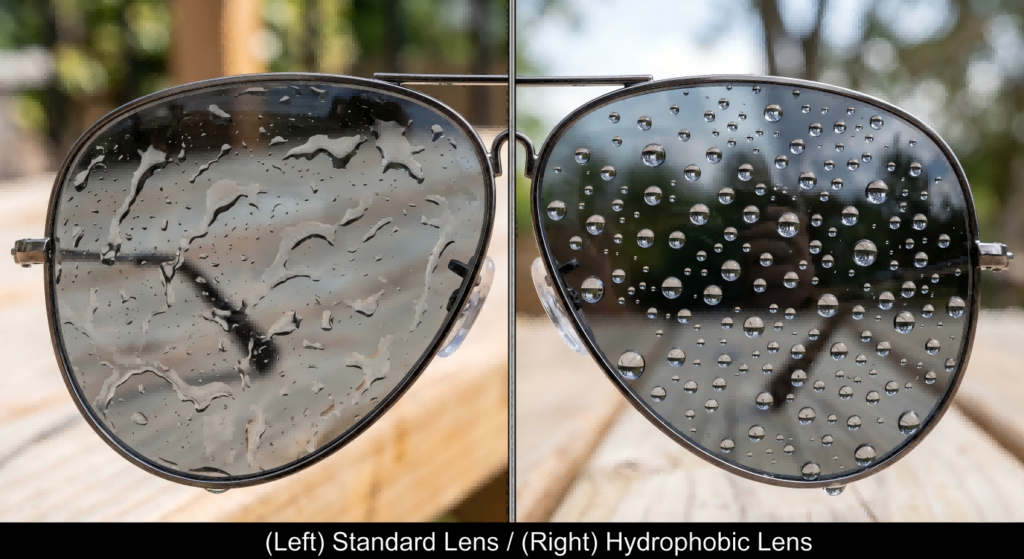
Water droplets sitting on a lens instantly ruin visibility. A premium waterproof sunglasses manufacturer will apply advanced nanocoatings to the exterior of the lenses.
-
Hydrophobic Coating: This coating alters the surface tension of the lens. Instead of flattening out and sticking, water beads up perfectly and rolls right off the glass, keeping the wearer’s vision clear even through ocean spray or heavy rain.
-
Oleophobic Coating: This repels oils. It ensures that sunscreen, sweat, and fingerprints wipe away cleanly without smudging across the entire lens.
Hardware and Assembly: The Saltwater Challenge
The ocean is an incredibly corrosive environment. A frame might float perfectly, but if the metal hinges rust after one week at the beach, the product fails.
Anti-Corrosion Hardware
Standard stainless steel hinges, even high grades, will eventually pit and rust when continuously exposed to saltwater and marine air. When manufacturing watersport eyewear, factories must either:
-
Use Titanium Components: Titanium is completely impervious to saltwater corrosion, though it increases the unit cost.
-
Employ Pin-Hinge Designs: Many modern floating frames eliminate metal screws entirely. Instead, they use a “snap-in” or plastic pin-hinge design molded directly into the TPX or TR90 frame, ensuring zero rust risk.
Rubberized Grip Systems
Water makes everything slippery. To prevent the sunglasses from flying off during a jet-ski ride or a wipeout, the frames need strategic grip points. Factories use double-injection molding to fuse hydrophilic rubber (which actually gets tackier when wet) onto the nose pads and temple tips. This secures the frame tightly to the wearer’s face.
Why B2B Buyers Need a Specialized Waterproof Sunglasses Manufacturer
Sourcing for the watersports niche requires precision. You cannot simply take a standard fashion frame, add polarized lenses, and call it a boating sunglass.
When you order floating sunglasses wholesale, you need an OEM/ODM partner who understands the rigorous testing required for this category. A dedicated waterproof sunglasses manufacturer will provide:
-
Buoyancy Testing: They will physically test the assembled frames (including the weight of the specific lenses you choose) to guarantee they float in both fresh and saltwater.
-
Adhesion Testing: Saltwater and UV rays degrade glue quickly. A specialized factory uses marine-grade adhesives and ultrasonic welding to ensure the rubber nose pads and temple grips do not peel off after a few weeks in the sun.
-
Custom Branding (Private Labeling): A top-tier factory allows you to customize the frame colors (often bright, high-visibility colors like neon yellow or orange, which are easier to spot if dropped in the water) and laser-etch your brand logo securely onto the lenses or temples.
Conclusion
The watersports eyewear market presents a fantastic opportunity for brands that prioritize performance and quality. Consumers in this space are willing to invest in gear that protects their eyes and survives their active lifestyle.
By utilizing lightweight materials like TPX, insisting on hydrophobic polarized lenses, and eliminating rust-prone hardware, you can build a product line that truly performs on the water. When you partner with an experienced waterproof sunglasses manufacturer, you ensure that your next bulk order of floating sunglasses wholesale delivers the durability, clarity, and buoyancy your customers demand.