Newsroom

News Release |

Lightweight & Unbreakable: The Winning Features of TR90 Sunglasses

Buyers return frames for two reasons: they broke, or they were uncomfortable. TR90 sunglasses address both problems at the material level. That’s not a marketing claim — it’s a property of the polymer itself. If you’re sourcing for an active lifestyle brand, a kids’ line, or any mid-range collection where durability matters, TR90 is worth understanding properly.
tr90 sunglasses

What TR90 actually is

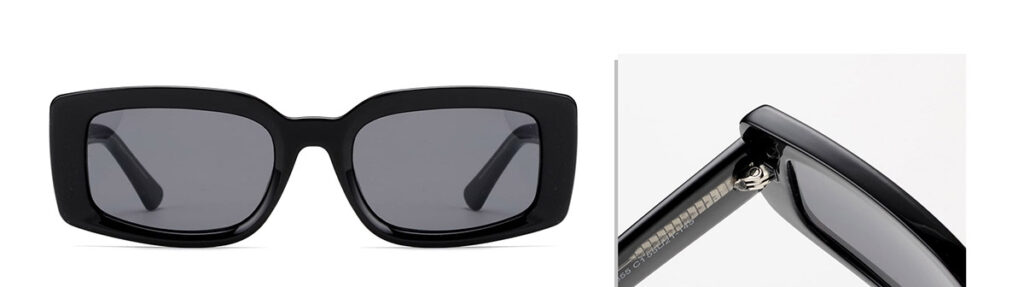
TR90 is a memory plastic, sometimes called “Swiss polymer” after its country of origin. The name refers to its defining behavior: bend it, and it returns to its original shape. That’s not something PC (polycarbonate) or acetate can do.

PC is the cheap, workhorse plastic. It takes printed patterns well, costs less, and handles basic use fine. But if someone bends a PC temple too far, it snaps or stays deformed. Acetate is the premium option — beautiful layered patterns, a tactile quality that reads as expensive. The tradeoff is weight and labor. Acetate frames are heavier, and crafting them requires significantly more manual work than injection-molded plastics.

TR90 sits between them on price and above them on functional performance. The material is lighter than both acetate and PC. It absorbs impact rather than fracturing. And it holds its shape through the kind of daily abuse that sends other frames to the trash.
The weight question

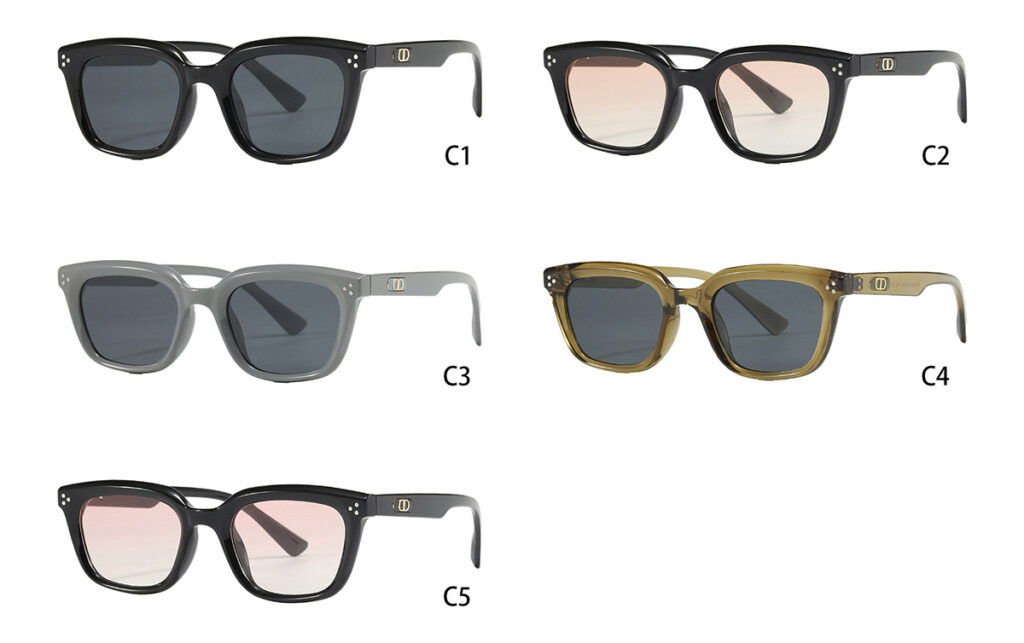
Frame weight is one of those things consumers notice immediately but rarely articulate clearly in reviews. What they say is “these are so comfortable” or “I forget I’m wearing them.” What they mean is the frames aren’t pressing on their nose bridge or behind their ears after two hours.

A large TR90 frame can weigh noticeably less than the equivalent in acetate. For oversized sunglasses — where the frame front is wide and the temples are long — that difference is real. For kids’ frames, where the child is wearing them for an afternoon at the beach, it matters even more. The density of TR90 is 1.14–1.15 g/cm³, the density of PC (polycarbonate) is 1.20 g/cm³ and the acetate density is 1.32 g/cm³.

This isn’t a soft selling point. Comfort affects how long people actually wear the product and whether they recommend it.

Flexibility and what “unbreakable” means in practice

TR90 won’t break under normal stress. The temples flex significantly before returning to shape. If a customer sits on a pair, they’re more likely to find the frames bent than snapped. That’s recoverable. A broken hinge or a split frame front isn’t.

We stress-test TR90 frames in our lab — repeated bending cycles, impact tests — and the failure rate under normal-use scenarios is low. The material is also stable during shipping and storage, so you’re not dealing with warped frames by the time they reach retail.

One clarification worth making: TR90 isn’t infinitely adjustable. Unlike acetate, you can’t heat it to reshape the fit. Opticians who adjust acetate frames by warming them won’t have that option with TR90. The flip side is that TR90 holds its shape in hot, humid environments where acetate can slowly warp over time.

Material Selection: A Direct B2B Comparison

Your procurement team needs all the available facts to make the best sourcing decision. We have prepared this direct comparison of common eyewear materials to help your business choose the perfect frame material for your brand’s next collection.

Material Key Winner Feature Relative Weight Durability Aesthetic Versatility B2B Market Position
PC (Polycarbonate) Cost-Effectiveness & Print Average Average Average Budget / Mass Market
Acetate (Cellulose) Premium Layered Look & Texture Heavy Average Excellent / Layered Premium / Fashion
TR90 (Swiss Polymer) Lightweight Comfort & Strength Lightest Excellent / Flexible Good / Single Colors Middle Market / Active
Metal (e.g., Titanium) Durability & Minimalism Light Good Simple Premium

Where TR90 fits in the market

The $30–$70 retail price range is where TR90 makes the most commercial sense. It’s a step up from basic PC frames — you can justify the price difference by pointing to the weight and durability — but it doesn’t require the premium that acetate commands.

For buyers sourcing wholesale sunglasses in this range, TR90 gives you a real story to tell. “Lightweight and flexible” isn’t vague when the material literally snaps back after bending. It’s a demo you can do in a showroom.

The honest limitation: color and pattern

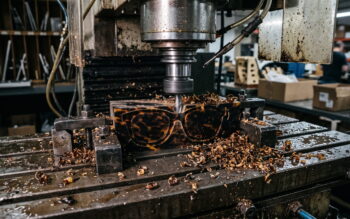
TR90 has one area where it can’t match acetate: layered, translucent color patterns.

Acetate gets its characteristic look from bonded sheets of different colors. The depth you see in a tortoiseshell acetate frame comes from layers of material fused together. TR90 frames are injection-molded from a single material. You can paint them — we apply solid colors, color-blocking, and surface finishes that look good — but you can’t replicate that layered translucent quality within the TR90 material itself.

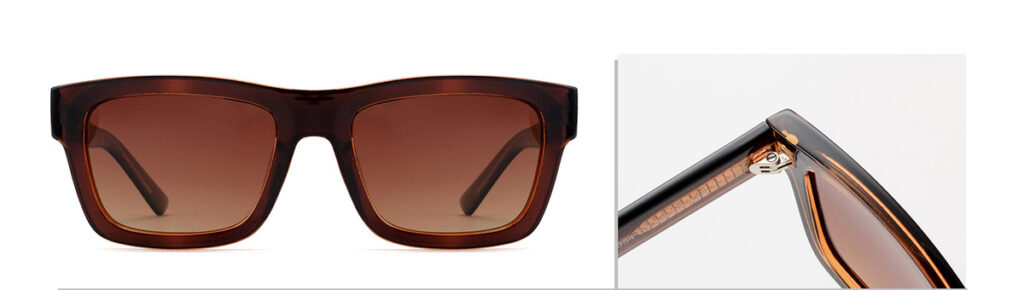
If a collection is specifically built around that aesthetic — fashion-forward, premium pattern work — acetate is the right call. TR90 is the right call when the brief is durability, comfort, and a clean color execution.
TR90 Sunglasses

Certifications and quality control

All TR90 frames we produce go through stress and flexibility testing before leaving the facility. We can provide material safety certificates and quality documentation with B2B orders, which simplifies customs clearance in most markets.

Our manufacturing is CE and FDA certified. If you need specific test reports for a particular market, we can discuss that during sampling.

Working with us on TR90

We’ve been running TR90 production long enough to know where things go wrong — mold tolerances, hinge integration, paint adhesion on flexible surfaces. The material behaves differently from rigid plastics, and the production process reflects that.

If you’re planning a TR90 collection and want to talk through construction details, color options, or MOQ, reach out to Wenzhou Zhantai Glasses. We offer OEM and ODM options and can work from your existing designs or start from scratch.
Recent Posts

The Timeless Market Appeal of Aviator Sunglasses for Men


The global eyewear market moves in fast cycles. Styles emerge, dominate for a season, and then vanish from consumer memory. This volatility presents a constant challenge for B2B procurement teams and retail brands. You must select products that balance trendy appeal with long-term sales stability. For retailers seeking a safe-margin, high-volume item that consistently generates […]

The Timeless Market Appeal of Aviator Sunglasses for Men
Full Article

Lightweight & Unbreakable: The Winning Features of TR90 Sunglasses


Buyers return frames for two reasons: they broke, or they were uncomfortable. TR90 sunglasses address both problems at the material level. That’s not a marketing claim — it’s a property of the polymer itself. If you’re sourcing for an active lifestyle brand, a kids’ line, or any mid-range collection where durability matters, TR90 is worth […]

Lightweight & Unbreakable: The Winning Features of TR90 Sunglasses
Full Article

Custom Printing on Plastic Sunglasses: Adding Fun Patterns to Your Frames


The eyewear market has gotten brutally competitive. Buyers scroll through hundreds of options in seconds. A solid-color frame doesn’t stop anyone anymore — but a frame covered in a bold floral print or retro checkerboard pattern does. Custom printing is how brands break out of commodity territory. You take a basic plastic sunglasses frame and […]

Custom Printing on Plastic Sunglasses: Adding Fun Patterns to Your Frames
Full Article

Professional Service Process

OEM/ODM service

Learn about the cooperation process
FAQs

Q1: What is your production capacity for OEM/ODM sunglasses orders?

Our total annual output exceeds 20 million pieces. For our primary injection styles, our capacity is between 800,000 and 1,000,000 pieces per month, while our metal production lines output 400,000 to 600,000 pieces per month. This large-scale capability allows us to support high-volume orders for global supermarkets and chain stores reliably.

Q2: What kind of customization services do you provide for fast-fashion brands?

We offer a complete product and packaging one-stop service. Our R&D team develops over 50 new sample designs per month based on market research and trend analytics. We fully support custom frames, lenses, and LOGO customization to match your exact brand identity.

Q3: How long is the typical lead time for samples and bulk production?

We pride ourselves on speed and efficiency. We offer fast sample-making within 7 to 15 days. If your project requires a new mold, it typically takes 20 to 30 days. For bulk order production, our standard lead time is 30 to 60 days.

Q4: Do your sunglasses meet international quality and safety standards?

Absolutely. We strictly follow quality control steps from raw materials (IQC) to finished products (OQC). Our factory and products hold comprehensive professional qualification certificates, including CE, FDA, ISO 9001, ISO 13485, BSCI, SMETA, and the Global Recycled Standard.

Q5: Do you have experience working with major global retailers?

Yes, Wenzhou Zhantai Glasses has over 30 years of company history and extensive experience manufacturing for top supermarkets, ecommerce platforms, and global brands. Our recognized quality control has earned us partnerships with industry leaders like Walmart, Disney, Muji, Safilo, and QUAY. By working with us, you receive factory prices with no middlemen.

Q6: What types of eyewear materials do you manufacture?

We work with a wide variety of materials across our 3 production lines. Our capabilities include injection PC and TR, metal, acetate, and eco-friendly materials. This diverse material expertise allows us to meet the specific price points and design requirements of different fast-fashion brands and supermarkets.

Q7: What are your main product categories?

Our main products are sunglasses, optical glasses, and reading glasses. While we specialize in injection sunglasses for retail chains, we also have dedicated production lines for optical frames and reading glasses to provide a comprehensive eyewear catalog.

Q8: What is your Minimum Order Quantity (MOQ)?

As an OEM/ODM factory focusing on large-scale production, our standard MOQ is 1200 pieces per model for 3-4 colors. However, we offer flexible solutions for trial orders or specific customization needs. Please contact our sales team to discuss your project.

Q9: Do you have manufacturing facilities outside of China?

Yes, we do. In addition to our main 10,000-square-meter headquarters in Wenzhou, China, we also operate a specialized manufacturing facility in Thailand. Having a dual-country production strategy allows us to provide our global clients with highly flexible supply chain solutions, optimize import logistics, and mitigate international trade risks (such as tariffs). This ensures uninterrupted, high-capacity delivery for major supermarkets and brands.

Q10: What is your company’s background and manufacturing scale?

Wenzhou Zhantai Glasses was founded in 1990, giving us over 30 years of deep expertise in eyewear manufacturing. Our headquarters covers a construction area of over 20,000 square meters and employs more than 500 skilled workers. Thanks to the trust of our global clients, we maintain a highly stable operational status; our annual turnover continues to grow steadily, reaching $40 million in 2025, with a projected figure of $45 million in 2026. We are a financially strong and scalable partner ready for long-term collaboration.

Get in touch

Let’s build your vision together. Backed by 30 years of manufacturing excellence, Zhantai Glasses offers the quality and customization your brand needs to stand out. From concept to global distribution, we handle the details so you can focus on growth.

Let's collaborate for exceptional eyewear. We look forward to a meaningful collaboration.

Wenzhou Zhantai Glasses

Beiwei No.2 Street, Ouhai District, Wenzhou City, Zhejiang Province, China.

[email protected]