Every week, a new eyewear brand founder sits across from my desk—or on a Zoom call across the world—and asks the exact same question: “How much does it really cost to make a pair of premium sunglasses?”
The internet is full of vague answers. Some “gurus” claim you can build luxury sunglasses for two dollars, while others quote exorbitant numbers. As an eyewear factory owner who has spent years managing production lines, dealing with raw material suppliers, and balancing margins, I want to pull back the curtain.
Today, I am going to give you the exact, unfiltered truth about your sunglasses manufacturing cost. I will break down where every penny of your invoice goes, why quotes vary so wildly between factories, and how you can optimize your specifications to maximize your profit margin.
The Baseline: Authentic Cost by Material
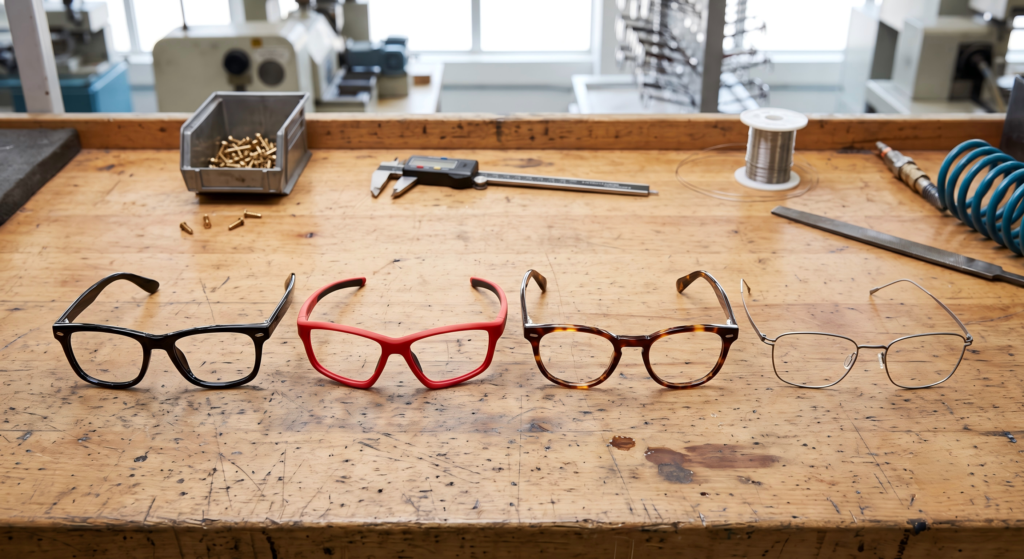
Before we dive into the percentages, let’s establish the baseline unit costs. The core material you choose dictates the entire production process. Here is what you should realistically expect to pay for a quality-controlled, retail-ready unit:
-
Polycarbonate (PC) / Basic Plastics ($3 – $8 per unit): Ideal for fast fashion or promotional items. We inject molten plastic into a mold. It is fast, cheap, and requires minimal hand-finishing.
-
TR90 / Nylon ($8 – $15 per unit): The standard for sports and activewear. TR90 requires specialized injection machines and better thermal control to maintain its famous flexibility and memory shape.
-
Cellulose Acetate ($12 – $20 per unit): The gold standard for boutique and luxury fashion. We carve acetate from solid blocks using CNC machines, followed by days of tumbling and hand-polishing.
-
Titanium ($15 – $25+ per unit): The pinnacle of metal eyewear. Machining titanium destroys drill bits, and welding it requires specialized oxygen-free argon chambers.
The Real Eyewear Production Cost Breakdown
Let’s look at the anatomy of your invoice. When I quote you $15 for a high-end acetate sunglass, where does that money actually go? Here is the true eyewear production cost breakdown based on our factory’s ledger:
-
Raw Materials: 30% – 40%
This is the physical body of the frame. For a premium product, we buy high-grade acetate sheets from reputable suppliers. This cost also includes the hardware: the metal core wires we shoot into the temples and the custom 5-barrel spring hinges that keep the glasses comfortable.
-
Lenses: 20% – 30%
Lenses dictate the safety and optical clarity of the product. Cheap acrylic lenses cost pennies, but if you want TAC polarized lenses or scratch-resistant CR-39 lenses with anti-reflective (AR) coatings, the cost jumps significantly. Lenses represent a massive chunk of your bill because we must source them from specialized optical laboratories.
-
Labor and Craftsmanship: 15% – 25%
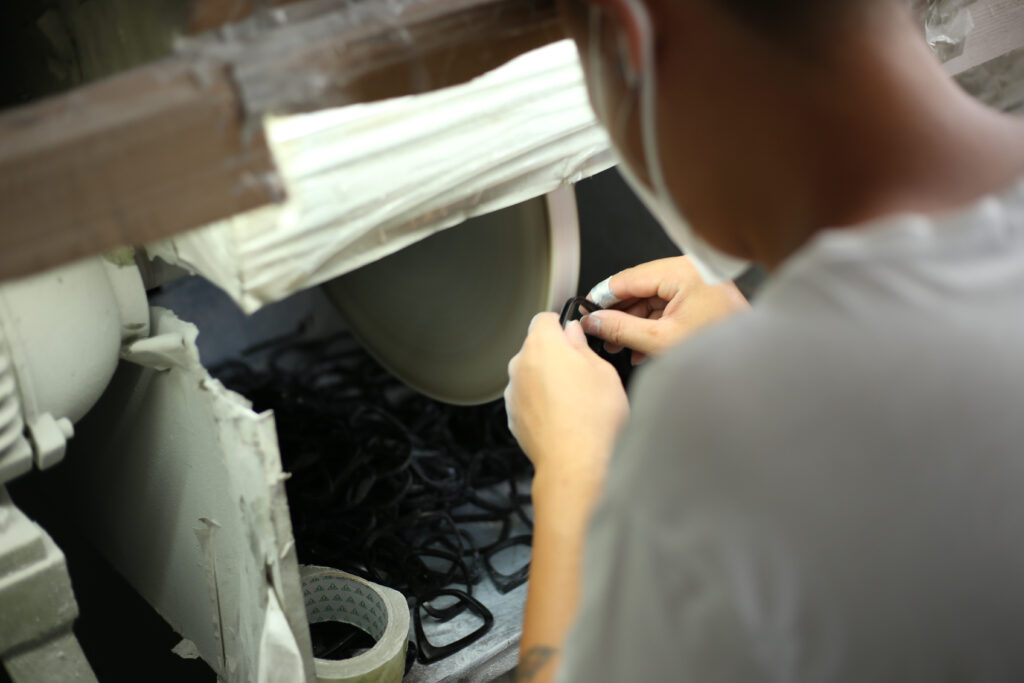
Eyewear manufacturing remains surprisingly manual. While CNC machines cut the acetate, human hands do the rest. Our artisans spend hours hand-buffing the frames on polishing wheels. Technicians manually insert the lenses, adjust the hinges, and heat-bend the temples so the glasses sit perfectly level on a glass table. You are paying for skilled artisan time.
-
Quality Control (QC): 5% – 10%
We do not just box up the frames and ship them. Our QC team implements AQL (Acceptable Quality Limit) inspections. They check for microscopic scratches, test the hinge friction, and run the FDA-mandated Drop Ball Test to ensure the lenses will not shatter upon impact.
-
Packaging and Logistics: 10% – 20%
A luxury sunglass needs luxury packaging. This portion of the budget covers the PU leather hard case, the debossed microfiber cloth, the rigid exterior retail box, and the heavy-duty master export cartons we use to survive the ocean freight journey.
The 1,200-Unit Case Study: Premium Acetate Sunglasses
Let’s apply this eyewear production cost breakdown to a real-world scenario. Assume you place a standard B2B order: 1,200 units of a premium Tortoise Acetate sunglass with Polarized TAC lenses.
I quote you $15.00 per unit. Your total invoice is $18,000.
Here is exactly how I allocate your $18,000 inside my factory:
-
Materials (35%): $6,300. I purchase the raw tortoise acetate boards, the wire cores, and the spring hinges.
-
Lenses (25%): $4,500. I order 1,200 pairs of UV400, polarized TAC lenses with a custom gradient tint.
-
Labor (20%): $3,600. This pays my CNC operators, my tumbling barrel supervisors, my hand-polishers, and the assembly team.
-
Quality Control (7.5%): $1,350. I pay my QC inspectors to rigorously test the batch, ensuring zero crooked frames leave my floor.
-
Packaging (12.5%): $2,250. I source the branded leather cases, microfiber cloths, and master shipping cartons.
Note: My factory profit margin is baked into the labor and efficiency optimizations within this structure, usually hovering around 10% to 15%.
Why Do Quotes Vary So Much Between Factories?
Often, a client will tell me, “Your factory quoted $15, but another supplier on Alibaba quoted me $6 for the same acetate frame!”
As a factory owner, I can tell you exactly how that competitor achieved a $6 price tag. They cut corners that will ultimately destroy your brand reputation.
-
Scrap Material vs. Virgin Material: I use fresh, high-grade acetate boards. The cheap factory sweeps up the leftover scrap acetate from the factory floor, melts it down, and injects it. It looks terrible, feels brittle, and snaps easily.
-
Fake Polarization: They use cheap tinted plastic lenses that offer zero actual UV protection, putting you at massive legal risk for eye damage claims.
-
Skipping the Polish: Polishing takes time. I tumble frames for 72 hours and hand-buff them. The cheap factory dips the frames in a chemical gloss varnish. It looks shiny on day one, but peels off like a bad sunburn after two weeks of wear.
The Pricing Funnel: Factory Cost vs. Quote vs. First Order vs. Re-order
Your sunglasses manufacturing cost is not static. It changes depending on where you are in the lifecycle of your product.
The Hidden Costs of the First Order
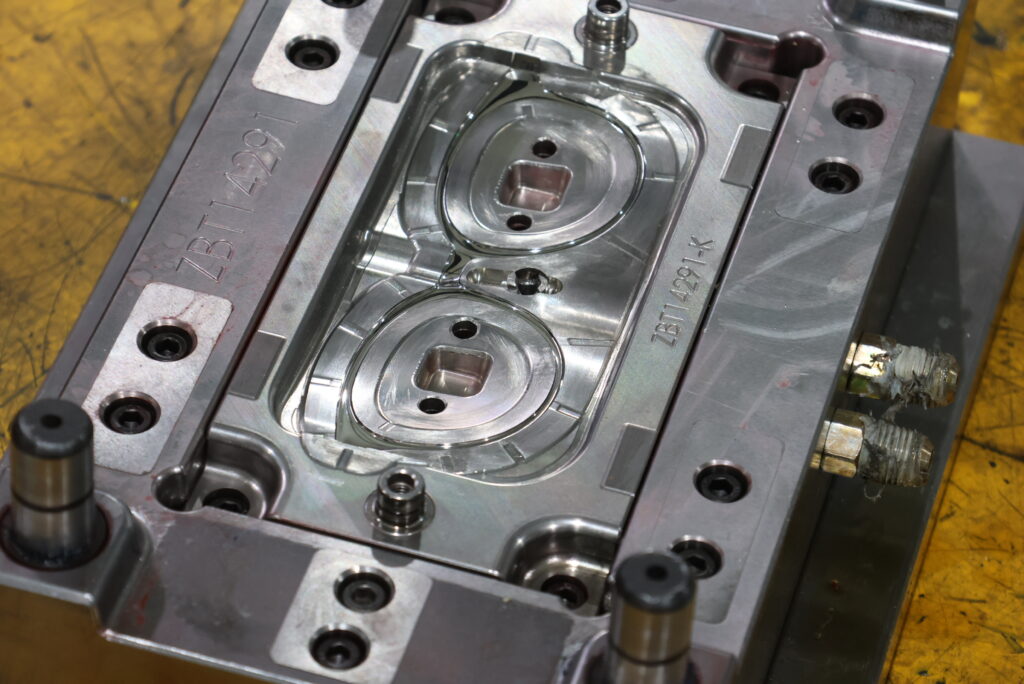
Your very first order will always be your most expensive. Why? Because of hidden upfront costs. If you design a custom frame from scratch (OEM), I have to cut a custom steel injection mold or program a new CNC path. Mold fees can run anywhere from $800 to $2,500 depending on complexity.
Furthermore, you must pay for mandatory testing and certifications (like FDA registration or CE marking for Europe). If we discover a design flaw during prototyping, we have to pay for rework. Your $15 unit cost might temporarily feel like $18 when you factor in these one-time setup fees.
The Re-Order Advantage
The magic happens on your second order. The molds are already cut and paid for. The CNC programming is saved on our hard drives. The compliance testing is complete. When you place a re-order, those hidden costs vanish, your profit margins expand, and our production speed increases dramatically.
How to Optimize Specs and Lower Your Costs
I want my clients to succeed because when you sell more glasses, I manufacture more glasses. If your budget is tight, here is how we can optimize your spec sheet to lower your costs without sacrificing quality:
-
Use Open Molds (ODM): Instead of paying $1,500 for a custom mold, choose a frame shape from my factory’s existing “open catalog.” We simply apply your brand logo to a frame we already know how to make efficiently. This instantly slashes your startup costs.
-
Stick to Standard Colors: Custom Pantone color-matching requires us to buy massive batches of raw plastic. If you stick to industry-standard colors—like pure Black, Clear, or classic Tortoise—I can source the raw materials much cheaper, and pass those savings on to you.
-
Simplify Your Packaging: Do not order a custom-shaped velvet box for your first run. Use our factory-standard EVA hard cases and add your hot-stamped logo. It looks premium but cuts your packaging costs in half.
Conclusion
Understanding your sunglasses manufacturing cost is the first step toward building a sustainable, profitable optical brand. When you partner with a transparent manufacturer, the mystery disappears. You learn that you are paying for durable materials, precise optical lenses, skilled human craftsmanship, and the rigorous quality control necessary to protect your brand.
Do not chase the lowest possible quote from a factory willing to cut corners. Build a relationship with a manufacturing partner who treats your eyewear production cost breakdown like a shared business plan. When we optimize your design, amortize your tooling costs, and deliver a product your customers love, we both win.
More You Like