If you wear sports sunglasses, ultra-lightweight optical frames, or premium flexible eyewear, you are likely wearing TR90. This incredible thermoplastic polyamide revolutionized the eyewear industry by offering a combination of extreme flexibility, durability, and a feather-light feel. It bends under pressure, refuses to break, and instantly returns to its original shape.
But how do we transform a handful of hard, transparent plastic pellets into a pair of high-performance, flexible sunglasses?
At Wenzhou Zhantai Glasses Co., Ltd., TR90 is our core expertise. We have spent years perfecting the TR90 manufacturing process, dialing in the exact thermodynamics and mechanical pressures required to unlock the material’s legendary “memory” properties. Today, we are opening our factory doors to show you exactly how TR90 glasses are made.
From the raw material selection to the intense pressures of the injection machines, here is the ultimate, factory-floor guide to TR90 eyewear production.
Raw Material Properties and Sourcing Standards
You cannot manufacture a premium frame using substandard raw materials. The foundation of the entire TR90 manufacturing process begins with the pellets.
TR90 is a specific grade of thermoplastic polyamide. While many budget factories use generic, recycled nylons and label them “TR90,” genuine high-performance TR90 pellets typically come from top-tier chemical companies like EMS-Grivory in Switzerland.
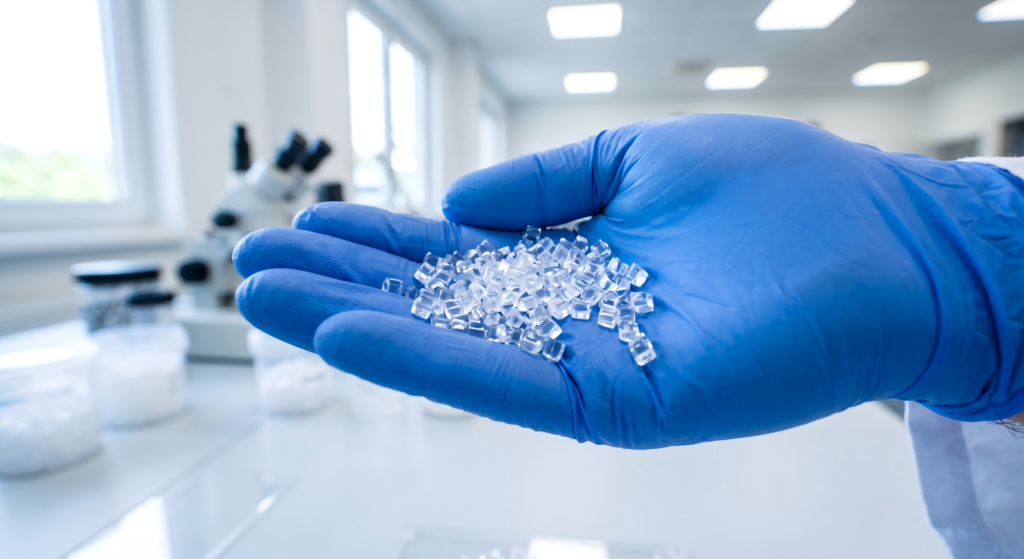
True TR90 possesses incredible shape memory and impact resistance. However, it is highly hygroscopic, meaning it absorbs moisture from the air. Before we can even think about melting the material, we must prep the pellets. We place the raw, transparent TR90 pellets into specialized industrial hoppers that bake the material at 80°C for at least four hours. If we skip this baking phase, microscopic water molecules will boil during the injection phase, causing the final frames to turn cloudy, brittle, and structurally weak.
Mold Design and Precision Engineering
Before the raw material melts, we must create the cavity it will fill. Mold design dictates the success or failure of the entire production run.
TR90 behaves differently than standard polycarbonate (PC) or basic plastics. It shrinks as it cools. Our engineering team designs heavy steel injection molds using CAD software, intentionally cutting the mold cavities slightly larger than the final frame size to account for this precise shrinkage rate.
A premium TR90 mold requires perfect gating (the channel where the liquid plastic enters) and advanced cooling channels built directly into the steel. If the liquid TR90 hits a bottleneck in the mold or cools unevenly, it creates weak points in the frame. We cut these molds using multi-axis CNC machines to achieve tolerances within a fraction of a millimeter, ensuring a flawless surface finish before the plastic even touches the steel.
TR90 Injection Molding Parameters
This is where the magic happens. TR90 injection molding is a high-stakes balancing act involving extreme heat, massive pressure, and precise timing.
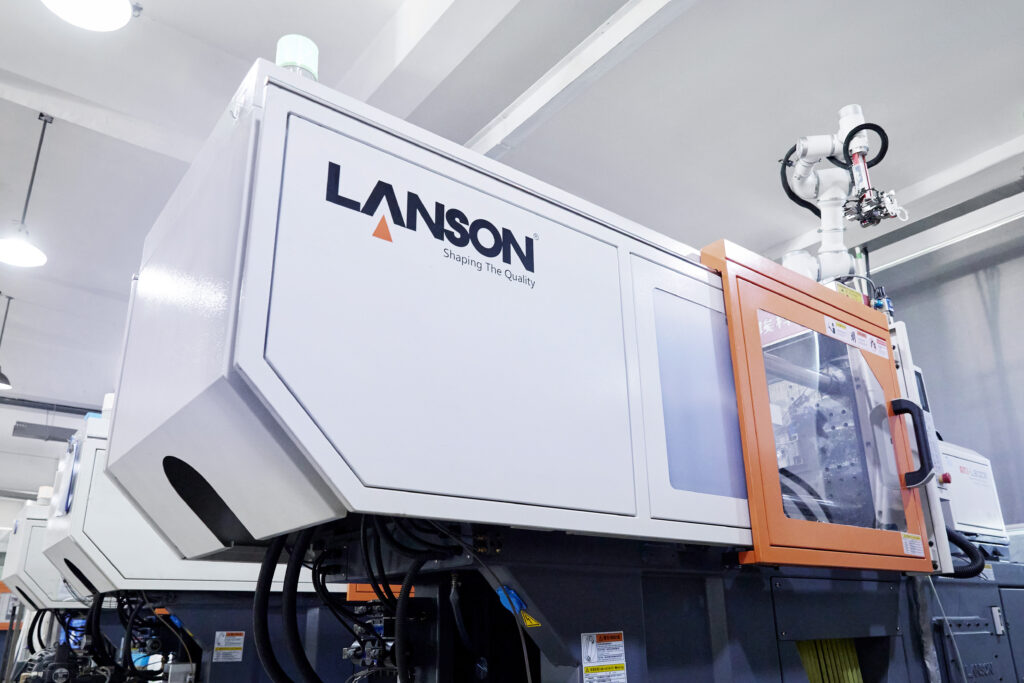
We feed the baked, moisture-free TR90 pellets into the injection machine’s heated barrel. A large, rotating screw crushes and melts the pellets. To achieve the perfect liquid viscosity without burning the polymer chains, we meticulously control the barrel temperature, keeping it between 260°C and 280°C depending on the specific frame design.
Once the TR90 reaches the perfect molten state, the machine clamps the heavy steel mold shut. This is not a gentle process. We use a massive 120-ton clamping force to keep the mold locked tight. If we use too little pressure, the high-pressure liquid plastic will force the steel mold open, causing “flash”—sharp, jagged edges of leaked plastic around the seams of your sunglasses.
The machine then shoots the molten TR90 into the mold cavity at high speed. The liquid plastic fills every microscopic detail of the frame design in less than two seconds.
Cooling and Internal Stress Release
If you take a freshly injected TR90 frame and bend it immediately, it will snap in half.
When liquid plastic cools rapidly inside a steel mold, it traps massive amounts of internal stress. The polymer chains freeze in unnatural positions. Budget factories often skip the next critical step to save time, resulting in frames that look fine but break the moment a customer accidentally sits on them.
At Zhantai, we implement a strict annealing process. We carefully remove the hot frames from the injection machine and place them into specialized, temperature-controlled curing ovens. We bake the frames at a low, consistent heat for several hours, and then let them cool incredibly slowly. This slow cooling process allows the polymer chains to relax and align naturally, releasing all the trapped internal stress. This annealing process is the absolute secret behind TR90’s legendary flexibility and unyielding shape memory.
Surface Treatment: Painting, Plating, and Silk-Screening
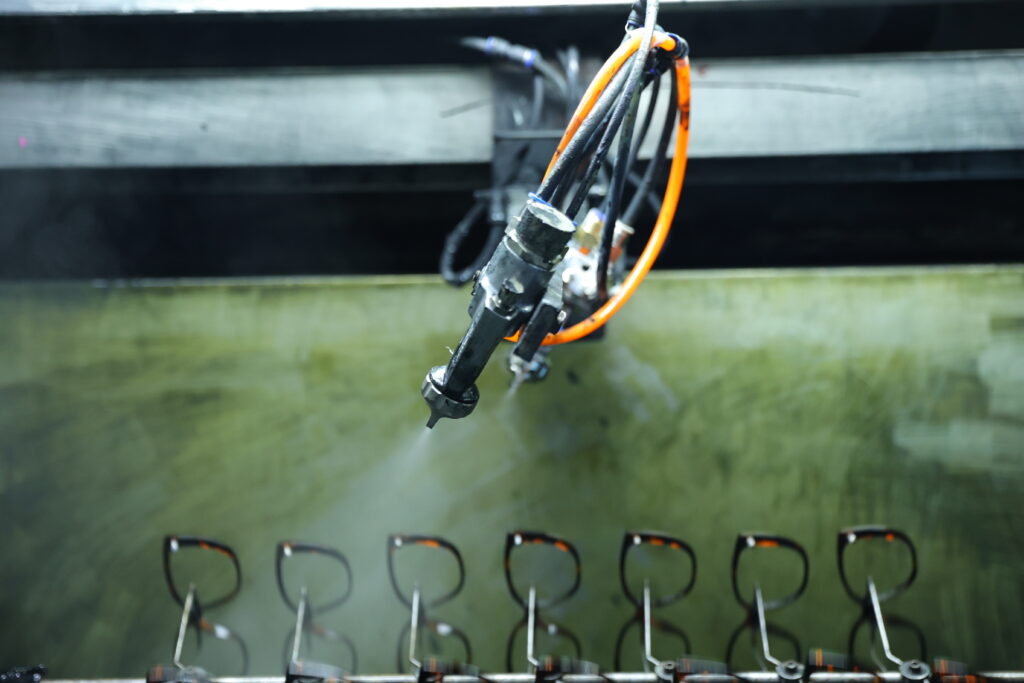
Raw TR90 naturally possesses a slightly milky, translucent finish. To achieve the vibrant colors, matte textures, and premium aesthetics that retail consumers demand, we move the annealed frames into the surface treatment department.
TR90 is notoriously difficult to paint because it resists chemical bonding. We first apply a specialized adhesion-promoter primer to the frames.
-
The Rubberized “Soft Touch” Coating: This is the most popular finish for TR90 sports eyewear. We apply a specialized matte polyurethane paint that gives the frame a premium, grippy, rubber-like texture.
-
High-Gloss and Electroplating: For fashion frames, we apply high-gloss UV-cured varnishes. We also utilize vacuum electroplating to add metallic accents to specific parts of the TR90 frame, creating a luxury aesthetic.
-
Silk-Screen Printing: Finally, we move the frames to the printing stations. Technicians use precision pad printing machines to stamp your brand logo onto the temples and print the CE marks and model numbers on the inside of the arms.
Strict Quality Control (QC) Standards
Our commitment to mastering how TR90 glasses are made does not end on the assembly line. Before we pack a single frame into a master carton, our QC team subjects the batch to intense physical and optical testing.
-
The Ultimate Flexibility Test: A QC inspector takes random samples and aggressively bends the temples outward past 90 degrees. A proper TR90 frame must instantly snap back to its original resting shape without any permanent warping or cracking.
-
Thermal Shock Testing: We place the frames in freezing chambers (-10°C) and then directly into hot ovens (60°C). We verify that the extreme temperature changes do not cause the paint to peel or the TR90 material to become brittle.
-
The FDA Drop Ball Test: We mount the finished sunglasses with their lenses installed on a testing rig and drop a 5/8-inch solid steel ball bearing directly onto the lens. We ensure the frame holds the lens securely and does not crack under the sudden impact.
Common Defects and Root Cause Analysis
Even with top-tier machinery, TR90 injection molding requires constant human vigilance. Here are the most common defects we actively prevent on the factory floor:
-
Flow Marks and Silver Streaks: If you see silver streaks on a TR90 frame, the factory failed to dry the raw pellets properly. Those streaks are actually trapped steam exploding inside the plastic. We prevent this through our strict 4-hour pre-baking protocol.
-
Short Shots: If a frame looks incomplete, missing a chunk near the end of the temple, the liquid plastic cooled too fast before filling the mold. We fix this by fine-tuning our injection speed and increasing the mold temperature.
-
Brittleness: If a TR90 frame snaps instead of bending, the factory either used cheap, recycled scrap material or skipped the vital annealing and stress-release oven phase.
Conclusion: Partnering with TR90 Experts
Manufacturing premium TR90 eyewear requires far more than just buying a plastic injection machine. It demands a deep understanding of polymer thermodynamics, precision steel tooling, and rigorous stress-release protocols.
At Wenzhou Zhantai Glasses Co., Ltd., we have spent years mastering every single variable of the TR90 production cycle. We know exactly how to manage the 120-ton pressures, calibrate the cooling times, and apply the perfect rubberized finishes that your customers love.
When you partner with a factory that truly understands the science behind the material, you eliminate the risk of brittle frames, peeling paint, and disastrous customer returns. You gain a manufacturing partner capable of delivering ultra-durable, highly flexible eyewear that performs flawlessly and elevates your brand’s reputation in the competitive global market.